
The signs of low dopamine can feel like your internal engine is just… running out of fuel. It’s less about a specific feeling of sadness and more about a persistent lack of motivation, energy, and the inability to feel pleasure from things you used to love. Your drive to get up and engage with life just isn’t there.
What Is Dopamine and Why Does It Matter?
Most people have heard dopamine called the “happy chemical,” but that’s a bit of a myth. It’s far more accurate to think of it as the “motivation molecule.” Dopamine isn’t the reward itself; it’s the neurochemical that drives you to seek the reward. It’s the spark that ignites your desire to start a new project, learn a skill, or even just get out of bed in the morning.
When your dopamine pathways are firing correctly, you feel focused, driven, and capable. It’s the brain chemical behind that deep sense of satisfaction you get when you finally cross a big item off your to-do list.
More Than Just a Mood Booster
Dopamine’s job description is surprisingly long. It’s a master regulator involved in several critical systems throughout your brain and body, which explains why the signs of low levels can be so widespread.
Here are some of dopamine’s key roles:
- Motor Control: Dopamine is essential for smooth, coordinated movement. Think of it as the lubricant for your physical actions, allowing you to move with precision and control.
- Executive Function: This is the chemical you need for focus, planning, and problem-solving. It helps you organize your thoughts and see a task through to completion.
- Learning and Memory: Dopamine is the ultimate reinforcer. When you do something and feel a sense of accomplishment, dopamine helps your brain stamp that action as “good” and worth repeating.
- Pleasure and Reward: It’s the engine of the brain’s reward system, pushing you to do things necessary for survival, like eating, socializing, and achieving goals.
A great way to think about it is to picture your brain’s motivation system as a car. Dopamine isn’t the destination (happiness), but the gasoline in the tank. Without enough gas, the car simply won’t go, no matter how much you want to get where you’re going.
The Consequences of an Imbalance
When dopamine is out of balance, the effects ripple across both your mental and physical health. Low levels can leave you feeling perpetually stuck in first gear, unable to gather the energy to move forward. This isn’t a failure of willpower; it’s a real neurochemical shortfall that makes taking action genuinely difficult.
Recognizing this is the first step toward figuring out what’s going on and exploring ways to support your brain’s natural chemistry. By identifying the symptoms early, you can start taking proactive steps to get your inner drive back online.
Key Mental and Emotional Signs of Dopamine Deficiency
When your dopamine runs low, the impact isn’t just about feeling a little “off.” It can feel like the color has been drained from your world, leaving everything in shades of gray. These symptoms often creep in so slowly that it’s easy to blame them on stress or just a bad week.
But learning to spot these mental and emotional red flags is the first step toward figuring out what’s happening beneath the surface. These signs are tied directly to dopamine’s job in managing your brain’s reward system and executive functions—the very things that fuel motivation, sharpen focus, and let you feel pleasure.
The Fog of Low Motivation and Focus
One of the most common complaints is a persistent and heavy brain fog. This isn’t just misplacing your keys; it’s a constant struggle to concentrate, organize your thoughts, or stick with a task. You might find yourself re-reading the same sentence over and over or losing your train of thought halfway through speaking.
This mental haze often comes with an almost paralyzing inability to get started, a state known as chronic procrastination. It feels less like laziness and more like there’s an invisible wall between you and your to-do list. That inner spark needed to simply begin is missing, making even small tasks feel like climbing a mountain. If this sounds familiar, you can dive deeper into the root causes in our guide on what causes a lack of motivation.
This diagram shows how dopamine acts as a central pillar for your brain’s ability to stay motivated, focused, and driven.
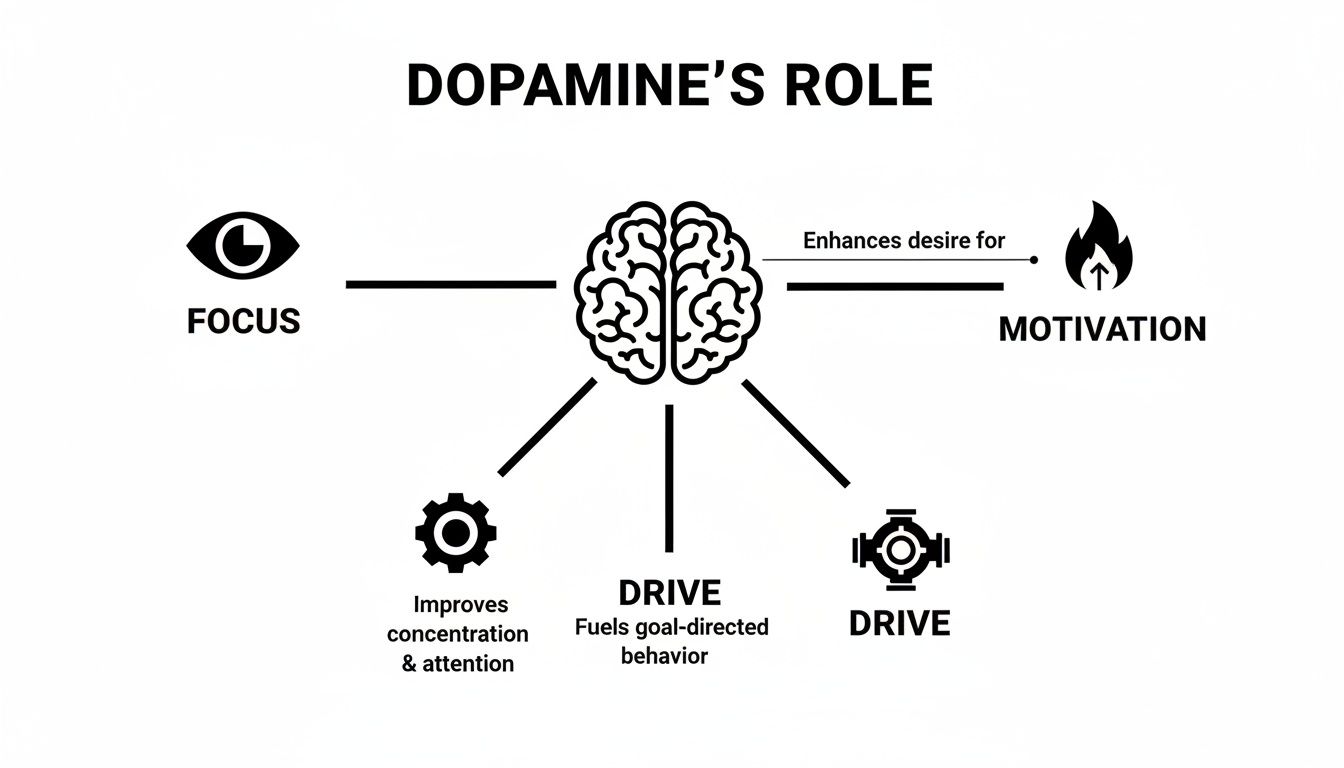
When this critical neurotransmitter is in short supply, it can directly undercut these core functions, turning everyday life into an uphill battle.
Loss of Pleasure and Emotional Flatness
Another huge sign is anhedonia—a clinical term for the inability to feel pleasure from things you used to love. Hobbies that once brought you joy now feel like chores. Your favorite songs might sound hollow, and getting together with friends can feel more draining than uplifting.
This creates an emotional numbness, a sense of being detached from life. You may not feel intensely sad, but you don’t feel much of anything at all. This emotional blunting is one of the most isolating aspects of low dopamine, making it tough to connect with others or the world around you.
Dopamine is the chemical that tells your brain, “Hey, this is good! Pay attention and remember this.” When that signal is weak, your brain has a hard time registering enjoyment, leaving you feeling uninspired and emotionally disconnected.
For anyone grappling with ongoing sadness, anhedonia, or a motivation slump—all of which can be tied to low dopamine—exploring professional depression treatment options can be a crucial step forward.
Low Dopamine Signs vs a Normal Bad Day
It’s one thing to have an off day, but it’s another thing entirely when that feeling becomes your new normal. Everyone has temporary slumps, but the signs of a dopamine deficit are chronic, touching multiple areas of your life day after day.
This table can help you tell the difference.
| Symptom Area | A Normal ‘Off’ Day | Potential Sign of Low Dopamine |
|---|---|---|
| Motivation | Feeling unmotivated for a specific task or for a day. | A constant lack of drive to do almost anything for weeks. |
| Focus | Getting distracted easily when tired or bored. | Pervasive brain fog that makes concentration nearly impossible. |
| Pleasure | Not being in the mood for a hobby on a particular day. | A consistent loss of interest and joy in all previous passions. |
| Emotional State | Feeling moody or irritable due to a specific event. | A prolonged sense of emotional flatness or apathy. |
| Energy | Feeling tired after a poor night’s sleep. | Chronic fatigue that isn’t relieved by rest. |
Recognizing these patterns is key. While a bad day is just part of life, a persistent lack of motivation, focus, and pleasure is a signal that deserves a closer look. Think of these mental and emotional signs as your brain’s way of telling you its core motivational system might need some support.
Recognizing the Physical Symptoms of Low Dopamine
While the mental fog and lack of motivation are often the first things people notice, the signs of low dopamine frequently show up in your body, too. Dopamine’s influence goes far beyond your mind—it plays a vital role in the complex systems that control physical movement.
When levels are insufficient, it’s like trying to run a finely-tuned machine without enough oil. Everything becomes stiffer, slower, and less coordinated.
Think of dopamine as the essential lubricant for your body’s gears. A specific brain region called the substantia nigra produces dopamine to ensure your movements are smooth, controlled, and almost automatic. When this supply runs low, the entire system can start to grind and stutter, leading to physical symptoms you can actually see and feel.

Muscle Stiffness and Movement Issues
One of the most telling physical signs of low dopamine is muscle rigidity that seems to come out of nowhere. Your limbs might feel tight or difficult to move, even when you haven’t been exercising. This isn’t your typical post-workout soreness; it’s a persistent stiffness that can limit your range of motion and cause aches or cramps.
This can show up in several distinct ways:
- Muscle Cramps: You might start experiencing frequent and painful muscle spasms, especially in your legs or feet.
- Tremors: A subtle, rhythmic shaking, often starting in a hand or fingers while you’re at rest, can be an early indicator.
- Poor Coordination: You may notice your balance is off or find yourself feeling clumsier than usual, perhaps dropping things more often.
- Slowed Movement (Bradykinesia): Simple, everyday actions like getting up from a chair or walking across a room can become noticeably slower and require more deliberate effort.
These movement-related symptoms are central to conditions like Parkinson’s disease, which is defined by a major loss of dopamine-producing cells. The economic and health impact of managing such conditions is massive. In fact, the global market for dopamine agonist drugs, driven primarily by Parkinson’s, was valued at USD 2.725 billion in 2023 and is projected to surpass USD 5.031 billion by 2033. You can learn more about the growing need for dopamine-related treatments to understand the scale of this issue.
Just as a car sputters on low fuel, your body’s motor control system can falter without enough dopamine. This neurochemical sends the critical signals for fluid, effortless motion, and when those signals weaken, the physical effects become obvious.
Subtle Changes You Might Overlook
Beyond major movement issues, some of the most revealing physical signs of low dopamine are incredibly subtle and easy to brush off. They often creep in so gradually that you or your loved ones might not connect them to a neurochemical imbalance.
It’s important to pay attention to these smaller changes, as they can provide a more complete picture of what’s going on.
Small Handwriting and Softer Voice
Have you noticed your handwriting getting smaller and more cramped? This condition, known as micrographia, is a classic physical sign. As dopamine levels fall, the fine motor control needed for writing starts to decline, causing letters to shrink and crowd together as you write across a page.
In the same way, low dopamine can affect the muscles that control your voice box. This can lead to a softer, more monotone speaking voice, sometimes with a breathy or hoarse quality. You might find people constantly asking you to speak up, even when you don’t realize your volume has changed. Paying attention to these subtle physical cues is crucial, as they are often the earliest warnings that your body’s intricate dopamine system needs support.
Common Causes and Risk Factors for Dopamine Depletion
Recognizing the signs of low dopamine is one thing, but understanding why your levels might be tanking is where the real power lies. Dopamine depletion rarely happens out of the blue. More often than not, it’s a direct result of a mismatch between our ancient brain chemistry and the demands of modern life.
Several factors can throw your brain’s delicate dopamine balance out of whack, paving the way for low motivation and mental fatigue. By pinpointing these root causes, you can stop just coping with the symptoms and start actively rebuilding your brain’s natural drive.
Nutritional Gaps and Building Blocks
Your brain can’t make dopamine from nothing. It needs a specific set of raw materials from your diet to get the job done. Think of it like a factory assembly line—if you run out of parts, the entire operation grinds to a halt.
The most critical of these building blocks is an amino acid called tyrosine. Your body converts tyrosine into L-Dopa, which then becomes dopamine. A diet short on tyrosine-rich foods puts a hard ceiling on how much dopamine your brain can produce.
Key nutritional factors include:
- Low Tyrosine Intake: Not getting enough from foods like almonds, avocados, bananas, beef, and eggs.
- Poor Gut Health: An unhealthy gut microbiome can get in the way of nutrient absorption, meaning you might not be getting the full benefit of the healthy foods you eat.
- Key Nutrient Deficiencies: A lack of magnesium, iron, and B vitamins can also interfere with the dopamine production process.
The Draining Effect of Chronic Stress
A short burst of stress can actually give you a helpful dopamine kick to tackle a challenge. But when that stress becomes chronic—a constant hum of work deadlines, financial worries, or relationship strain—it starts to drain your dopamine reserves.
This long-term state of “fight or flight” overworks your entire neurochemical system. Your brain starts burning through dopamine and other key neurotransmitters much faster than it can replace them, leaving you feeling emotionally exhausted, unmotivated, and physically spent.
Think of your dopamine system like a well. Under normal conditions, you draw water as you need it, and it naturally refills. Chronic stress is like leaving the tap running 24/7—eventually, the well runs dry.
Lifestyle Habits and Dopamine Dysregulation
Our daily habits play a massive role in keeping dopamine levels steady. Certain lifestyle choices can create a vicious cycle of temporary highs followed by deep crashes, eventually making your brain’s reward pathways less sensitive.
Poor sleep is a major offender. During deep sleep, your brain is busy clearing out metabolic waste and restocking its supply of neurotransmitters, including dopamine. When you consistently skimp on sleep, you rob your brain of this essential reset time, leading to lower baseline dopamine levels the next day. A sedentary lifestyle does similar harm by denying your brain the natural dopamine release that comes from physical activity.
It’s also crucial to understand how common substances affect your brain chemistry. You can learn more about the impacts of caffeine and alcohol on neurotransmitter levels, both of which can contribute to dopamine depletion over time.
The Modern Challenge of Digital Overstimulation
In our hyper-connected world, we face a unique challenge: the constant drip of instant digital rewards. The endless novelty from social media feeds, notifications, and algorithm-driven content keeps our dopamine system firing on all cylinders, creating a dysregulated reward pathway.
This digital overstimulation is a real mental health concern, with research suggesting that digital addiction has a global prevalence of around 6%. This constant cycle of pings and alerts keeps your dopamine system on a hamster wheel, leading to tolerance and, eventually, burnout. By identifying these causes in your own life, you can start making targeted changes to support your brain’s health.
Lifestyle Strategies to Naturally Support Dopamine
Knowing the signs of low dopamine is the first step. Taking action is where the change happens. You can’t just wish your dopamine levels higher, but you can create an environment where your brain has everything it needs to function well. Think of it less like a quick fix and more like tending a garden—consistent, thoughtful care brings the best results over time.
Practical, evidence-based lifestyle changes are so powerful because they get to the root of the problem. They give your brain the essential building blocks and healthy routines needed to produce, release, and regulate this crucial neurotransmitter all on its own.
Fuel Your Brain with the Right Nutrients
Your brain’s ability to make dopamine starts on your plate. It needs a steady supply of an amino acid called tyrosine, which is the direct precursor to L-Dopa and, eventually, dopamine itself. Without enough tyrosine, your brain simply doesn’t have the raw materials it needs.
Making sure your diet includes plenty of tyrosine-rich foods is a foundational strategy for supporting your brain chemistry. It’s a direct way to keep your internal “dopamine factory” stocked and ready for business.
Try adding more of these foods to your meals:
- Lean Proteins: Chicken, turkey, and fish are fantastic sources.
- Nuts and Seeds: Almonds, walnuts, and pumpkin seeds provide both tyrosine and healthy fats that support brain function.
- Legumes: Beans, lentils, and soybeans are great plant-based options.
- Dairy Products: Greek yogurt and cottage cheese offer a powerful protein punch.
- Fruits and Vegetables: Avocados and bananas are particularly known for their tyrosine content.
By focusing on a nutrient-dense diet, you give your brain a consistent advantage.
Get Moving to Boost Mood and Motivation
Exercise is one of the most effective and immediate ways to naturally increase dopamine. Physical activity doesn’t just trigger the release of dopamine—it also increases the number of dopamine receptors in your brain, making your entire reward system more efficient.
You don’t have to run a marathon to get the benefits. Any movement that gets your heart rate up can make a difference. The real key is consistency and finding something you actually enjoy, which creates a positive feedback loop of motivation and reward.
Think of exercise as a way to jump-start your brain’s engine. The anticipation of a rewarding activity—like a brisk walk, a bike ride, or a dance class—can trigger dopamine release even before you start moving. This is why building an exercise habit can feel so good.
This simple act directly fights the physical and mental sluggishness that often comes with low dopamine.
Prioritize Restorative Sleep
Sleep is your brain’s non-negotiable maintenance window. During deep sleep, your brain clears out metabolic waste and, critically, restocks its supply of neurotransmitters. Skimping on sleep is like asking your brain to run on an empty tank day after day.
Chronic sleep deprivation messes with the natural rhythm of dopamine release, leading to lower baseline levels and a dulled response in your reward pathways. It’s why you feel so unmotivated, foggy, and irritable after a bad night’s sleep. Sticking to a consistent sleep schedule is fundamental for restoring balance. For more in-depth tips, check out our guide on how to increase dopamine naturally.
Embrace Mindfulness and Meditation
Mindfulness practices like meditation can have a surprisingly profound impact on your dopamine system. Research shows that meditation can actually increase dopamine release, helping to improve focus, regulate mood, and blunt the impact of stress on your brain.
Meditation trains your brain to focus on the present, helping to break the cycle of overstimulation and constant reward-seeking that burns through your dopamine reserves. It calms the nervous system and fosters a more balanced neurochemical state, offering a sustainable way to support your mental well-being from the inside out.
How Targeted Supplements Like Mucuna L-Dopa Can Help
While lifestyle habits are the foundation for long-term brain health, sometimes you need more targeted support to get back on your feet. This is where certain supplements can make a real difference, especially those containing L-Dopa from the Mucuna pruriens plant.
To see why, we have to understand a key biological challenge: the blood-brain barrier. Think of it as a highly selective security gate for your brain. It stops most substances, including dopamine itself, from getting in from your bloodstream. This means you can’t just take a dopamine pill and expect it to work.
L-Dopa is the exception. It’s the direct precursor—the raw building block—your brain uses to make its own dopamine. And crucially, L-Dopa can pass through that security gate, delivering the exact materials your brain needs right where they’re needed most.
Mucuna Pruriens: A Natural L-Dopa Source
Mucuna pruriens, also called velvet bean, is a plant that naturally packs a high concentration of L-Dopa. When you’re looking for a Mucuna supplement, the most important thing is finding a standardized extract. This guarantees that every dose contains a consistent, reliable amount of the active compound, which is essential for getting predictable results.
By providing a bioavailable form of L-Dopa, a quality Mucuna supplement can help support:
- Motivation and Drive: It helps refuel that inner engine that powers your goals and ambitions.
- Mental Focus and Clarity: It can cut through brain fog and sharpen your concentration.
- Mood and Well-being: It supports the neurochemical pathways tied to feelings of pleasure and satisfaction.
Here’s an analogy: If your brain is a dopamine factory, L-Dopa is the essential raw material delivered directly to the assembly line. Lifestyle changes improve the factory’s overall efficiency, but a supplement like Mucuna L-Dopa makes sure you never run out of core supplies.
Why Responsible Supplementation Is Key
It’s critical to approach supplements with care and awareness. The ripple effects of dopamine are complex, even touching on areas like weight management. New research shows that dysfunctional dopamine receptors can weaken self-control and amplify food cravings, contributing to the obesity epidemic that now affects 41.9% of adults in the United States. Discover new insights about dopamine and obesity to see how deep the connection goes.
Before you add any new supplement to your routine—especially one as direct as L-Dopa—it is absolutely essential to consult with a healthcare professional. They can help you figure out if it’s the right move for your unique body and ensure it won’t interfere with any existing conditions or medications. For a deeper dive, check out our definitive guide to Mucuna pruriens L-Dopa benefits and safety. Getting professional guidance isn’t just a suggestion; it’s a non-negotiable step for using it safely and effectively.
Common Questions About Dopamine
Diving into the world of brain chemistry can feel a little overwhelming. As you start connecting the dots on low dopamine, it’s totally normal to have questions about testing, how long things take, and the bigger picture of keeping everything in balance. Let’s clear up some of the most common ones.
Our goal here is to cut through the confusion and give you practical, straightforward answers so you can feel more confident on your path to better brain health.
Can I Get My Dopamine Levels Tested?
This is a great question, but the answer isn’t what most people expect. Directly measuring dopamine in the living brain is incredibly difficult and pretty much only happens in a research lab. It’s not like a simple blood test your doctor can order to check for a “dopamine deficiency.”
Instead, a good clinician pieces together the clues. They look at your whole symptom profile—things like low motivation, finding no joy in your usual activities (anhedonia), or even changes in motor control. They combine that with your medical history and sometimes even how you respond to certain treatments. It’s the full story told by these clinical signs, not a single number from a lab report, that guides them.
Key Takeaway: There’s no standard “dopamine test” your doctor can run. A diagnosis comes from a thorough assessment of your symptoms and overall health by a qualified professional.
If you’re worried about the signs you’re experiencing, the best first step is always to have a conversation with your doctor.
How Quickly Can I Increase My Dopamine Levels?
How fast you’ll feel a difference really depends on the path you take. Different strategies work on different timelines, and building a more resilient dopamine system is definitely more of a marathon than a sprint.
Here’s a rough idea of what to expect:
- Immediate (But Temporary) Lifts: Simple lifestyle changes, like a brisk walk or an intense workout, can give you an instant, though short-lived, boost in mood and focus.
- Medium-Term Gains: Making consistent changes—like eating more tyrosine-rich foods and making good sleep a priority—will start to build a more stable foundation over several weeks and months.
- Targeted Support: For some people, supplements like Mucuna L-Dopa might offer more noticeable support, often within a few days or weeks, but everyone’s biology is different.
Real, lasting improvement comes from the small, healthy habits you build into your daily life that support your brain’s natural chemistry.
Is It Possible to Have Too Much Dopamine?
Absolutely. When it comes to brain chemistry, the goal is always balance, not just more. While low dopamine causes a host of problems, excessively high levels can be just as disruptive.
Too much dopamine activity is linked to a completely different set of issues, including impulsivity, agitation, aggression, and poor impulse control. This is a perfect example of why any strategy to support dopamine, especially with powerful supplements, has to be done with care and a deep respect for your body’s complex systems.
This really highlights why working with a healthcare professional is so important. They can help you find a responsible, personalized approach that aims for that sweet spot—that equilibrium—so you can support your brain health safely and effectively without overshooting the mark.
Ready to support your brain’s natural motivation and focus? At Keter Wellness, we specialize in high-quality, plant-based supplements designed for holistic well-being. Our flagship Mucuna L‑Dopa is standardized to 20% for consistent, reliable support. Explore our transparent, filler-free formulations at https://www.keterwellness.com and take the next step toward feeling your best.
Leave a Reply