
You can boost your dopamine levels naturally by focusing on a few core lifestyle habits. Things like a protein-rich diet, consistent exercise, quality sleep, and getting enough sunlight are the real heavy hitters. These aren’t just feel-good tips; they provide the raw materials and regulatory support your brain needs for healthy motivation and mood.
What Is Dopamine and Why It Matters for Your Mood

It’s often called the “pleasure chemical,” but that label really sells dopamine short. It’s a powerful neurotransmitter—a chemical messenger in your brain—that’s at the heart of motivation, focus, and your ability to feel satisfied.
Think of it as the engine driving your ambition. It’s the force that pushes you to chase goals, learn something new, or celebrate a win.
When your dopamine is balanced, you feel driven, sharp, and connected to life. Finishing a tough project, nailing a new recipe, or just ticking an item off your to-do list creates a healthy, rewarding surge of dopamine. This internal reward system is a brilliant evolutionary tool, designed to reinforce behaviors that help us survive and grow.
The Modern Drain on Dopamine
The problem is, modern life can be incredibly taxing on our natural dopamine regulation. The constant ping of notifications, chronic stress, and diets packed with processed foods throw this delicate system out of whack.
Instead of the steady, earned satisfaction from meaningful activities, we get caught in a loop of seeking quick, intense “hits” from things like endless social media scrolling or sugary snacks.
This constant overstimulation can lead to dopamine depletion. Your brain’s receptors become less sensitive, meaning you need more and more stimulation just to feel normal. The fallout can show up in a few key ways:
- A persistent lack of motivation, or feeling “stuck.”
- Trouble concentrating or experiencing “brain fog.”
- A general sense of apathy, finding less joy in things you used to love.
- Feeling tired and drained, no matter how much you rest.
When you feel this way, it’s not a personal failing. It’s often a biological signal that your brain chemistry needs support. The good news is, you have a surprising amount of power to restore that balance yourself.
Dopamine isn’t just about feeling good in the moment; it’s about having the drive to pursue what makes you feel good in the long run. Healthy dopamine function is the difference between surviving your day and thriving in it.
Your Roadmap to Natural Restoration
Learning how to increase dopamine isn’t about chasing a temporary high. It’s about building a sustainable lifestyle that supports your brain’s chemistry from the ground up. This guide is a practical roadmap built on the foundational pillars of well-being.
Forget quick fixes. We’re going to focus on evidence-based strategies that create lasting change. You’ll learn how to feed your brain with the right foods, use movement and sunlight to your advantage, and implement mindful practices that rewire your reward pathways for deeper, more lasting satisfaction.
Natural Dopamine Boosting Strategies at a Glance
This table summarizes the core strategies we’ll explore in detail, giving you a quick overview of each method, its mechanism, and how soon you might see results.
| Strategy | How It Boosts Dopamine | Potential Timeframe for Effects |
|---|---|---|
| Nutrition | Provides the amino acid tyrosine, the essential building block for dopamine production. | 2-4 weeks for noticeable impact on mood and energy. |
| Exercise | Triggers dopamine release and improves the sensitivity of dopamine receptors. | Immediate mood lift post-activity; several weeks for sustained changes. |
| Sunlight | Helps regulate circadian rhythms and may increase dopamine receptor density. | Can be felt within days with consistent exposure. |
| Mindfulness | Can increase baseline dopamine levels and build resilience against stress. | Immediate calm; 8-12 weeks for deeper regulatory benefits. |
| Sleep | Allows the brain to reset dopamine receptors and regulate its natural daily cycle. | Noticeable improvements in motivation after just 1-2 nights of good sleep. |
By addressing these core areas, you can shift from a state of depletion toward a mind that feels focused, motivated, and resilient. The journey starts with understanding these simple yet powerful connections.
Fueling Your Brain with a Dopamine Diet
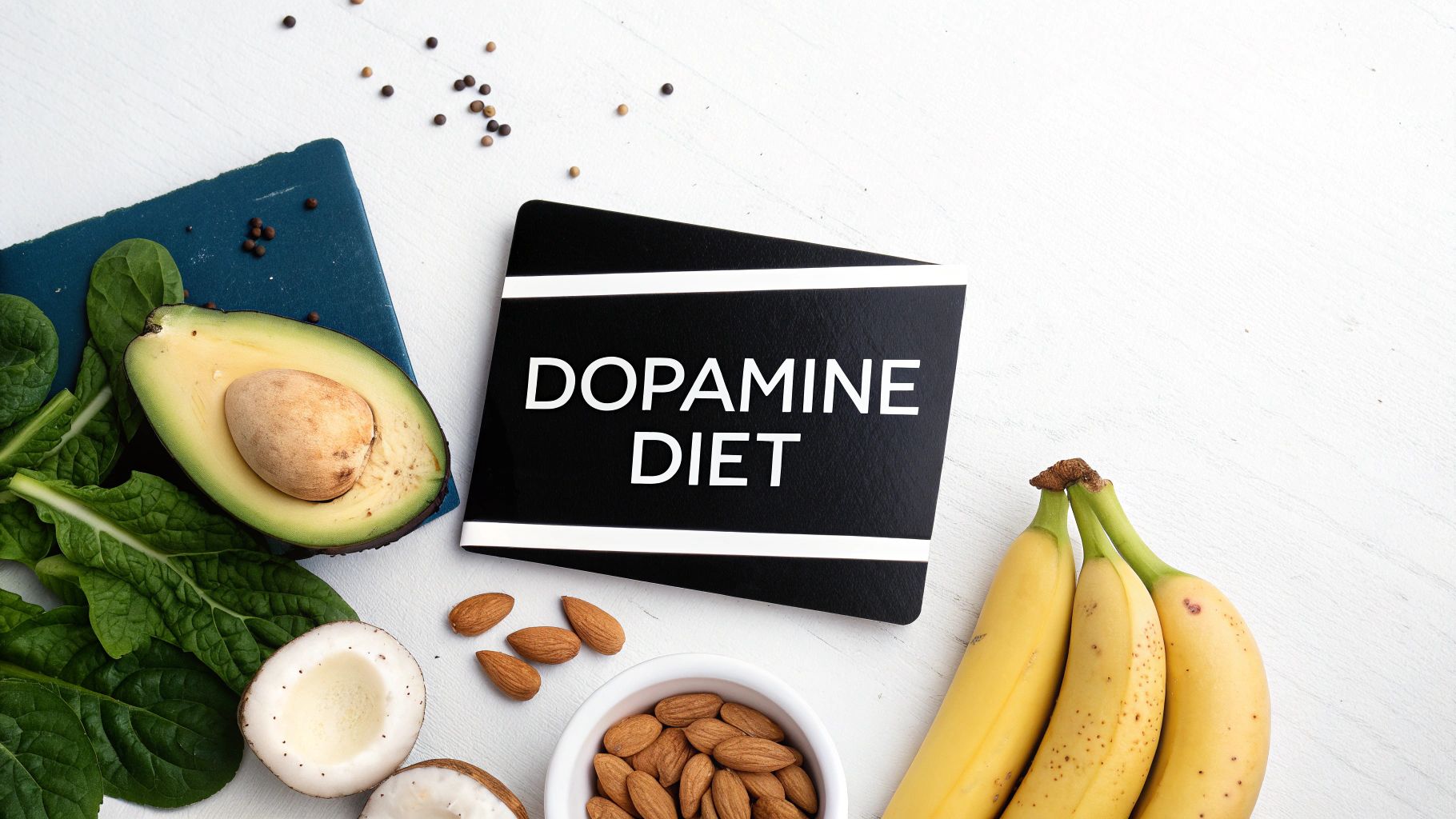
You’ve heard it a million times: “you are what you eat.” When it comes to your brain chemistry, this couldn’t be more accurate. If you’re looking for ways to increase dopamine naturally, the absolute best place to start is with your diet. After all, food provides the raw materials your brain needs to manufacture neurotransmitters.
Dopamine production kicks off with a specific amino acid called tyrosine. Your brain can’t just conjure dopamine from nothing; it needs a consistent supply of this key ingredient. When you eat protein-rich foods, your body breaks them down, making tyrosine available for your brain to use.
This means a focus on protein isn’t just for building muscle—it’s for building a motivated, focused mind. A diet that’s too low in protein can starve your brain of the very compounds it needs, leading to that familiar “blah” feeling, low drive, and poor concentration.
Stocking Your Kitchen with Tyrosine-Rich Foods
Getting your brain the materials it needs is simpler than you think. It’s not about a restrictive, complicated diet. It’s about being intentional. Think of it as creating a “dopamine menu” that you can pull from daily.
Plenty of delicious, everyday foods are packed with tyrosine, and you can easily weave them into your meals to support steady dopamine production.
- Lean Meats: Turkey and chicken are fantastic sources. A simple turkey sandwich or a grilled chicken salad can give you a major tyrosine boost.
- Fish: Salmon and tuna are loaded with both tyrosine and brain-supporting omega-3 fatty acids. It’s a win-win.
- Eggs: Starting your day with a couple of scrambled eggs is a classic for a reason—it’s an easy, reliable source of protein and tyrosine.
- Dairy: Greek yogurt and cottage cheese are packed with this key amino acid.
- Nuts and Seeds: Almonds, pumpkin seeds, and sesame seeds are perfect for snacking or adding a crunch to your yogurt or salad.
- Legumes: Lentils, chickpeas, and beans are excellent plant-based options that fuel your brain just as effectively.
- Avocados and Bananas: These fruits are unique because they also contain tyrosine, making them an easy add-in for smoothies and snacks.
Try this simple mindset shift: instead of asking, “What’s for dinner?” ask, “How can I fuel my brain with this meal?” That small change puts your neurotransmitter health front and center in your daily choices.
The Gut-Brain Connection and Dopamine
The dopamine diet conversation doesn’t stop with tyrosine. A growing body of research keeps reinforcing the powerful connection between your gut and your brain. Your digestive tract is home to trillions of bacteria—your gut microbiome—and they play a surprisingly huge role in making neurotransmitters.
A healthy, balanced gut creates an environment that supports dopamine synthesis. On the flip side, an imbalanced gut, often fueled by processed foods and sugar, can cause inflammation and throw this delicate process off-kilter.
To support your gut-brain axis, make these a priority:
- Probiotics: Bring in fermented foods like yogurt, kefir, kimchi, and sauerkraut. They introduce beneficial bacteria that help your whole system run better.
- Prebiotics: These are the fibers that feed the good bacteria you already have. You can find them in garlic, onions, bananas, and whole grains.
By focusing on gut health, you’re building a foundation for your brain to thrive. It’s a critical, and often forgotten, piece of the dopamine puzzle.
Foods That Can Sabotage Your Dopamine Levels
Just as certain foods build you up, others can work against you. Some common dietary habits can actively undermine your efforts, making you feel like you’re taking one step forward and two steps back.
The main culprits are excessive sugar and high amounts of saturated fats. Sure, a sugary donut can give you a quick dopamine hit, but it’s a trap. This leads to a crash and, over time, can actually desensitize your dopamine receptors. That means you need more and more sugar to get the same feeling of pleasure.
Likewise, diets heavy in saturated fats from fried foods and excessive butter have been shown to disrupt dopamine signaling. Limiting these foods is just as important as adding the good ones. Moderation is key to keeping your dopamine system balanced and responsive. While some natural sources can be supportive, for those exploring more direct precursors, it’s wise to read our complete guide to Mucuna Pruriens and L-Dopa.
The Power of Movement and Sunlight

Beyond what you eat, two of the most powerful and reliable tools for boosting your mood are completely free: moving your body and getting outside in the sun.
Physical activity isn’t just about burning calories or building muscle; it’s a direct line to your brain’s reward system. And sunlight? Think of it as the master switch that regulates your energy, mood, and internal clock.
When you exercise, you’re literally telling your brain to release a cocktail of feel-good chemicals, with dopamine at the top of the list. It’s what’s behind the euphoric “runner’s high” and that amazing feeling of clarity you get after a solid workout.
This isn’t just a temporary buzz. Exercise is one of the most well-documented natural methods for elevating dopamine. The research is solid, showing that physical activity triggers a measurable rise in dopamine markers in key brain regions. You can dig into the science behind exercise and dopamine here.
Finding Your Dopamine-Boosting Movement
Here’s the secret: the best exercise for dopamine is the one you’ll actually stick with. Forget about forcing yourself into a routine you hate. You don’t need to become a marathoner to get the benefits.
The goal is to find something that gets your heart rate up and that you genuinely enjoy.
- Aerobic Exercise: Things like brisk walking, jogging, cycling, or swimming are fantastic for a sustained dopamine release. Just aim for 20-30 minutes on most days.
- Yoga and Tai Chi: These practices are a double win. They boost dopamine through mindful movement while also lowering cortisol, the stress hormone that can get in dopamine’s way.
- Dancing: Seriously. Putting on your favorite song and moving for a few minutes is one of the fastest ways to get a mood lift. It’s unstructured, fun, and incredibly effective.
- Strength Training: Lifting weights or doing bodyweight exercises gives you a satisfying sense of progress, which directly feeds that dopamine reward loop.
Try to reframe exercise from a chore to a tool. That 20-minute walk isn’t something you have to do; it’s your daily dopamine appointment.
You don’t have to overhaul your life. Start by ‘snacking’ on movement. Take a 10-minute walk after lunch, do a few stretches while your coffee brews, or have a 5-minute dance party in your kitchen. Small, consistent efforts compound into significant changes.
Let the Sunshine In for Better Brain Function
Sunlight is the other half of this equation, and it’s something most of us don’t get enough of. Natural light, especially in the morning, is crucial for setting your circadian rhythm—your body’s internal 24-hour clock.
This internal clock doesn’t just manage your sleep; it governs your hormone release, including neurotransmitters like dopamine.
When your rhythm is off—maybe from too much late-night screen time or spending all day indoors—dopamine production can get thrown out of whack. This often leads to that classic “tired but wired” feeling, a sure sign your systems are struggling.
On top of that, sunlight helps your body synthesize Vitamin D, which is absolutely essential for brain health. Low Vitamin D levels are consistently linked to mood issues and impaired dopamine activity. Getting some sun is a direct way to support your brain’s basic chemical balance.
Simple Habits for Safe Sun Exposure
You don’t need to bake on a beach for hours. It’s all about being intentional with small windows of time.
Here are a few practical ways to work it in:
- Get Morning Light, First Thing: Try to get 10-15 minutes of sunlight within an hour of waking. Have your coffee on the porch or just walk around the block. That early light is incredibly powerful for setting your clock for the day.
- Take Your Breaks Outside: Instead of scrolling on your phone, step outside for five minutes. It’s enough to reset your focus and give you an energy bump.
- Eat Lunch Al Fresco: If you can, take your lunch to a park bench or an outdoor table. You’ll be combining a break, food, and sunlight all at once.
- Be Sun Smart: Of course, you need to be safe. Aim for short, frequent exposures without sunscreen to maximize Vitamin D, but always protect your skin from burning if you’re going to be out for longer.
When you pair consistent movement with daily sunlight, you create a powerful synergy. You’re not just chasing a temporary dopamine hit; you’re building a more resilient and balanced brain for the long haul.
Using Mindful Practices to Rewire Your Brain
While diet, sleep, and exercise lay the physical groundwork for healthy dopamine, your mental habits are what truly shape your brain’s reward system. This is where mindful practices come in.
This isn’t about chasing a fleeting high. It’s about fundamentally rewiring how you experience satisfaction and focus, building a more resilient and sustainable sense of well-being from the inside out.
In a world overflowing with notifications, social media feeds, and instant gratification, our brains get conditioned to expect quick, intense dopamine hits. This non-stop cycle can leave your dopamine receptors feeling overworked and desensitized. The result? You feel unmotivated, flat, or find yourself needing more and more stimulation just to feel normal.
Mindfulness is the perfect antidote. It trains you to find reward in the present moment, which generates a gentler, more sustainable dopamine release that doesn’t come with a crash. You shift from relying on external validation to cultivating internal regulation, giving you far more control over your mental state.
Starting a Simple Meditation Practice
The idea of meditation can sound intimidating, but you don’t need a special cushion or an hour of silence to get started. At its core, the practice is simply about paying attention to your breath and gently guiding your focus back whenever your mind inevitably wanders.
Even a short, consistent session can make a huge impact. In fact, meditation is one of the most effective zero-cost ways to elevate dopamine. One landmark study found an incredible 65% increase in dopamine release after just one hour of practice. Another review in 2019 linked mindfulness to improved dopamine sensitivity, which helped reduce anxiety in 60% of participants over an eight-week period.
Here’s a simple way to begin:
- Find a comfortable spot. Sit in a chair with your feet flat on the floor or on a cushion. Just aim to be relaxed but upright.
- Set a timer for 5-10 minutes. This takes the pressure off so you aren’t watching the clock.
- Focus on your breath. Notice the physical sensation of air entering your nose and filling your lungs. Don’t try to change it, just observe it.
- Acknowledge wandering thoughts. Your mind will wander—that’s what minds do. When it happens, just gently note the thought without judgment and guide your attention back to your breath.
That last step is the most important. The act of noticing and redirecting is like a bicep curl for your attention muscle. The more you do it, the stronger your focus becomes and the better you get at regulating your brain’s reward circuitry. Our guide on the essentials of starting a meditation practice offers more tips to help you get started.
Beyond Formal Meditation: Mindful Activities
If sitting still feels like a major hurdle right now, don’t worry. You can weave mindfulness into other activities that also naturally support your dopamine system. The key is to engage your senses fully and give the activity your undivided attention instead of just going through the motions.
- Mindful Music Listening: Put on a piece of instrumental music you enjoy. Close your eyes and try to isolate each instrument. Notice every note, every shift in rhythm, every subtle detail. This kind of focused listening is a deeply rewarding and dopamine-boosting experience.
- Practicing Gratitude: Gratitude actively shifts your brain’s focus from what you lack to what you have—a powerful way to stimulate your reward centers. Each night, jot down three specific things you were grateful for. Instead of something generic like “my family,” try “the funny joke my partner told at dinner.” Specificity is what makes it so potent.
- Creative Pursuits: Engaging in a creative hobby like painting, playing an instrument, or even gardening requires deep focus and produces a tangible result. This process of creation and completion is a natural source of satisfaction and a healthy dopamine release.
The goal of mindfulness isn’t to empty your mind. It’s to become more aware of what’s in it, allowing you to choose where you place your attention and find satisfaction in the present moment rather than constantly chasing the next hit.
By consistently incorporating these practices, you can actively reshape your brain’s dopamine pathways. You’ll build resilience against stress, sharpen your focus, and uncover a more stable and authentic sense of well-being.
The Critical Role of Sleep and Stress Management

If diet and movement are the gas in your dopamine engine, think of sleep and stress management as the nightly maintenance crew. You can put the best fuel in, but if you skip the oil changes and ignore the warning lights, the system will eventually break down.
It’s a simple truth I see all the time: you can eat perfectly and exercise every day, but if you’re chronically stressed and sleep-deprived, you’re fighting an uphill battle for motivation and mental clarity.
Here’s why. While you sleep, your brain is busy performing a nightly reset on its entire dopamine system. Research has shown that even a single night of bad sleep can blunt your dopamine receptors. That’s why you feel foggy, unmotivated, and crave quick hits of sugar or caffeine the next day—your brain is literally struggling to feel rewarded by normal things.
Why Quality Sleep Is Non-Negotiable
Your dopamine levels have a natural daily rhythm. They rise in the morning to get you awake and moving, and they gradually fall in the evening to prepare you for rest. Sleep deprivation throws this entire cycle into chaos.
When you consistently get less than the recommended 7-9 hours of sleep, your brain’s ability to use dopamine effectively just plummets. This kicks off a frustrating loop: low dopamine makes you feel exhausted, so you reach for stimulants to get through the day. But those stimulants disrupt your sleep that night, further draining your dopamine for tomorrow. Breaking this cycle is absolutely fundamental.
Here’s how to start building better sleep hygiene:
- Set a “Digital Sunset”: Turn off all screens—phones, TVs, tablets—at least 60-90 minutes before you plan to sleep. The blue light they emit messes with melatonin, the hormone that tells your body it’s nighttime.
- Create a Wind-Down Ritual: This is about signaling to your brain that the day is over. Read a real book, take a warm bath, or do some gentle stretching. It doesn’t matter what you do, as long as you do it consistently.
- Optimize Your Bedroom: Make it cool, dark, and quiet. Blackout curtains or a simple eye mask can be a game-changer. Same with a white noise machine or earplugs if you live in a noisy area.
A great rule of thumb is to reserve your bedroom for two things: sleep and intimacy. When you start working, eating, or watching TV in bed, you weaken the brain’s association between that space and rest, making it harder to switch off.
How Chronic Stress Drains Your Dopamine Tank
Stress is the other silent saboteur of your dopamine system. When you’re constantly under pressure, your body is flooded with the stress hormone cortisol. Cortisol and dopamine have an inverse relationship—when one goes up, the other tends to go down.
But chronic stress does more than just temporarily lower dopamine. Over time, it can actually damage the very neurons that produce and respond to it. This is what leads to that feeling of being emotionally flat, anxious, and unable to enjoy anything.
Managing stress isn’t just a “nice-to-have” for feeling good; it’s a direct intervention to protect your brain’s reward system. The key is building resilience through small, consistent habits.
Here are two practical places to start:
- Use Tactical Breathing: When you feel that wave of overwhelm, try box breathing. Inhale for a count of four, hold for four, exhale for four, and hold for four. Just a few rounds can interrupt your body’s fight-or-flight response.
- Practice Setting Boundaries: Overcommitting at work or in your social life is a fast track to burnout and dopamine depletion. Learning to say “no” is one of the most powerful stress management tools you have.
Tackling stress is a core pillar of mental wellness. For those looking at the bigger picture, understanding natural alternatives to antidepressants can offer a broader context for supporting your brain health holistically. By prioritizing both restorative sleep and proactive stress management, you create the stable foundation your brain needs to thrive.
Common Questions About Boosting Dopamine Naturally
When you start digging into how to naturally increase dopamine, a few practical questions always pop up. Getting clear on the details helps you set realistic expectations and use these strategies safely. Let’s tackle some of the most common ones I hear.
How Long Does It Take to Feel the Effects?
This is probably the number one question. The honest answer? It depends entirely on what you’re doing. Some strategies give you an immediate lift, while others are a long game, building lasting change over time.
For example, you’ll feel a mental boost and more clarity almost immediately after a 30-minute jog. That’s the instant dopamine release in action. But for that exercise habit to truly upgrade your motivation and receptor health, you need to keep at it for several weeks.
Dietary changes take a bit longer to show up. You can expect a more stable mood and energy after consistently eating tyrosine-rich foods for about 2-4 weeks. Mindfulness practices like meditation can bring a sense of calm in a single session, but the deeper rewiring for dopamine regulation usually takes shape over 8-12 weeks of consistent practice.
The real key here is consistency, not intensity. Small, daily habits compound over time to create significant, lasting changes in your brain’s chemistry.
Are Supplements Like L-Tyrosine or Mucuna Pruriens a Good Idea?
Supplements can feel like a tempting shortcut, but they demand a cautious, informed approach. While some can be effective, they are never a replacement for the foundational lifestyle habits we’ve talked about.
L-Tyrosine, the amino acid precursor to dopamine, can offer support during periods of high stress or intense cognitive demand. Think of it as providing the raw materials your brain needs to keep up.
Mucuna Pruriens, on the other hand, is a different beast. It contains L-Dopa, a more direct precursor that crosses the blood-brain barrier. It’s potent, but it can also have significant side effects and may disrupt your body’s natural dopamine production if misused. It is absolutely crucial to talk to a healthcare provider before starting any new supplement, especially one as powerful as Mucuna.
Distinguishing Healthy Dopamine Seeking from Addictive Behavior
It’s vital to know the difference between activities that give you a healthy dopamine boost and those that lead down a harmful path. The distinction boils down to control and long-term consequences.
- Healthy Dopamine Seeking: This is about engaging in activities that align with your long-term goals and well-being. Think of the satisfaction you get from learning a new skill, finishing a tough workout, or completing a creative project. These actions deliver a genuine sense of accomplishment without negative fallout.
- Addictive Behavior: This is marked by a compulsive need for a stimulus, even when you know it’s causing harm. Examples include endless social media scrolling, binge-eating junk food, or substance use. The defining factor is the loss of control. Healthy habits support your life; addictive ones take away from it.
By focusing on sustainable, goal-oriented activities, you can put your brain’s reward system to work for you, building a more motivated and fulfilling life.
At Keter Wellness, we believe in empowering your well-being with transparent, high-quality herbal solutions. Our standardized Mucuna L‑Dopa 20% is crafted to support your brain’s natural vitality. Explore our commitment to purity and potency at /.
Leave a Reply