
Educational only. Not medical advice. Consult a qualified healthcare professional before using any supplement.
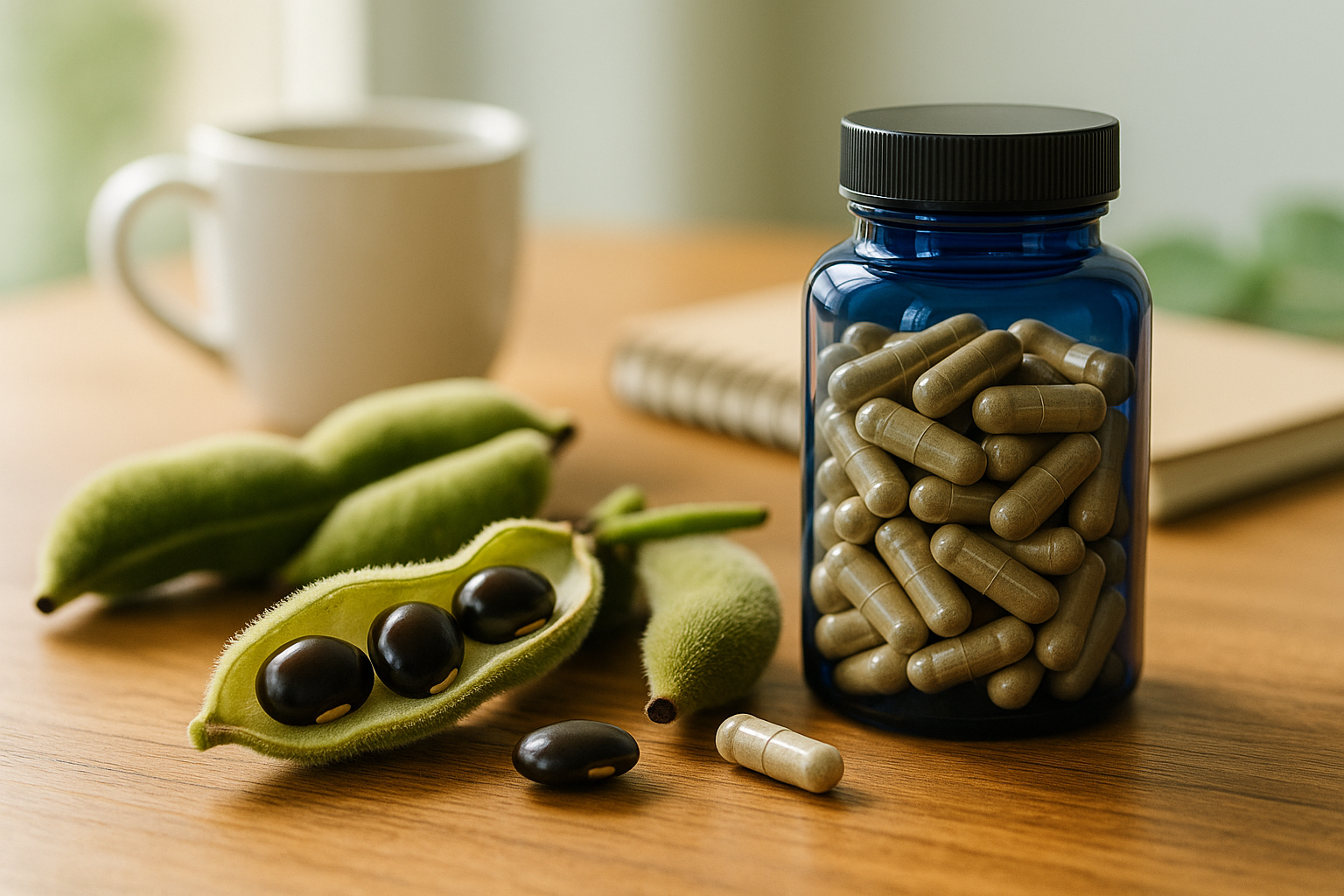
Mucuna pruriens, commonly known as velvet bean, is a tropical legume long used in traditional systems of health. Its significance comes from its natural content of L-Dopa, a direct precursor to dopamine—an essential neurotransmitter involved in mood, motivation, attention, and movement. After ingestion, L-Dopa can cross the blood–brain barrier and convert to dopamine in the central nervous system. This guide explains how Mucuna pruriens works, outlines potential benefits and safety considerations, and offers practical usage tips.
Key Points at a Glance
- Mucuna pruriens is a natural source of L-Dopa.
- L-Dopa → Dopamine: a key pathway for mood, motivation, and cognitive function.
- Traditional use with growing modern interest.
- Benefits appear tied to supporting healthy dopamine dynamics.
- Quality and standardization (e.g., 20% L-Dopa) are crucial.
What Is Mucuna Pruriens and How Does L-Dopa Work?
Mucuna pruriens contains a naturally occurring form of L-Dopa (levodopa). L-Dopa is able to cross the blood–brain barrier and is then converted by enzymes into dopamine. Dopamine helps regulate movement, motivation, mood, and aspects of cognition. Research and traditional use have explored Mucuna as a plant-based source of L-Dopa, and it has been studied in contexts where dopamine support is relevant. Understanding this conversion pathway helps explain why standardized extracts of Mucuna pruriens are used for targeted dopamine support.
Commonly Reported Benefits: Mood, Motivation, and Focus
By supporting dopamine pathways, Mucuna pruriens may help promote a sense of well-being, mental clarity, and sustained attention. Some users report improved motivation and productivity alongside clearer focus. Importantly, these effects are described as supporting the body’s natural neurochemical balance rather than forcing a spike, which may feel smoother for some individuals. Responses vary; setting realistic expectations and tracking personal response is recommended.
Dosage Guidelines and Optimal Timing
Because Mucuna pruriens influences dopamine, a thoughtful approach is essential. Begin conservatively and adjust as needed in consultation with a healthcare professional.
- Start low: Many begin around 200–250 mg of standardized extract per day and assess tolerance.
- Typical range: 250–500 mg per day of standardized extract; individualized needs can differ.
- Timing: Morning or early afternoon aligns with natural alertness rhythms and helps avoid sleep disruption.
- With or without food: Absorption may be better on an empty stomach, but take with food if you experience stomach upset.
- Multiple servings: If using split doses, space them evenly to maintain steady effects.
- Medical guidance: Essential if you use medications or have underlying conditions.
Potential Side Effects and Who Should Avoid Mucuna Pruriens
Possible side effects may include nausea, headache, digestive discomfort, or restlessness—often related to dose or timing. Discontinue use and seek medical advice if adverse reactions occur.
Who Should Avoid or Use Only Under Supervision
- Individuals with psychiatric conditions (e.g., bipolar disorder, schizophrenia) due to dopamine modulation.
- People taking medications that affect dopamine or interact with L-Dopa; medical supervision is important.
- Pregnant or breastfeeding individuals (insufficient safety data).
Common Mistakes to Avoid
- Starting at high doses without assessing tolerance.
- Ignoring potential interactions with prescriptions or health conditions.
- Assuming “natural” equals risk-free; monitor response and adjust thoughtfully.
Quality Indicators: What “Standardized to 20% L-Dopa” Means
Standardization means each serving is adjusted to contain a consistent amount of an active compound—in this case, L-Dopa. A label stating standardized to 20% L-Dopa indicates predictable potency, helping you dose more accurately and reducing variability caused by growing or processing differences. Choose products that clearly note standardized percentage, serving size, capsule count, other ingredients, and manufacturing quality (e.g., cGMP).
Pros and Cons of Mucuna Pruriens Supplementation
Pros
- Natural source of L-Dopa to support dopamine pathways related to mood, motivation, and focus.
- Tradition of use plus growing modern interest and study.
- Standardized extracts can offer consistent potency.
Cons
- Responses vary; dialing in dose and timing can take experimentation.
- Potential side effects (e.g., nausea, headache, digestive upset) in some individuals.
- Possible interactions with certain medications; medical guidance advised.
How to Take Mucuna Pruriens: Quick Reference
- Begin low (e.g., 200–250 mg standardized extract) to gauge tolerance.
- Follow product directions and professional guidance; typical daily totals are often 250–500 mg.
- Take earlier in the day to support alertness and reduce risk of sleep disruption.
- Be consistent with timing; consider a journal to track response.
- Choose standardized products for reliable dosing (e.g., 20% L-Dopa).
Frequently Asked Questions
What is Mucuna pruriens?
A tropical legume (velvet bean) that naturally contains L-Dopa, a precursor to dopamine.
Why is L-Dopa important?
It converts to dopamine, which plays roles in mood, motivation, attention, and movement.
Is it safe?
Many people tolerate it well when used as directed, but side effects and interactions are possible. Consult a healthcare professional, especially if you take medications.
How do I find the right dose?
Start low, evaluate your response, and follow product guidance. Individual needs vary.
How quickly does it work?
Timelines differ; some notice effects within days to a few weeks.
Can I combine it with other supplements?
It depends—seek professional guidance to avoid interactions or redundancy.
Conclusion
Mucuna pruriens is a promising, plant-based source of L-Dopa that can support dopamine-related functions such as mood, motivation, and focus. Prioritize standardized extracts, start with conservative dosing, and monitor your individual response. With a careful, informed approach and professional guidance where appropriate, Mucuna pruriens can be a useful addition to a broader wellness routine.
Where to Buy
Looking for a standardized option? Shop Keter Wellness Mucuna L-Dopa 20% on Amazon for a consistent, clearly labeled extract that’s easy to incorporate into your routine.
Disclaimer: This content is for educational purposes only and is not intended to diagnose, treat, cure, or prevent any disease.
Leave a Reply