
Thinking about which supplements to take can feel like navigating a maze. A "what vitamins should I be taking quiz" can be a surprisingly useful starting point. The right vitamins for you depend entirely on your unique diet, lifestyle, age, and health goals—there's no one-size-fits-all answer.
A well-designed quiz acts as a personalized filter to highlight potential nutrient gaps. It’s not a medical diagnosis, but it’s an excellent tool to help you start a smarter conversation about your health.
Your Quick Guide to Finding the Right Vitamins
This guide will walk you through how these quizzes actually work, what to look for in a good one, and how to use the results to make informed, safe decisions about supplements. We’ll break down the science in a practical way so you can move from confusion to confidence.

Why a Quiz Is a Smart Starting Point
Think of your body’s nutritional needs as a complex puzzle. While a balanced diet is always the foundation, things like chronic stress, where you live, or your dietary choices (like being vegan) can create gaps. A vitamin quiz serves as an initial map, highlighting areas that might need a little extra support.
For example, someone living in a northern climate with long, dark winters is a classic candidate for Vitamin D supplementation. An athlete, on the other hand, might have increased needs for magnesium and B vitamins to support energy and recovery. These are the kinds of nuances a generic multivitamin often misses entirely.
A quiz helps translate your daily habits and health goals into actionable nutritional insights. It’s the bridge between knowing you could be healthier and understanding how to start.
What to Expect From This Guide
We’ll explore some of the most common deficiencies people face and what signs to look out for. Below is a quick overview of key vitamins, their roles, and where you can find them in food.
Common Vitamin Deficiencies and Their Symptoms
This table summarizes common vitamin deficiencies, their typical symptoms, and dietary sources to help you identify potential areas of concern.
| Vitamin | Common Symptoms of Deficiency | Good Dietary Sources |
|---|---|---|
| Vitamin D | Fatigue, bone pain, mood changes, frequent illness. | Fatty fish (salmon, mackerel), fortified milk, sunlight. |
| Iron | Extreme fatigue, weakness, pale skin, cold hands/feet, brittle nails. | Red meat, spinach, lentils, fortified cereals. |
| Vitamin B12 | Numbness or tingling, weakness, fatigue, anemia, brain fog. | Meat, fish, milk, cheese, eggs (primarily animal products). |
| Magnesium | Muscle cramps, fatigue, mood issues, irregular heartbeat. | Nuts, seeds, whole grains, dark leafy greens, dark chocolate. |
| Calcium | Muscle cramps, brittle nails, weak bones (osteopenia), confusion. | Dairy products, fortified plant milks, tofu, leafy greens (kale). |
Remember, this is just a starting point. Many symptoms can overlap with other conditions.
This guide is designed to bring some clarity to the often-overwhelming world of supplements. We'll cover:
- Common Vitamin Deficiencies: Learn the signs and symptoms linked to low levels of key nutrients.
- The Science Behind the Questions: Understand how a quiz connects your lifestyle answers to specific vitamin recommendations.
- Interpreting Your Results: Discover how to use your quiz outcome to make practical, safe choices.
- Next Steps: Know when it's time to talk to a healthcare professional for testing and expert guidance.
By the end, you’ll have a clear framework for using a vitamin quiz as a launchpad for a more personalized and effective supplement strategy.
Why Personalized Vitamin Recommendations Matter
Taking a generic multivitamin can feel like a simple fix, but it’s a bit like using a one-size-fits-all key for a very specific lock. While it might cover a few basic needs, it completely overlooks the unique factors that define what your body actually requires. Your body isn't a generic template; it’s a dynamic system influenced by countless variables.
Think of your nutritional needs like a car engine. You wouldn’t put diesel in a gasoline car and expect it to run well, right? In the same way, giving your body high doses of nutrients it already has in abundance can be ineffective or, in some cases, even work against you. Personalization is what allows you to give your engine the precise fuel it needs to perform at its best.
Beyond the One-Size-Fits-All Bottle
The fundamental problem with a standard multivitamin is that it treats a 25-year-old marathon runner the same as a 65-year-old retiree. Their nutritional demands are worlds apart, yet they get the same bottle off the shelf. This is where a high-quality what vitamins should i be taking quiz changes the game, moving beyond that generic approach by asking targeted questions that reveal your specific needs.
Your lifestyle choices create a unique nutritional fingerprint. Several key factors dramatically alter what your body is asking for:
- Your Diet: Someone following a vegan diet, for instance, will naturally lack Vitamin B12, which is found almost exclusively in animal products. On the other hand, a person on a paleo diet might get plenty of iron but could be missing out on calcium if they avoid dairy.
- Your Activity Level: Athletes and highly active people burn through energy and nutrients much faster. They often have increased needs for B vitamins for energy metabolism, magnesium for muscle function, and antioxidants to handle exercise-induced stress.
- Your Geographic Location: Where you live matters more than you might think. Someone in the Pacific Northwest with limited sun exposure during the winter is far more likely to need Vitamin D than someone living in sunny Florida.
Personalization isn't about chasing trends; it's about listening to your body's unique signals. It means shifting from a broad, shotgun approach to a targeted, strategic plan that addresses your actual nutrient gaps.
The Power of a Tailored Approach
A personalized approach ensures you're supplementing intelligently. Instead of guessing, you’re making an informed decision based on real data about your life. This method helps you avoid "nutrient overload"—taking too much of a certain vitamin—which can sometimes be just as problematic as a deficiency.
By focusing on what you truly need, you can better support specific health goals, whether that’s boosting your energy, strengthening your immune system, or improving cognitive function. Taking the time to understand the vast array of vitamins and their benefits is the first step toward building a supplement routine that genuinely works for you. This tailored strategy isn't just more effective; it's a safer and more efficient way to invest in your long-term health.
How a Vitamin Quiz Decodes Your Needs
At first glance, an online vitamin quiz might seem like just another simple questionnaire. But a well-designed what vitamins should i be taking quiz is much smarter than that. Think of it as a detective, piecing together clues from your daily life to build a clear picture of your potential nutritional needs.
It doesn’t just ask random questions. It systematically digs into the key areas of your life that directly influence what your body requires. This whole process is grounded in solid nutritional science, turning your honest answers into a logical starting point for supplementation.
The Four Pillars of a Quality Quiz
Any reliable quiz will focus its questions on four essential areas. Each one provides a critical piece of the puzzle, helping to spot where you might have gaps in your current nutritional intake.
These pillars are:
-
Dietary Habits: This is the most direct line of inquiry. Questions like, "How many servings of leafy greens do you eat per week?" or "Do you follow a vegan or vegetarian diet?" are absolutely crucial. Answering "I follow a vegan diet" instantly flags a likely need for Vitamin B12 and Iron, since these are found almost exclusively in animal products.
-
Lifestyle Factors: Your day-to-day activities and environment play a massive role. If you answer, "I work indoors and live in a northern climate," that points toward a probable Vitamin D gap, since sunshine is our main source. Similarly, high-stress jobs or intense athletic routines can burn through minerals like magnesium and B vitamins much faster.
-
Health Goals: What are you actually trying to achieve? Questions about goals like "improving energy levels," "supporting immune health," or "enhancing focus" help shape the recommendations. A desire for more energy might suggest B vitamins, while immune support could point to Vitamin C and Zinc.
-
Life Stage and Biology: Your age and sex significantly change your nutritional needs. A woman over 50, for example, has very different calcium and Vitamin D requirements for bone health than a man in his 20s. Questions about age help the quiz apply the correct nutritional framework to your results.
A quiz isn't a diagnostic tool, but it's an excellent way to connect the dots between your life and your potential nutrient needs. It transforms abstract health goals into a concrete list of possibilities to explore further.
From Answers to Actionable Insights
This infographic gives you a peek into how a quiz uses a decision-tree model. Each answer you give guides the logic toward a specific nutritional suggestion.
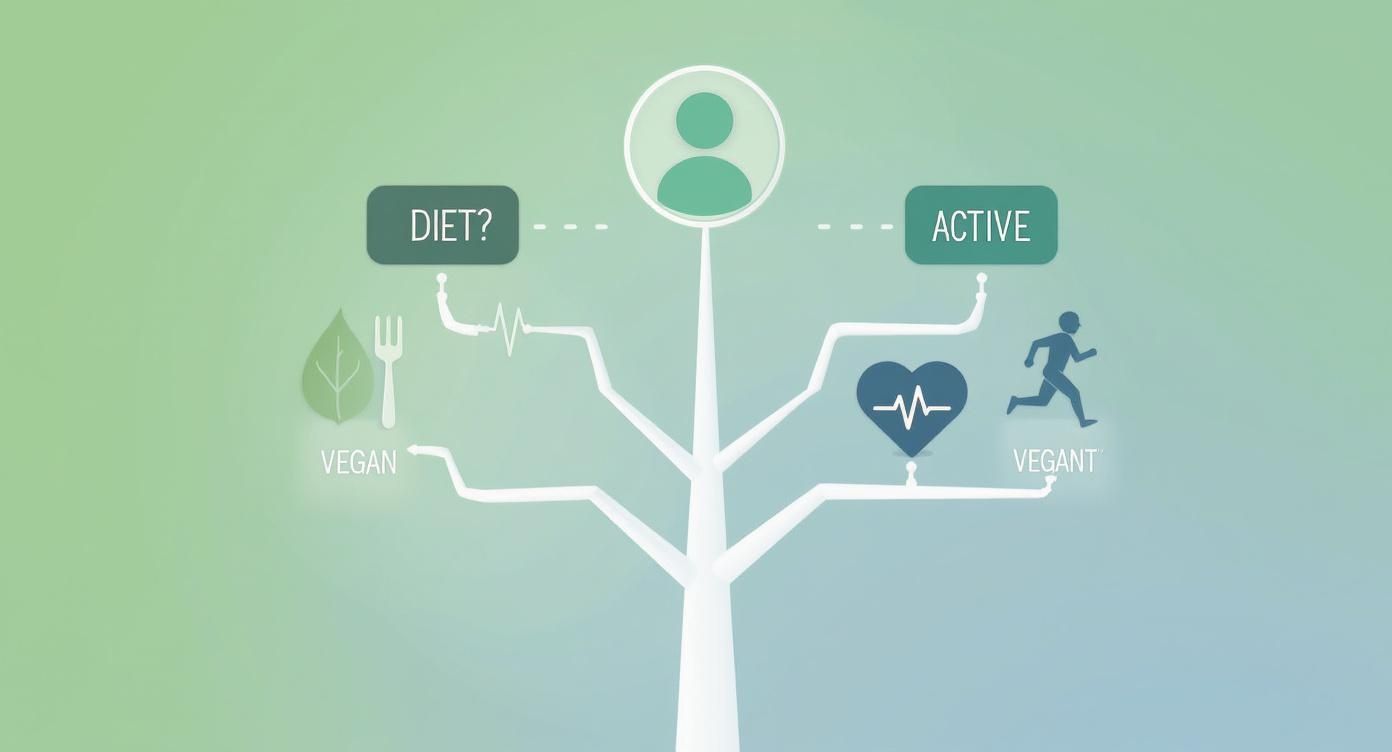
As you can see, a combination of factors—like being a vegan and having an active lifestyle—creates a more specific and useful recommendation than either factor would on its own. This logical filtering is what gives a quality quiz its real power.
This system is built on decades of research into how micronutrients work. Vitamins are critical compounds our bodies need for essential functions, but we can't produce most of them ourselves. The scientific community identified most of these essential nutrients, like vitamin B12 in 1948, by studying the very diseases caused by their absence—think scurvy from a lack of Vitamin C. You can explore more about the history of vitamin discovery and their functions on the NIH website. This historical understanding of deficiency forms the scientific backbone of any reputable vitamin quiz.
Putting Your Quiz Results Into Action
So, you took the "what vitamins should I be taking quiz" and now you're holding a list of personalized suggestions. Great! That's a fantastic first step. But it's important to see these results for what they are: a well-informed starting point, not a final prescription.
Think of the quiz as a helpful map. It highlights potential routes and points of interest based on your answers, but you're still the one driving. Before you rush out to buy every supplement on the list, let's take a moment to be strategic. The goal here is smart supplementation, not a complete cabinet overhaul overnight.

Create Your Smart Supplement Strategy
Feeling a little overwhelmed by the recommendations? Don't be. Here’s a simple, three-step framework to turn that list into a practical, real-world plan.
- Step 1: Do a Little Homework on Each Suggestion. Take a few minutes to understand what each recommended vitamin or mineral actually does. Learn its main job in the body, where you can find it in food, and the classic signs of a deficiency. This helps you connect the dots between the quiz suggestion, your lifestyle answers, and what's on your plate.
- Step 2: Start Small and Prioritize. You don't need to add ten new bottles to your routine all at once. The best approach is to start with just one or two of the most critical suggestions. For example, if the quiz flagged low sun exposure and a diet light on leafy greens, Vitamin D and Magnesium are probably the most logical places to begin.
- Step 3: Cross-Reference with Your Actual Diet. Take an honest look at your meals from the past week. If the quiz suggested you might need more iron, but you know you eat red meat or lentils multiple times a week, you might already be covered. The quiz points out potential gaps; your diet provides the real-world context.
The Most Important Final Step
There's no doubt that tools like vitamin quizzes have become incredibly popular as people seek more personalized health advice. They can feel like a form of nutritional insurance. But it’s worth remembering that public health authorities are clear: most people can get everything they need from a balanced diet.
The single most important action you can take after getting your quiz results is to discuss them with a healthcare professional. A doctor, naturopath, or registered dietitian can review your suggestions within the context of your full health history. Even better, they can order blood tests to confirm if a deficiency actually exists.
This simple conversation elevates your quiz results from a helpful online tool to a productive starting point for a professional consultation. It’s the best way to ensure you’re supplementing safely, choosing high-quality products, and building a routine that truly supports your well-being.
Speaking of quality, it's also wise to understand what goes into the supplements you choose. Learning why choosing GMP-certified supplements is such a critical part of the process will help you make smarter, safer choices.
When to Look Beyond the Quiz for Advice
A “what vitamins should I be taking quiz” is a brilliant starting point. Think of it as a helpful scout that surveys the terrain of your health and lifestyle, flagging areas that might need a closer look. It brings a lot of clarity to a confusing topic.
But it's crucial to understand its role: it's a guide, not a doctor. The quiz is designed to give you personalized suggestions based on your answers, but it can't diagnose a medical condition or see the full picture of your unique body chemistry.
This is where we draw a hard line between a helpful online tool and non-negotiable medical advice. A quiz is meant to start a conversation, not be the final word. Its purpose is to arm you with information so you can walk into your doctor's office and have a much more productive discussion.
When a Doctor Is Your Best Next Step
While a quiz can point you in the right direction, some situations absolutely demand a conversation with a doctor. These scenarios often go beyond simple lifestyle-based nutrient gaps and can hint at an underlying health issue that a quiz just isn't built to uncover.
You should always see a professional if you:
- Experience Persistent Symptoms: If you're dealing with stubborn issues like chronic fatigue, unexplained hair loss, brain fog, or digestive problems, these could be signs of a true clinical deficiency or another health condition. For anyone wrestling with low energy, getting to the bottom of it is key, which you can read more about in our guide to natural remedies for low energy.
- Manage a Chronic Health Condition: People with conditions like thyroid disorders, celiac disease, or diabetes have very specific nutritional needs and potential absorption problems that require an expert's guidance.
- Are Pregnant or Breastfeeding: This stage of life completely changes your nutritional demands to support both your own health and your baby's. That requires specialized advice.
- Take Prescription Medications: It's a fact that many common medications can interfere with how your body absorbs nutrients or can even deplete certain vitamins and minerals over time.
A quiz can only make educated guesses based on the answers you provide. A doctor, on the other hand, can get concrete, objective data. Blood tests, for instance, give definitive proof of a nutrient deficiency that a quiz can only ever suggest as a possibility.
At the end of the day, using a vitamin quiz responsibly means seeing it as one tool in your wellness toolkit—and an early one at that. Use its insights to get smarter about your health, then team up with a professional to build a safe, effective, and truly personalized strategy.
What's Next? The Future of Personalized Nutrition
A "what vitamins should i be taking quiz" is more than just a questionnaire—it's your starting point for moving beyond generic multivitamins toward targeted, intelligent supplementation. It’s an incredibly useful tool you can use right now. But this is just the beginning of a much bigger shift in personal health.
The future of nutrition is moving toward something hyper-personal, shifting beyond lifestyle questions and into the world of your unique biology. Imagine a system that doesn’t just ask about your diet but actually understands your genetic predispositions. This is the fast-emerging world of nutrigenomics.
Beyond Questionnaires: The Rise of DNA-Based Insights
Nutrigenomics is a field that studies the direct relationship between your genes, your diet, and your health. Soon, recommendations won't just be based on the fact that you're a vegan living in a cloudy climate. Instead, they’ll be based on how efficiently your specific genetic makeup processes Vitamin D or B12.
This level of detail promises a future where supplementation is incredibly precise, taking most of the guesswork out of the equation. Instead of a quiz suggesting you might need more magnesium, a genetic analysis could reveal you have a higher-than-average biological requirement for it to function at your best.
The ultimate goal is to move from reactive supplementation (fixing a deficiency after it happens) to proactive nutritional support (preventing one from ever occurring) based on your personal biological blueprint.
This shift is already happening. The global vitamin supplements market has seen massive growth, largely because more of us are taking an active interest in our personal health. We're seeing innovations like AI-driven platforms that customize vitamin routines based on DNA profiles, often delivered right to our door through subscription apps. It’s a perfect blend of public health awareness and new technology, and it's completely changing how we think about vitamins. You can learn more about the growing personalized nutrition market on GlobeNewswire.
Ultimately, while technology is opening some exciting new doors, the core principle is the same: self-education. A good vitamin quiz is your best first step. Use it to start asking the right questions, and then partner with a healthcare professional to find the definitive answers. That’s how you take informed, proactive steps toward better health.
Your Top Questions About Vitamin Quizzes
Taking a "what vitamins should I take" quiz is a great first step, but it often brings up more questions. Let's clear up some of the most common ones we hear so you can move forward with confidence.
Are Vitamin Quizzes Accurate?
A well-designed quiz from a trusted source can give you a surprisingly accurate snapshot of your potential nutrient gaps. It does this by analyzing your diet, lifestyle, and health habits. However, it's crucial to remember that a quiz cannot diagnose a clinical deficiency.
Think of it as a highly educated guess. It’s the perfect tool to prepare you for a productive conversation with your doctor, who can order blood tests to get a definitive answer.
This blend of convenient self-assessment and professional medical advice is the smartest way to approach your health.
Can I Just Take a Multivitamin Instead?
A daily multivitamin can feel like a simple insurance policy, but it’s a one-size-fits-all solution in a world where everyone’s needs are unique. It might give you too much of something you already get plenty of from food, while falling short on a nutrient you're actually lacking.
A quiz helps you sidestep the guesswork. It points you toward the specific nutrients your body is calling for, making your supplement routine far more effective and preventing you from wasting money on things you don't need.
How Often Should I Re-take a Quiz?
Your body isn't static, and neither are your nutritional needs. It's a good idea to reassess things whenever your life changes in a significant way. This keeps your supplement plan perfectly aligned with your body’s current demands.
Consider retaking a quiz if you:
- Change your diet, like going vegetarian, vegan, or keto.
- Start a new fitness routine that places more demands on your body.
- Enter a new life stage, such as pregnancy, menopause, or simply getting older.
Even if nothing major has changed, taking a quiz once a year is a great way to check in and make sure you’re still on the right track.
Ready to discover your personalized needs with a trusted partner in wellness? At Keter Wellness, we blend science and nature to help you achieve your health goals. Explore our high-quality, plant-based supplements today.
Leave a Reply