
When you’re looking for natural ways to boost your energy, it’s about more than just finding a magic pill or herb. It’s about figuring out why you’re tired in the first place and addressing the root causes. The most effective strategies always start with the fundamentals: fixing nutritional shortfalls, stabilizing your blood sugar, and getting truly restorative sleep. These are the bedrock of sustainable energy.
Why You Are Constantly Feeling Drained

Before you can recharge, you have to find what’s draining your battery. Think of your body like a high-performance car. If you keep putting the wrong fuel in the tank or ignoring the engine warning light, it won’t matter how hard you press the accelerator. That nagging fatigue is usually a symptom of a deeper imbalance, not just a sign you need another coffee.
Understanding the why behind your low energy is the single most important first step. It shifts your entire approach from randomly trying quick fixes to strategically building a system for lasting vitality. Without this insight, you’re just guessing.
The Most Common Energy Drains
Several key factors can secretly sabotage your energy levels day after day. They often work together, too, creating a vicious cycle of fatigue that feels impossible to escape. Once you pinpoint which of these apply to you, you’ll have a clear roadmap for choosing the right natural remedies.
Here are the primary culprits:
- Nutritional Gaps: Micronutrient deficiencies are like potholes on your energy highway. A lack of iron, for example, means your body can’t transport oxygen efficiently, leaving your cells starved for fuel. Similarly, B vitamins are absolutely essential for converting the food you eat into usable energy.
- Blood Sugar Rollercoasters: When you eat simple carbs and sugary foods, your blood sugar spikes and then crashes hard. This classic “crash and burn” leaves you feeling sluggish, irritable, and craving more sugar—and so the cycle continues.
- Poor Sleep Quality: It’s not about how many hours you spend in bed; it’s about the quality of that time. Deep, uninterrupted sleep is when your body does its most critical repair and detoxification work. If your sleep is shallow or fragmented, you wake up feeling like you never rested at all.
- Chronic Stress and Cortisol: Modern life has a way of keeping our bodies stuck in “fight or flight” mode. This floods your system with the stress hormone cortisol, which can disrupt sleep, mess with digestion, and eventually lead to adrenal fatigue and total burnout.
Your body’s energy system is an intricate power grid. A single faulty connection—be it a nutritional shortfall or a hormonal imbalance—can disrupt the entire network, leading to a system-wide blackout.
Hormonal Imbalances and Their Impact
Beyond the usual suspects, hormonal shifts can be a huge source of unexplained tiredness, especially for women. Your thyroid hormones, for instance, act as the body’s metabolic thermostat. When your thyroid is underactive (hypothyroidism), your entire system slows down, causing deep fatigue, weight gain, and a constant feeling of being cold.
Imbalances in estrogen and progesterone can also wreak havoc on your mood, sleep, and energy. For people who eat well and get enough sleep but still feel exhausted, looking at hormones is often the missing piece of the puzzle. By identifying the specific causes of your fatigue, you can stop just coping and start building a resilient foundation for vibrant, sustained energy. This targeted approach ensures the solutions you choose will actually work.
Build Your Energy Baseline with Food and Lifestyle

Before we even touch on powerful herbs or supplements, we have to get the foundation right. Think of your energy production like building a house. You wouldn’t install the windows before pouring the concrete and framing the walls. In the same way, the most effective natural remedies for low energy start with the non-negotiables: diet and lifestyle.
These core habits are what make everything else work. They create the baseline stability your body needs to produce, store, and efficiently use energy. Honestly, getting these fundamentals dialled in can solve a huge chunk of energy problems on its own, and it will amplify the benefits of any targeted supplements you add later.
Master Your Macronutrients for Steady Fuel
The food on your plate is your body’s primary fuel, but the type of fuel matters—a lot. A balanced plate isn’t just a health cliché; it’s a strategic plan to sidestep the energy peaks and valleys that leave you feeling wiped out. The goal is to provide a slow, steady release of energy, not a quick jolt that disappears just as fast.
To pull this off, every meal should have a mix of three key players:
- Complex Carbohydrates: Forget simple sugars that cause a rapid spike and crash. Complex carbs like quinoa, sweet potatoes, and whole grains break down slowly. This provides a sustained release of glucose, your brain and body’s preferred fuel, keeping you going for hours.
- High-Quality Proteins: Protein is essential for building neurotransmitters like dopamine, which drives your motivation and focus. Including sources like lean meats, fish, beans, or lentils helps maintain muscle and keeps you full, preventing those energy-sapping cravings.
- Healthy Fats: Fats from avocado, nuts, and olive oil are critical for hormone production and absorbing key vitamins. They’re a dense energy source and, just as importantly, help stabilize blood sugar by slowing down how quickly you digest carbs.
Tame the Blood Sugar Rollercoaster
Ever wonder what’s behind that dreaded 3 p.m. slump? More often than not, it’s unstable blood sugar. When you eat sugary or highly processed foods, your blood sugar skyrockets. Your body responds by releasing a flood of insulin to bring it back down, but it often overcorrects, causing a crash that leaves you exhausted, foggy, and irritable.
Fixing this is simpler than it sounds. By making sure you combine protein, fat, and fiber (from your complex carbs and veggies) at each meal, you slow down digestion. This prevents the dramatic spikes and crashes, creating a smooth, stable energy curve all day long.
Think of your blood sugar like a calm river, not a tidal wave. A steady flow provides consistent, reliable power. Volatile crashes, however, erode your energy banks, leaving you depleted and struggling to recover.
Proper hydration is another huge piece of the puzzle. Dehydration can trigger fatigue long before you even feel thirsty because it forces your heart to work harder. Adding a pinch of electrolytes like sodium and potassium ensures that water actually gets into your cells, where all the energy-producing magic happens.
Unlock Energy Through a Healthy Gut
Your gut is so much more than a digestive tube—it’s a bustling ecosystem that directly impacts your energy levels. The trillions of bacteria in your microbiome are responsible for extracting nutrients from your food. If your gut health is off, you could be eating the perfect diet and still not absorb the vitamins and minerals you need to make energy.
A healthy gut also synthesizes B vitamins—the spark plugs of your metabolism—and helps regulate inflammation, a notorious energy drain. Supporting your gut with fiber-rich foods, probiotics, and prebiotics is a powerful way to unlock the full potential of your diet.
This focus on foundational health is catching on. Consumer preference for natural energy solutions has skyrocketed, with 78% of consumers worldwide now preferring natural and herbal ingredients. In the United States alone, 42% of adults reported using herbal supplements, signaling a massive shift toward plant-based wellness. You can explore more data on consumer shifts toward herbal medicine.
2. Fight Back Against Stress Fatigue with Adaptogenic Herbs

When chronic stress is the main culprit behind your fatigue, you need more than a quick fix. You need to build resilience from the inside out. This is where a special class of plants called adaptogens shines, offering one of the smartest natural remedies for burnout.
Think of adaptogens as a thermostat for your body’s stress response. Instead of just flooring the gas pedal or slamming on the brakes, they help your body adapt to whatever stressors you’re facing, gently guiding your system back toward balance.
They work by supporting your adrenal glands and influencing key stress hormones, especially cortisol. By helping to regulate cortisol, they prevent the jittery highs that cause anxiety and the subsequent crashes that leave you feeling utterly drained. For a deeper dive, check out our guide on controlling cortisol.
Ashwagandha: For Calming Resilience
Ashwagandha (Withania somnifera) is one of the most famous and well-researched adaptogens, known for its incredible ability to calm stress and anxiety. It’s perfect for anyone who feels “wired but tired”—exhausted yet unable to switch off.
This powerful herb helps dial down elevated cortisol levels, fostering a sense of calm without making you drowsy. It’s a fantastic choice for slowly rebuilding your energy reserves after they’ve been depleted by long-term stress.
Rhodiola Rosea: For Mental and Physical Stamina
If your fatigue feels more like brain fog and physical heaviness, Rhodiola Rosea might be your best bet. This Arctic herb is famous for fighting fatigue and sharpening cognitive function, especially when you’re under pressure.
Rhodiola works by influencing key neurotransmitters like serotonin and dopamine, which are closely linked to your mood and focus. Research shows it can improve concentration, cut through mental fatigue, and even boost physical endurance.
Panax Ginseng: For a Revitalizing Boost
Often called “true ginseng,” Panax ginseng is one of the most energizing adaptogens available. It’s best for those experiencing deep physical exhaustion and a general lack of vitality, providing a noticeable lift without the jitters of caffeine.
Unlike a stimulant, ginseng works by improving cellular energy production over time. It helps your body become more efficient at using oxygen and managing its energy resources, building a stronger, more sustainable foundation.
Key Idea: Adaptogens don’t just put a band-aid on fatigue. They train your body to handle stress more efficiently, shifting you from a cycle of burnout and recovery to a state of sustained, balanced energy.
Choosing the right adaptogen all comes down to understanding your specific symptoms. Are you stressed and anxious, or mentally and physically drained? Let’s compare them to make the choice clearer.
Comparing Popular Adaptogenic Herbs for Energy
This table breaks down the key differences between Ashwagandha, Rhodiola, and Ginseng to help you find the best fit for your energy needs.
| Adaptogen | Primary Benefit | Best For | Typical Form |
|---|---|---|---|
| Ashwagandha | Stress reduction & calming | Feeling “wired but tired,” anxiety-driven fatigue | Capsules, powders, tinctures |
| Rhodiola Rosea | Mental clarity & stamina | Brain fog, physical exhaustion, performance under pressure | Standardized extracts in capsules |
| Panax Ginseng | Revitalizing energy boost | Deep physical fatigue, low vitality, burnout | Root extracts in capsules or teas |
By matching the herb to your unique energy profile, you can create a targeted strategy that moves beyond temporary fixes and toward genuine, long-term resilience.
Boost Motivation with Dopamine-Supporting Botanicals
Sometimes, feeling drained has nothing to do with physical exhaustion. It’s more of a mental block—a total lack of motivation, drive, and the will to get things done. If you feel physically fine but mentally stuck in neutral, the problem might be rooted in a key brain chemical: dopamine.
Dopamine is often called the “motivation molecule” for a good reason. It’s the neurotransmitter that powers your brain’s reward system, pushing you to set goals, seek out new experiences, and feel that rush of accomplishment when you succeed. When dopamine signaling is low, even simple tasks can feel like climbing a mountain. The spark just isn’t there.
This is where certain botanicals can step in, offering a different kind of support that targets the very source of your inner drive.
Understanding the Dopamine Pathway
To get more dopamine, your brain needs the right raw materials. Think of it like a factory assembly line: it starts with an amino acid called L-Tyrosine, which gets converted into a substance called L-Dopa. From there, L-Dopa is converted directly into dopamine.
Supplying your brain with L-Dopa is like skipping the first few steps and delivering a nearly finished product right to the factory floor. It makes the whole process much more efficient. While you can’t really get L-Dopa from your diet, one powerful plant contains a significant natural source: Mucuna pruriens.
Think of dopamine as the fuel for your internal engine of ambition. Without enough of it, you can press the accelerator all you want, but the car simply won’t move forward. Supporting this system is about refilling the tank so you can reignite your drive.
Mucuna Pruriens: A Natural Source of L-Dopa
Mucuna pruriens, also known as velvet bean, is a tropical legume that has been a staple in Ayurvedic medicine for centuries. Its real claim to fame in the modern world is that it’s one of nature’s best sources of L-Dopa, the direct precursor your brain uses to make dopamine.
When you supplement with a high-quality, standardized Mucuna pruriens extract, you’re giving your brain the exact ingredient it needs to support healthy dopamine levels. This often translates into real-world benefits you can actually feel:
- Renewed Motivation: A genuine desire to start and finish tasks, big or small.
- Sharper Focus: The ability to concentrate and stay on track without getting easily distracted.
- Brighter Mood: Dopamine is directly tied to feelings of pleasure, satisfaction, and reward.
- Greater Drive: A restored sense of ambition and forward momentum in your life.
Of course, the quality of your supplement matters. It’s crucial to choose a product that is standardized for its L-Dopa content. This ensures you’re getting a consistent, effective dose every time. To make it easier, our team has put together a detailed guide on finding the best Mucuna pruriens supplement based on purity, potency, and transparent sourcing.
Important Safety and Dosing Considerations
Because Mucuna pruriens has such a direct and powerful effect on brain chemistry, it demands respect. This isn’t a casual supplement you take for a minor slump in energy.
Always start with a low dose to see how your body responds. It’s also critical to talk to a healthcare professional before trying it, especially if you are pregnant, nursing, or taking any prescription medications—particularly those for mood disorders or Parkinson’s disease. Using it responsibly is the key to safely unlocking its potential to bring back your inner drive.
The Essential Vitamins and Minerals That Fight Fatigue
While lifestyle tweaks and potent herbs build a strong foundation, your body’s actual energy production happens at a microscopic level. It’s helpful to think of your cells as tiny factories. For these factories to run smoothly, they need a constant supply of very specific raw materials. If they don’t get them, the entire assembly line sputters and stalls, no matter how much fuel you pour in.
Those raw materials are vitamins and minerals. In fact, deficiencies in key micronutrients are a huge, yet often overlooked, reason for nagging fatigue. Fixing these shortfalls is one of the most direct ways to boost your energy, ensuring your cellular engines have exactly what they need to power your day.
Let’s focus on the “big three” when it comes to fighting fatigue: Iron, Vitamin B12, and Magnesium.
Iron: The Oxygen Transporter
Iron has a mission-critical job: it’s the core component of hemoglobin, the protein in your red blood cells that grabs oxygen from your lungs and ferries it to every single cell in your body. When your iron is low, your cells are literally starved for oxygen. This leads to a deep, profound exhaustion that no amount of sleep can fix. It’s a bone-deep tired.
The most common signs of iron deficiency anemia include:
- Persistent, heavy fatigue
- Pale skin (check the inside of your lower eyelids)
- Shortness of breath, even from light activity
- Feeling cold, especially your hands and feet
- Dizziness or lightheadedness
To get more iron, focus on heme iron from animal sources like red meat, poultry, and fish, which your body absorbs easily. You can also get non-heme iron from plant foods like lentils, spinach, and fortified cereals, but it’s a good idea to pair them with a source of Vitamin C (like bell peppers or citrus) to seriously boost absorption.
Vitamin B12: The Cellular Spark Plug
If iron delivers the oxygen, then B vitamins are the spark plugs that actually ignite the fuel. Vitamin B12 is especially vital for turning the food you eat into usable energy (glucose). It’s also crucial for a healthy nervous system and making new red blood cells. A B12 deficiency can cause not just fatigue, but some pretty significant neurological symptoms, too.
Think of your metabolism like a complex engine. Vitamin B12 is the ignition switch. Without it, the fuel just sits there, unused. The engine won’t start, leaving you feeling sluggish and mentally foggy.
Because B12 is found almost exclusively in animal products, vegetarians and vegans are at a much higher risk of deficiency. Older adults and people with digestive issues can also struggle to absorb it properly. The best food sources are meat, fish, eggs, and dairy. If you’re avoiding animal products, fortified foods or a good supplement are non-negotiable. To learn more about how these micronutrients work, you can explore the wide array of vitamin benefits in our detailed guide.
Magnesium: The Multitasking Mineral
Magnesium is the unsung hero of energy production. It’s involved in over 300 enzymatic reactions in the body, but one of its most important jobs is helping create ATP (adenosine triphosphate)—the main energy currency your cells spend to get anything done. If you don’t have enough magnesium, your body simply can’t make energy efficiently.
This mineral also plays a key role in muscle function, nerve signals, and blood sugar control, all of which have a massive impact on your energy levels. Signs of low magnesium can include fatigue, muscle cramps, anxiety, and trouble sleeping. You can find it in leafy greens, nuts, seeds, and even dark chocolate.
The growing interest in foundational nutrients like these is hard to miss. People are actively looking for natural, evidence-backed solutions. The global herbal medicine market is projected to skyrocket from USD 105.24 billion to an incredible USD 580.81 billion by 2034. This reflects a massive cultural shift toward plant-derived and nutrient-based therapies over purely synthetic options. You can read more about this expanding market and its implications here.
Key Nutrients for Energy Production
To put it all together, here’s a quick-reference table summarizing the key vitamins and minerals that help keep your energy levels humming.
| Nutrient | Role in Energy | Top Food Sources | Deficiency Symptoms |
|---|---|---|---|
| Iron | Transports oxygen to cells via hemoglobin; essential for cellular respiration. | Red meat, poultry, fish, lentils, spinach, beans | Extreme fatigue, pale skin, shortness of breath, cold hands/feet |
| Vitamin B12 | Converts food into glucose for energy; required for red blood cell and nerve function. | Meat, fish, eggs, dairy, fortified cereals | Fatigue, weakness, brain fog, nerve tingling, anemia |
| Magnesium | Critical for ATP production (the body’s main energy molecule); involved in 300+ reactions. | Leafy greens, nuts, seeds, dark chocolate, avocados | Fatigue, muscle cramps, anxiety, poor sleep, weakness |
| B Vitamins (Complex) | Act as coenzymes in energy metabolism, helping unlock energy from carbohydrates, fats, and proteins. | Whole grains, meat, eggs, legumes, leafy greens | General fatigue, irritability, skin issues, brain fog |
When looking at supplements to fill any gaps, always go for high-quality, absorbable forms—like magnesium glycinate or citrate—to make sure your body can actually put them to good use.
Building Your Personal Energy Restoration Plan
Knowing what to do is one thing, but turning that knowledge into real, lasting change is where the magic happens. Creating your own strategy isn’t about following a rigid rulebook; it’s about becoming a detective for your own body. The best way to do this is with a structured, step-by-step approach that keeps you from feeling overwhelmed and helps you figure out what truly moves the needle.
Think of it like tuning a guitar. You don’t crank on all the strings at once and hope for the best. You adjust one string at a time, listen carefully, and make tiny adjustments until it sounds right. We’re going to do the same thing with your energy—introduce one new habit or remedy at a time so you can clearly hear its effect.
Start with Your Foundation
Before you even think about adding supplements or herbs, the first step is to nail the basics. You can’t build a strong house on a shaky foundation, and you can’t build lasting energy on poor sleep and junk food.
Commit to these fundamentals for at least two weeks before introducing any targeted remedies. This gives your body a stable baseline.
Your foundational checklist is simple:
- Balanced Meals: Make sure every meal has a solid source of protein, healthy fat, and complex carbohydrates. This is your key to stable blood sugar.
- Strategic Hydration: Drink plenty of water all day long. For an extra edge, add a tiny pinch of electrolytes to help your cells actually absorb it.
- Prioritized Sleep: Get serious about your sleep schedule. Aim for 7-9 hours of quality, uninterrupted rest every single night.
Once these habits feel second nature, you’re ready to move into the more targeted phase of your plan. This is where the real experimentation begins.
Introduce and Track One Remedy at a Time
Now for the fun part. You’re going to choose just one supplement or herb from our list to try. This singular focus is non-negotiable. If you start taking three new things at once and feel amazing, you’ll have no idea which one was the hero.
Your body sends you signals every day. The goal of this plan is to learn how to listen to them. By introducing changes slowly and methodically, you turn down the background noise and can clearly hear how your system responds.
To do this right, grab a simple notebook or open a note on your phone and start a ‘fatigue journal.’ It doesn’t need to be fancy. For each day, just jot down a few key points:
- Energy Levels (1-10): How did you feel in the morning, afternoon, and evening?
- Supplement/Herb: What did you take, and at what dosage?
- Sleep Quality: Was it restful? Did you wake up a lot?
- Notable Symptoms: Jot down anything else you notice, good or bad—less brain fog, better mood, digestive changes, anything.
This journal becomes your personal dataset. It’s how you connect the dots between what you’re doing and how you’re feeling.
This decision tree gives you a great starting point, showing how specific symptoms can point toward common mineral deficiencies.
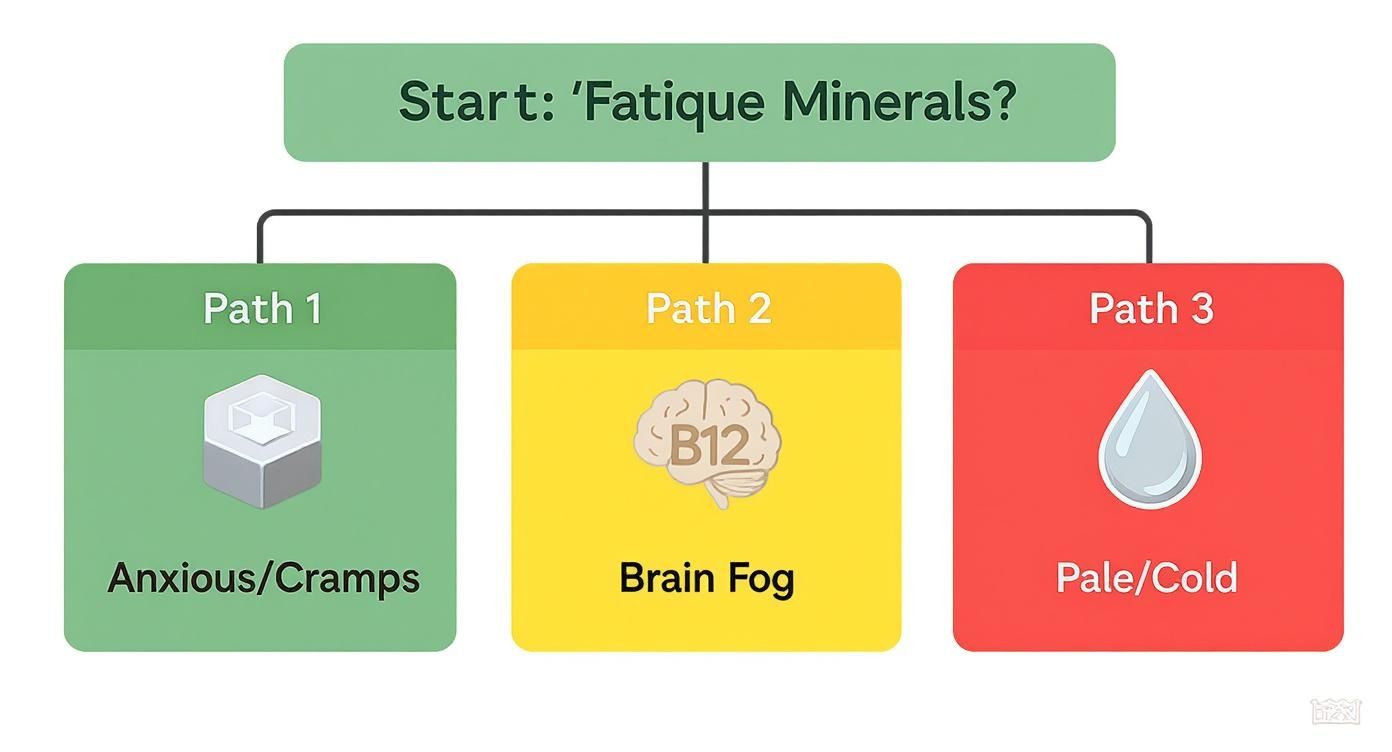
By paying attention to your unique signs—like anxiety suggesting a need for magnesium or brain fog pointing to B12—you can make a much smarter choice about which natural remedies for low energy to try first.
Common Questions About Natural Energy Boosters
Stepping into the world of natural energy support always brings up a few questions. That’s a good thing. Getting clear on the details helps you make smart choices that are right for your body and your goals. Let’s cover some of the most common ones.
How Long Until I Feel a Difference?
This is probably the number one question people ask, and the honest answer is: it depends. Natural remedies aren’t like flipping a switch the way a cup of coffee is. Patience and consistency are your best friends here.
Think of it in layers. Simple lifestyle shifts—like fixing your diet, drinking enough water, and prioritizing sleep—can start paying off in as little as one to two weeks. You might just notice you’re not hitting that 3 PM wall anymore or that you’re waking up feeling a bit more ready for the day.
Herbal remedies, especially adaptogens, play the long game. They aren’t stimulants; they work by helping your body find its own balance again. For herbs like Ashwagandha or Rhodiola, you’ll want to give them four to eight weeks of consistent, daily use to really feel their stabilizing effects on your stress and energy. The same goes for correcting a deep nutritional issue, like low iron—that can take several months.
Can I Combine Different Energy Supplements?
It’s tempting to throw a bunch of different supplements at the problem, hoping for a bigger, faster result. But that approach can backfire. Stacking multiple remedies, especially ones with stimulating properties, can easily lead to feeling anxious, overstimulated, or dealing with weird interactions.
The smartest and safest way forward is to introduce one new remedy at a time.
Give your body a few weeks to really get acquainted with a new supplement before you even think about adding another. This lets you clearly see how each one affects you. If you are considering a combination, it’s absolutely essential to talk to a healthcare professional first to make sure it’s a safe and effective plan.
Your body is always giving you feedback. When you introduce things one by one, you can actually hear what it’s saying. Stacking them all at once is like trying to listen to five different conversations—it just becomes noise.
Should I Be Cautious with Coffee?
Yes, absolutely. Caffeine is a powerful central nervous system stimulant, so you have to be mindful of how it plays with certain herbs. Mixing your daily coffee with other stimulating natural remedies is a fast track to feeling jittery and wired.
Here’s a quick guide for navigating this:
- Avoid Stacking Stimulants: Never combine caffeine with other energizing herbs like Panax Ginseng or higher doses of Rhodiola. It’s just too much.
- Start Low and Slow: If you’re a regular coffee drinker and want to try a stimulating herb, start with the absolute lowest dose to see how your body handles the combination.
- Pair with Calming Adaptogens: A much better strategy is to pair your coffee with a non-stimulating, calming adaptogen like Ashwagandha. It can help your body manage the stress response that caffeine sometimes aggravates, creating a smoother, more balanced energy.
At Keter Wellness, we believe in giving you both the knowledge and the high-quality tools you need for your wellness journey. If you’re looking to support your motivation and mental drive, you can explore our transparently sourced and standardized supplements.
Leave a Reply