
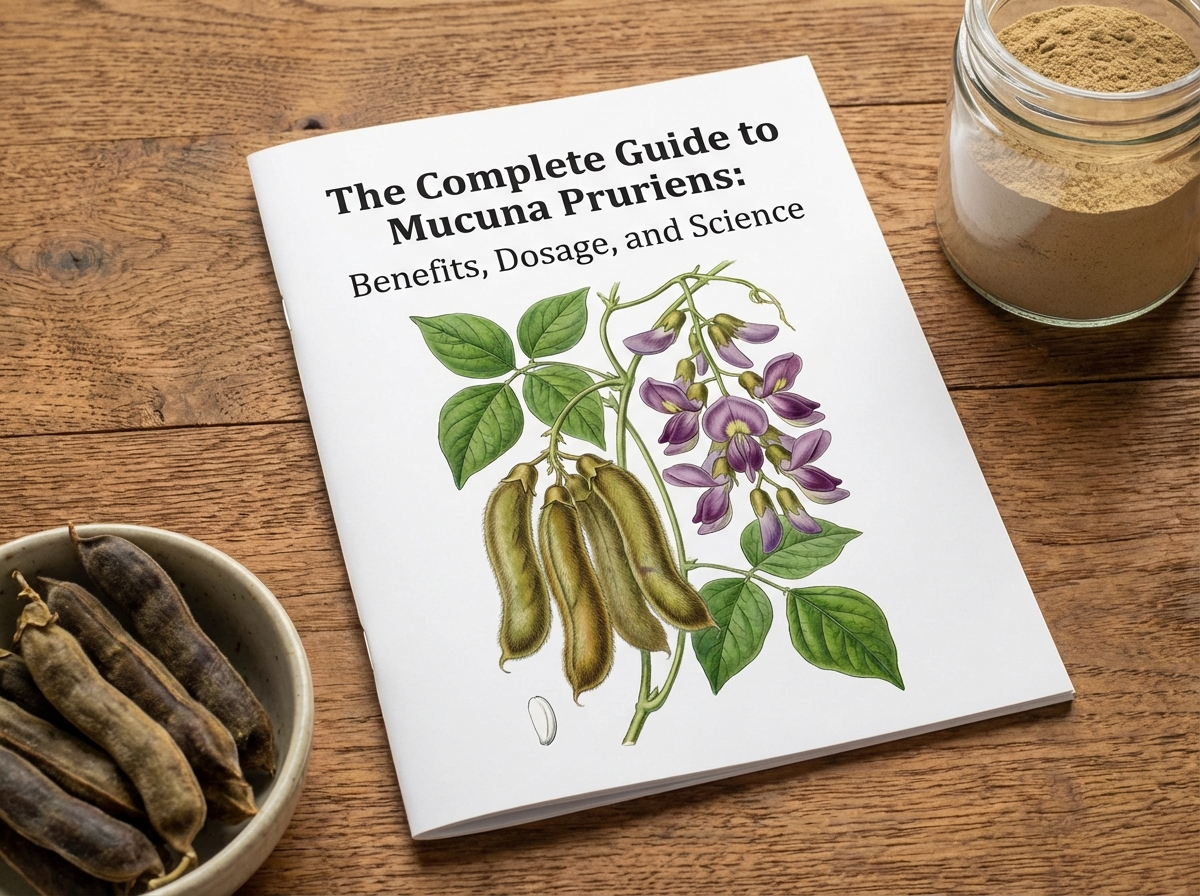
Quick Summary
- What it is: Mucuna pruriens (aka Velvet Bean) is a legume and natural source of L-DOPA, a direct precursor to dopamine.
- Primary Use: Supports mood, motivation, and focus by replenishing dopamine levels.
- Key Safety: Contains potent bioactive compounds. Not recommended for those on MAOIs, antipsychotics, or levodopa medication without medical supervision.
- Quality Marker: Look for standardized extracts (e.g., 15–20% L-DOPA) rather than raw root powder to ensure consistent dosing.
Do you ever feel like your “drive” is missing? You have the coffee, you have the sleep, but the motivation to get things done just isn’t there.
For many, this isn’t just fatigue—it’s a lack of dopamine, the brain’s “motivation molecule.”
While modern life depletes our dopamine reserves through stress and overstimulation, nature provides a solution that has been used for over 3,000 years. It’s called Mucuna Pruriens (or the Velvet Bean), and it is one of the only natural sources of L-Dopa, the direct precursor to dopamine.
In this complete guide, we will explore the science behind Mucuna, how it supports mood and focus, and why standardized extracts (like our Mucuna L-Dopa 20%) are superior to raw powders.
What is Mucuna Pruriens?

Mucuna pruriens is a tropical legume native to Africa and tropical Asia. In Ayurveda, the traditional medicine system of India, it is known as Kapikacchu.
Historically, it wasn’t just used for mood. Ancient texts describe it as a powerful tonic for:
- Nervous system restoration
- Reproductive health and libido
- Motor control and balance
Unlike other adaptogens that work vaguely on “stress,” Mucuna has a very specific mechanism of action: it feeds your brain the raw materials it needs to create joy and focus.
The Science: How L-Dopa Works in the Brain
To understand why Mucuna works, you have to understand the Blood-Brain Barrier.
You cannot simply “take dopamine.” If you consumed pure dopamine, it couldn’t cross the protective barrier into your brain. However, L-Dopa (Levodopa) can cross that barrier.
- You ingest Mucuna Pruriens, made of mucuna pruriens seeds, containing L-Dopa.
- L-Dopa travels through the bloodstream and crosses the blood-brain barrier.
- Once inside, the brain converts L-Dopa directly into Dopamine.
This increase in dopamine is what leads to the “Mucuna Effect”: a sense of calm, focused alertness without the jittery spike-and-crash associated with caffeine.
Top 4 Benefits of Mucuna Pruriens
1. Mood & Motivation (Strong Evidence):
Mucuna provides L-DOPA, which crosses the blood-brain barrier to synthesize dopamine. Human studies support its role in regulating cortisol and dopamine levels.
2. Male Reproductive Health (Strong Evidence):
Multiple human trials demonstrate improvements in sperm quality and testosterone levels in infertile men.
3. Stress Reduction (Moderate Evidence):
Studies suggest it may lower cortisol levels in chronically stressed individuals.
4. Focus & Cognition (Preliminary Evidence):
While dopamine is critical for focus, direct clinical trials on Mucuna for ADHD/focus specifically are limited but promising based on mechanism of action.
Raw Powder vs. Standardized Extract: Why It Matters

This is the most critical factor when choosing a supplement.
- Raw Powder: L-DOPA content varies wildly (3% to 7%). Unreliable dosing.
- Standardized Extract: Guarantees a specific percentage (e.g., Keter Wellness uses 20% L-DOPA). This ensures you get a functional dose without consuming excessive plant matter that can cause GI distress.
- Lab Testing: Always check for a Certificate of Analysis (COA) to verify potency and purity.
At Keter Wellness, we use a 20% Standardized Extract from the best sources of mucuna pruriens.
Is Keter Wellness mucuna pruriens powder organic?
While it is not certified organic, mucuna is grown naturally without the use of pesticides.
Why 20%?
We believe 20% is the “Goldilocks” ratio.
- 99% L-Dopa (Synthetic): Often too harsh and can cause rapid tolerance buildup.
- 3% Raw Powder: Too weak to notice significant cognitive benefits.
- 20% Extract: High enough to provide a potent boost for focus and mood, but retains the other beneficial phytonutrients of the whole plant for a balanced effect.
Ready to feel the difference? Shop our Lab-Tested Mucuna L-Dopa 20% here.
Recommended Dosage and Usage
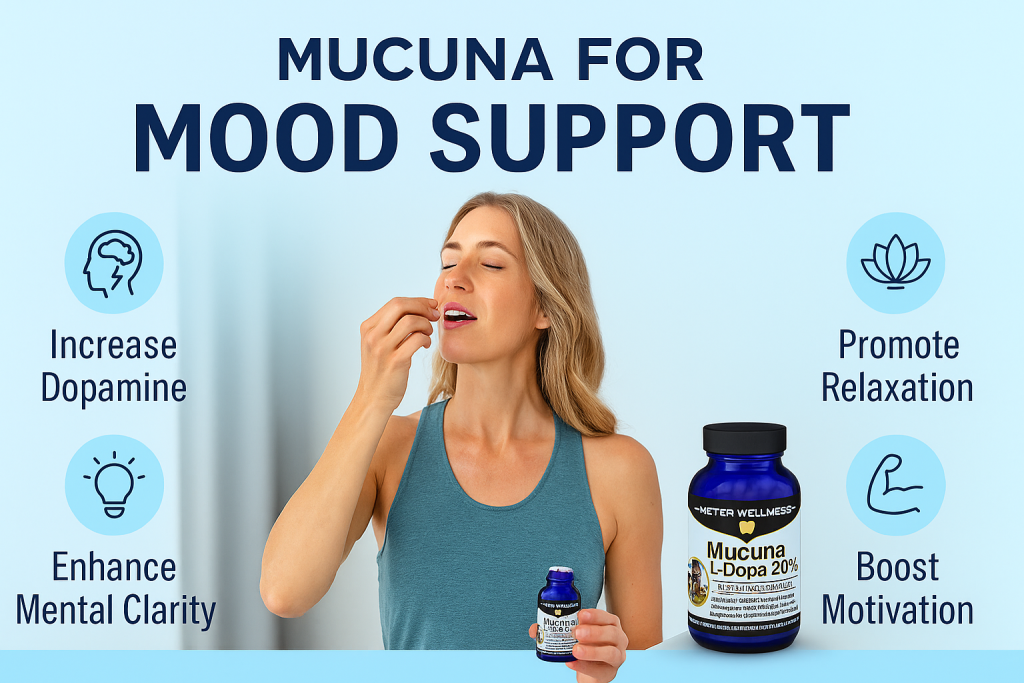
Because our extract is potent, we recommend starting slow.
- Starting Dose: 1 capsule (containing roughly 100mg-150mg of L-Dopa) per day.
- Best Time to Take: Morning or early afternoon. Because it increases alertness, avoid taking it right before bed.
- Cycling: To keep your dopamine receptors sensitive, many experts recommend cycling Mucuna.
- Example: 5 days on, 2 days off.
Note: Always consult your healthcare provider before starting a new supplement, especially if you are currently taking medication for mood or blood pressure.
Safety, Side Effects, and Interactions
Mucuna is generally well-tolerated, but it is a powerful bioactive herb.
- Contraindications: Do not use with MAOIs, antipsychotics, or during pregnancy.
- Interactions: May potentiate the effects of prescription Levodopa/Carbidopa.
- Common Side Effects: Nausea or upset stomach (often due to taking on an empty stomach or high dosage).
Frequently Asked Questions about Mucuna Pruriens
How long does it take for Mucuna pruriens to work?
Can I take Mucuna pruriens every day?
Is Mucuna pruriens the same as L-DOPA?
How much L-DOPA is in a standard dose of Mucuna?
What is the best time of day to take Mucuna pruriens?
Conclusion: Unlock Your Potential Naturally
You don’t have to rely on synthetic stimulants or sugar to get through your day. By supporting your brain’s natural dopamine production, you can reclaim your motivation and focus the way nature intended.
Experience the power of the Velvet Bean.
> Click here to buy Keter Wellness Mucuna L-Dopa 20%
Scientific References
- Lampariello LR, et al. The Magic Velvet Bean of Mucuna pruriens. Journal of Traditional and Complementary Medicine. 2012.
- Shukla KK, et al. Mucuna pruriens improves male fertility by its action on the hypothalamus-pituitary-gonadal axis. Fertility and Sterility. 2009.
Leave a Reply