

Feeling down is just part of being human, but you have more control over your mood than you might think. The real secret to boost mood naturally isn’t some grand gesture; it’s the small, consistent shifts you make every day. We’re talking about simple tweaks to your diet, daily movement, sleep habits, and even how you engage with the world around you.
Your Practical Guide to Naturally Lifting Your Spirits
When you’re stuck in a funk, the thought of making huge changes can feel completely overwhelming. But here’s the good news: you don’t have to. The goal is to build sustainable habits that create a solid foundation for better mental well-being, one small step at a time. This guide goes beyond feel-good platitudes to give you actionable, science-backed strategies you can start using today.
Forget quick fixes that don’t last. We’re focused on building resilience. By understanding the powerful connection between your body and your mind, you can take practical steps to feel better more consistently.
Building a Foundation for a Better Mood
The strategies we’re about to cover are designed to work together, creating a powerful ripple effect across your well-being. Think of it as building a personal toolkit for managing your emotional state. Small efforts in a few key areas can add up to significant improvements.
We’ll focus on four key pillars for a natural mood lift:
- Lifestyle Adjustments: We’ll dig into the undeniable impact of physical activity, sunlight, and quality sleep. These aren’t just suggestions; they are non-negotiables for a stable mood.
- Mindful Nutrition: You’ll learn how the food you eat directly fuels your brain chemistry and which specific nutrients are critical for keeping your emotions balanced.
- Stress Management: Discover practical techniques like mindfulness and gratitude that do more than just calm you down—they can actually rewire your brain for a more positive outlook.
- Targeted Support: We’ll explore how key neurotransmitters like dopamine drive your motivation and happiness. For a deeper dive, you can learn more about how to increase dopamine levels naturally in our detailed guide.
The most effective way to boost your mood is holistically. It’s not about one magic bullet, but about weaving multiple positive habits into the fabric of your daily life.
To give you a quick snapshot, here’s a look at the core strategies we’ll be covering in this guide. Think of this table as your go-to reference for simple, effective actions you can take right now.
At-a-Glance Guide to Natural Mood Boosters
| Strategy | Key Action | Primary Benefit |
|---|---|---|
| Lifestyle Habits | Get 15-30 minutes of daily sunlight and 20-30 minutes of moderate exercise. | Regulates circadian rhythm, boosts endorphins and serotonin. |
| Diet & Nutrients | Focus on whole foods rich in omega-3s, B vitamins, and magnesium. | Provides essential building blocks for neurotransmitters. |
| Stress Management | Practice daily mindfulness, meditation, or gratitude journaling. | Reduces cortisol and trains the brain for a positive focus. |
| Behavioral Habits | Engage in hobbies, social connection, and achieve small, meaningful goals. | Increases dopamine and provides a sense of purpose and reward. |
| Herbal Support | Consider standardized herbs like Mucuna pruriens for L-Dopa. | Offers targeted support for specific neurotransmitter pathways. |
Each of these points is a piece of the puzzle. By addressing them together, you create a powerful, self-reinforcing system that supports a brighter, more stable mood day in and day out.
A Roadmap to Feeling Better
This guide is your roadmap. Each section gives you clear, practical advice, helping you move from knowing to doing. We’ll look at the science behind why these methods work and offer real-world tips for fitting them into a busy schedule.
Whether it’s harnessing the power of a 20-minute walk in the park or understanding how your gut health influences your emotions, you’ll walk away with the knowledge to make better choices. By focusing on these core areas, you can build a more resilient and positive mindset, ready to handle whatever life throws your way.
Using Movement and Sunlight to Elevate Your Mood
When your mood needs a lift, two of the most powerful tools are often right outside your door: movement and sunlight. They’re foundational to our well-being for a reason—they directly influence your brain chemistry and internal body clock. Best of all, they are free, accessible, and can shift how you feel in just a few minutes.
Engaging in physical activity is like flipping a switch in your brain. You’ve probably heard of the “runner’s high,” which is a perfect example. When you get your body moving, your brain releases endorphins, natural chemicals that act as painkillers and mood elevators.
At the same time, exercise helps lower cortisol, the body’s main stress hormone. This one-two punch—boosting feel-good chemicals while dialing down stress—makes movement a potent strategy for feeling better, fast.
Weaving More Movement Into a Busy Schedule
I get it. The idea of starting an exercise routine can feel completely overwhelming, especially when your energy is already low. The trick is to rethink what “exercise” even means. It doesn’t have to be a punishing hour-long session at the gym to make a real difference.
Short bursts of activity scattered throughout your day can be just as beneficial. The real goal is consistency, not intensity.
Here are a few practical ways to get started:
- The 10-Minute Walk: Just commit to a single, brisk 10-minute walk once a day. Do it on your lunch break, first thing in the morning, or after dinner. It’s a small promise to yourself with a huge payoff.
- “Exercise Snacking”: Instead of one big workout, sprinkle short “snacks” of movement into your day. This could be a set of squats while your coffee brews, a few minutes of stretching between meetings, or just always taking the stairs.
- Find What Feels Good: Choose an activity you genuinely enjoy. If you hate running, don’t force it. Try dancing in your living room, hiking a local trail, or digging in the garden. When movement is fun, it becomes a reward, not a chore.
The science is crystal clear on this: physical activity creates significant, dose-dependent improvements in mood. Research shows that even a single session of 10 to 30 minutes of brisk walking can spark an immediate increase in positive feelings. Long-term, meeting physical activity guidelines—around 150 minutes of moderate activity per week—is linked to a 20–30% lower risk of developing depression. You can explore more findings on the powerful link between movement and health on the American Heart Association’s website.
This infographic really drives home how movement, nature, and nutrition are the three core pillars of natural mood enhancement.
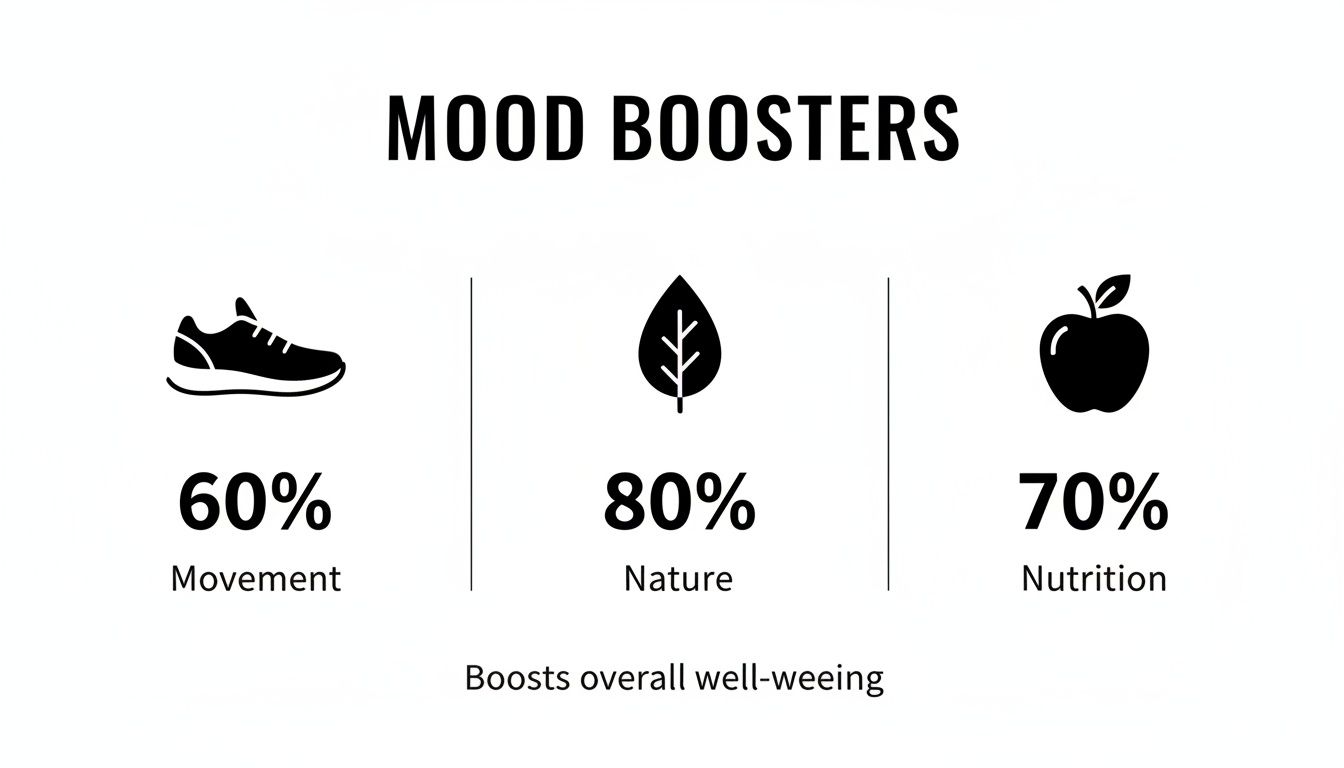
As you can see, they all work together, each one playing a crucial role in supporting your overall well-being.
Harnessing the Power of Sunlight
Just like movement, sunlight has a profound and direct impact on your mood. Exposure to natural light helps your brain produce serotonin, a key neurotransmitter that contributes to feelings of happiness and calm. Low serotonin levels are often linked to mood disorders, which is why getting enough sun is so vital.
Sunlight also plays a critical role in regulating your circadian rhythm—your body’s internal 24-hour clock. This internal clock governs your sleep-wake cycle, hormone release, and other essential functions.
Getting sunlight first thing in the morning is particularly effective. It sends a strong signal to your brain to stop producing melatonin (the sleep hormone) and “wake up” your internal systems, leading to better alertness and an improved mood all day long.
Even on cloudy days, the natural light outdoors is far more powerful than any indoor lighting. Aiming for just 15-20 minutes of unfiltered sun exposure can make a huge difference.
Creating a Practical Mood-Boosting Routine
The real magic happens when you combine movement and sunlight. By taking your exercise outdoors, you get the benefits of both at once, amplifying the positive effects.
Here’s a simple routine to try:
- Morning Sunlight Walk: Start your day with a 15-minute walk outside. This not only gets your body moving but also sets your circadian rhythm for the day, boosting both energy and mood.
- Lunchtime Reset: Use part of your lunch break to step away from your screen and get some fresh air. Even a quick walk around the block can help clear your head and fight off that afternoon slump.
- Weekend Nature Immersion: Plan a longer outdoor activity on the weekends. Think a hike, a bike ride, or a trip to a park. This gives you a deeper dose of nature and movement to help reset your entire system.
By intentionally weaving these two simple elements into your daily life, you are actively managing your own brain chemistry. You’re building a strong foundation for a more stable, positive mood—and it’s one of the most direct ways to take back control of your emotional well-being.
How Spending Time in Nature Rewires Your Brain
We all know that getting outside feels good, but there’s a lot more going on than just fresh air and sunshine. When we immerse ourselves in the natural world, something powerful happens in our brains—a psychological reset that scientists sometimes call ‘ecotherapy.’
It’s a simple concept: direct contact with green and blue spaces (parks, forests, lakes) acts as a natural remedy for our overstimulated modern minds. It quiets the constant mental chatter and restores a sense of calm.

The moment you step into a natural environment, your brain chemistry begins to shift. One of the first things to change is your level of cortisol, the body’s primary stress hormone. Since high cortisol is a well-known contributor to anxiety and low mood, this gives us a direct physiological pathway to feeling more relaxed.
This isn’t just a vague feeling; it’s a measurable biological response. Studies have shown that even a short 20-minute walk in a park can significantly lower cortisol levels. It’s an incredibly effective tool for de-stressing after a tough day.
Quieting Negative Thought Loops
Ever get stuck in a mental loop, replaying a negative thought over and over? That’s called rumination, and it’s a hallmark of a low mood. Nature offers a powerful antidote through something called “soft fascination.”
Unlike the demanding focus of city life (watching for traffic, navigating crowds), nature captures our attention gently and involuntarily. The rustling of leaves, the sound of a stream, or the sight of a bird in flight engages our minds without draining them.
This process gives our prefrontal cortex—the part of the brain that handles intense focus and problem-solving—a much-needed break. It interrupts the cycle of rumination, allowing our minds to reset and find a more positive footing.
The restorative power of nature isn’t just about escaping the city; it’s about giving your brain the specific sensory input it needs to quiet down, recover from mental fatigue, and break free from negative thought patterns.
The evidence backing this up is compelling. A massive UK study of nearly 500,000 adults found that people who spent more time outdoors had a lower risk of depression, used fewer antidepressants, and reported greater happiness. This link held true even after accounting for other lifestyle factors.
The takeaway? Even small, incremental increases—like adding an extra 30 to 60 minutes of outdoor time to your day—can produce real, measurable improvements in your well-being. You can dive deeper into the research on how natural light and green spaces boost mood on UCLA Health’s website.
Making Nature a Part of Your Daily Life
You don’t need to plan an elaborate wilderness trip to reap these benefits. Small, consistent doses of nature can have a huge impact, especially for those of us living in busy urban areas. The key is to be intentional about it.
Here are a few practical ways to get started:
- Find Your Local Green Oasis: Pull up a map and look for nearby parks, community gardens, or tree-lined walking paths. You might be surprised to find pockets of nature you never knew existed just a few blocks away.
- Schedule “Green Time”: Treat it like an important appointment. Block out 20-30 minutes on your calendar a few times a week for a walk in the park or to just sit by a local pond.
- Bring the Outdoors In: If getting outside is a challenge, you can still get some of the benefits. Start a small herb garden on your windowsill, buy a few low-maintenance houseplants, or even play nature sounds like rain or birdsong.
- Practice Mindful Observation: When you are outside, consciously engage your senses. Notice the different shades of green, feel the texture of a leaf, listen to the world around you. This simple mindfulness exercise deepens the restorative effect.
The goal is to stop seeing nature as a destination and start seeing it as an essential part of your daily toolkit. That short walk through a park on your lunch break can be far more restorative than scrolling through your phone, offering a genuine mental reset that leaves you feeling calmer, more focused, and emotionally lighter. Start small, be consistent, and let nature work its magic.
Fueling Your Mind with Mood-Enhancing Nutrition
You’ve probably heard the saying “you are what you eat,” and when it comes to mood, it’s the absolute truth. The food on your plate provides the raw materials for neurotransmitters—the chemical messengers like serotonin and dopamine that dictate how you feel from one moment to the next. Making a few intentional shifts in your diet is one of the most powerful ways to support your mood from the inside out.

This connection starts in a surprising place: your gut. Often called the “second brain,” your gut is where a staggering 95% of your body’s serotonin is made. That makes gut health a non-negotiable part of managing your mood. When you nourish your gut, you’re directly fueling a brighter brain.
Key Nutrients for a Brighter Outlook
While a balanced diet is always the goal, some nutrients are true superstars when it comes to mood regulation. Focusing on foods rich in these compounds gives your brain targeted support. It’s not about being perfect, but about consistently giving your mind the fuel it needs to function at its best.
Three of the heaviest hitters for mental well-being are:
- Omega-3 Fatty Acids: These are critical components of your brain cell membranes. They help keep inflammation in check and are essential for neurotransmitter function.
- B Vitamins: This group—especially B6, B9 (folate), and B12—is vital for producing energy and synthesizing mood-lifting chemicals like dopamine and serotonin.
- Magnesium: This mineral is a workhorse, involved in over 300 biochemical reactions, including many that help calm the nervous system and ease feelings of anxiety.
Getting more of these into your diet is simpler than it sounds.
| Nutrient | Top Food Sources | Simple Meal Idea |
|---|---|---|
| Omega-3s | Salmon, walnuts, chia seeds, flaxseeds | Toss a tablespoon of ground flaxseed into your morning oatmeal or smoothie. |
| B Vitamins | Leafy greens, eggs, legumes, avocados | Build a lunch salad with spinach, chickpeas, avocado, and a hard-boiled egg. |
| Magnesium | Dark chocolate, almonds, pumpkin seeds, bananas | Grab a handful of almonds and a square of dark chocolate for an afternoon snack. |
By deliberately adding these whole foods, you’ll naturally have less room for the processed options that can cause mood swings and energy crashes.
The Power of Probiotics for Your Gut-Brain Axis
Beyond specific nutrients, the health of your gut microbiome—the trillions of bacteria living in your digestive tract—is directly wired to your emotional state. A healthy gut communicates with the brain, influencing everything from how you handle stress to your overall mood. This is where probiotics and prebiotics enter the picture.
Probiotics are the good bacteria found in fermented foods, while prebiotics are the fibers that feed those good bacteria. You need both.
To give your gut microbiome a boost, try adding these:
- Probiotic-Rich Foods: Yogurt (with live cultures), kefir, sauerkraut, kimchi, and miso.
- Prebiotic-Rich Foods: Garlic, onions, bananas, oats, and asparagus.
A simple daily habit like having a small bowl of plain Greek yogurt with berries can provide both probiotics and prebiotics, nurturing your gut-brain connection effortlessly.
Emerging research backs this up, showing that dietary changes and probiotic use can lead to measurable improvements in mood. If you want to dig into the science, you can explore studies on how nutraceuticals and probiotics improve mood on the National Center for Biotechnology Information’s website.
Adopting a Mood-Supportive Eating Pattern
Instead of getting hung up on single “superfoods,” it’s more sustainable and effective to adopt a broad eating pattern. The Mediterranean diet, for example, is consistently linked with better mental health. It’s less of a restrictive diet and more of a lifestyle centered on whole, nutrient-dense foods.
The core principles are straightforward:
- Prioritize Plants: Fill your plate with a rainbow of vegetables, fruits, whole grains, and legumes.
- Choose Healthy Fats: Make olive oil your go-to and include nuts, seeds, and avocados.
- Incorporate Lean Protein: Aim for fish and poultry a few times a week, and limit red meat.
- Enjoy Fermented Foods: Regularly include sources of probiotics like yogurt and kefir.
This way of eating naturally covers all the key nutrients your brain needs while supporting a healthy gut. It’s a realistic approach to fueling your mind for the long haul.
And if you’re curious about targeted support beyond diet, our complete guide about Mucuna pruriens is a great next step. By making these thoughtful nutritional shifts, you are taking a powerful, proactive step toward a brighter, more stable mood.
Building a Resilient Mindset with Daily Habits
While what you eat and how you move are foundational, the daily habits you build inside your mind are just as powerful for creating long-term emotional well-being. This is where we shift focus from the body to the brain, exploring simple, practical techniques that can reshape your entire emotional landscape.
Building a resilient mindset isn’t about pretending negative feelings don’t exist. It’s about having the right tools in your pocket to navigate them effectively when they show up.
This all comes down to neuroplasticity—your brain’s incredible ability to physically rewire itself based on what you think and do. By consistently practicing certain mental habits, you can literally strengthen the neural pathways for calm, positivity, and resilience. It gives you a direct line to influence how you feel and react to whatever life throws your way.
Cultivating Mindfulness and Presence
One of the most effective ways to start reshaping your mindset is through mindfulness. It’s simply the practice of paying attention to the present moment without judging it.
When you’re feeling low, your mind is often stuck ruminating on the past or worrying about the future. Mindfulness is the anchor that brings you back to the here and now.
This simple practice helps you become an observer of your thoughts instead of a victim to them. You learn to notice a negative thought, acknowledge it without getting tangled up in it, and just let it pass. That tiny bit of space between a feeling and your reaction to it is where you get your sense of control back.
Mindfulness is not about emptying your mind. It’s about being fully present with whatever is happening—good or bad—which reduces the power of negative thoughts and grounds you in reality.
Getting started can be as simple as focusing on your breath for just two minutes. If you’re looking for a more structured approach, it helps to learn about the different techniques. For anyone interested in going a bit deeper, this guide on what meditation is all about is a great starting point for beginners.
The Power of a Gratitude Practice
When your mood is low, your brain’s default setting is to scan for what’s wrong. A gratitude practice is the perfect counter-habit. It actively retrains your brain to look for what’s right. This simple shift in focus can change your entire emotional baseline over time.
Keeping a gratitude journal is a fantastic way to make this habit stick. Every day, just jot down three to five specific things you’re grateful for.
- Be Specific: Instead of “I’m grateful for my family,” try “I’m grateful my sister sent me that funny text this morning that made me laugh out loud.” Specifics have more impact.
- Focus on People: Expressing gratitude for the people in your life tends to deliver a stronger emotional punch than focusing on possessions.
- Notice the Small Things: Did you really enjoy that first sip of coffee? Was there a quiet moment in an otherwise hectic day? These little joys are surprisingly powerful.
This isn’t about toxic positivity. It’s about intentionally balancing your brain’s natural negativity bias by acknowledging the good that’s already in your life.
Prioritizing Restorative Sleep
Sleep is the ultimate reset button for your brain and mood. It’s during deep sleep that your brain cleans house—consolidating memories, clearing out metabolic waste, and processing emotions.
When you skimp on quality sleep, the emotional regulation centers in your brain go haywire. This makes you far more prone to irritability, anxiety, and low moods. Improving your sleep hygiene—the habits surrounding your bedtime—is one of the highest-impact things you can do for your mental health.
- Stick to a Schedule: Try to go to bed and wake up around the same time every day, even on weekends. This is key for regulating your body’s internal clock.
- Create a Wind-Down Routine: In the hour before bed, disconnect from screens. Read a book, take a warm bath, or listen to some calming music. Signal to your brain that it’s time to power down.
- Optimize Your Environment: A dark, quiet, and cool bedroom is the ideal setup for deep, restorative sleep.
Treat sleep as a non-negotiable appointment in your daily schedule. Your mood will thank you for it.
Nurturing Social Connections
As humans, we are wired for connection. Meaningful relationships are a cornerstone of long-term happiness and act as a powerful buffer against stress and low moods.
When you feel down, the natural instinct is often to withdraw, but that usually just makes things worse. Making a conscious effort to connect with others—even when you don’t feel like it—can give you a significant lift.
This doesn’t have to mean big social events. It can be as simple as a quick phone call to a friend, grabbing lunch with a coworker, or joining a local group that shares one of your interests.
Every positive social interaction reinforces a sense of belonging and gives your brain the cues it needs to feel safe and secure. It’s a critical habit for building a truly resilient mind.
Your Questions, Answered
When you start making changes to boost your mood naturally, a few practical questions almost always come up. How long will this take? Should I do everything at once? And what if it’s not enough? Let’s clear those up so you can move forward with confidence.
So, how long until you actually feel a difference? It really depends. Some things give you an almost instant lift—think of a brisk walk in the sunshine. The endorphin and serotonin release can brighten your perspective in minutes.
But for the deeper, more foundational shifts, consistency is everything. If you’re overhauling your diet or building a new exercise habit, you’ll probably start noticing small improvements within a week or two. The real, lasting changes to your baseline mood usually become clear after 4-8 weeks of sticking with it.
Should I Combine Strategies?
Absolutely. In fact, that’s where the magic really happens. These strategies aren’t isolated fixes; they’re designed to work together, creating a powerful synergistic effect that supports your whole system.
Think of it like this:
- Movement + Nature: Taking your exercise outside combines a workout with sunlight exposure and the calming effects of being in a green space.
- Nutrition + Energy: Eating well gives your body the fuel it needs for exercise and keeps your blood sugar stable, heading off those mood-crashing slumps.
- Sleep + Mindset: A good night’s sleep literally resets your brain, making it far easier to manage stress and practice mindfulness the next day.
The best way to start is small. Don’t try to change everything overnight. Pick one or two new habits that feel manageable, like a 10-minute daily walk and adding a serving of leafy greens to your dinner. Once those feel automatic, you can build from there.
When Natural Methods Aren’t Enough
It’s also really important to be honest about the limits of lifestyle changes. These natural strategies are fantastic for managing day-to-day mood fluctuations and building emotional resilience. They are not, however, a substitute for professional medical care if you’re dealing with something more serious.
If you’ve been feeling down, have lost interest in things you used to enjoy, or are experiencing other symptoms of depression for more than two weeks, please talk to a healthcare provider. A doctor or mental health professional can give you a proper diagnosis and create a treatment plan that’s right for you. This might include therapy, medication, or other support alongside the natural approaches we’ve discussed.
Reaching out for help is a sign of strength, not weakness.
At Keter Wellness, we believe in supporting your well-being with high-quality, plant-based solutions. Our standardized herbal supplements are designed to complement a healthy lifestyle and provide targeted support for your mood and vitality. Explore our transparent, filler-free formulations at /.
Leave a Reply