

Feeling unmotivated or just plain stuck in a mental fog? The answer might lie in dopamine, your brain’s “feel-good” and “get-it-done” chemical. By learning how to increase dopamine levels naturally, you can make simple tweaks to your diet, exercise, and daily habits that pay huge dividends for your mood, focus, and drive.
Your Practical Guide to Boosting Dopamine
When you’re hit with that sense of “blah” or find it hard to get going, it could be a sign that your brain’s reward system is running a bit low on dopamine. This powerful neurotransmitter does more than just signal pleasure; it’s the very engine behind your motivation, your ability to focus, and the satisfaction you get from achieving things, big or small.
Learning how to support your body’s natural dopamine production is the first real step toward getting your mental energy back.
This guide is all about actionable, science-backed strategies—no quick fixes here. We’re focusing on sustainable lifestyle changes that support your brain for the long haul. Forget complicated protocols. These are straightforward adjustments you can start weaving into your life today.
What You Will Learn
This article breaks down the most effective ways to give your dopamine system the support it needs. We’ll cover:
- Nutritional Strategies: Find out which foods are the building blocks for dopamine and, just as importantly, which ones might be getting in your way.
- The Power of Movement: Learn how everything from a brisk walk to an intense workout can trigger both an immediate and lasting dopamine release.
- Mindful Habits: We’ll explore how simple practices like meditation, quality sleep, and even getting some sun can help rewire your brain for a more balanced mood.
- Responsible Supplementation: Get an evidence-based look at supplements that can support dopamine, including when to consider them and why talking to a pro is non-negotiable.
Our goal is to give you a clear roadmap. To get you started, the table below gives you a snapshot of the core methods we’re about to dive into. It’s a simple way to see where you can make the biggest impact on your well-being right away.
Dopamine isn’t just about feeling good; it’s about having the motivation to pursue the things that make you feel good. By supporting its natural production, you are actively investing in your own drive, focus, and vitality.
Core Strategies for a Natural Dopamine Boost
Here’s a quick overview of the most effective methods for naturally increasing dopamine. Think of this as your cheat sheet, showing the primary benefits of each strategy and a simple, concrete action to get you started.
| Strategy | Primary Benefit | Example Action |
|---|---|---|
| Tyrosine-Rich Diet | Provides essential building blocks for dopamine synthesis. | Add a handful of almonds or half an avocado to your lunch. |
| Consistent Exercise | Triggers immediate dopamine release and strengthens reward pathways. | Take a brisk 20-minute walk during your lunch break. |
| Quality Sleep | Resets and sensitizes dopamine receptors for better function. | Set a consistent bedtime and avoid screens an hour before. |
| Sunlight Exposure | Increases dopamine receptor density, improving brain sensitivity. | Spend 15 minutes outside in the morning without sunglasses. |
| Mindfulness & Meditation | Stimulates dopamine production and enhances internal reward signals. | Try a 5-minute guided meditation using a free app. |
Fueling Your Brain for Dopamine Production
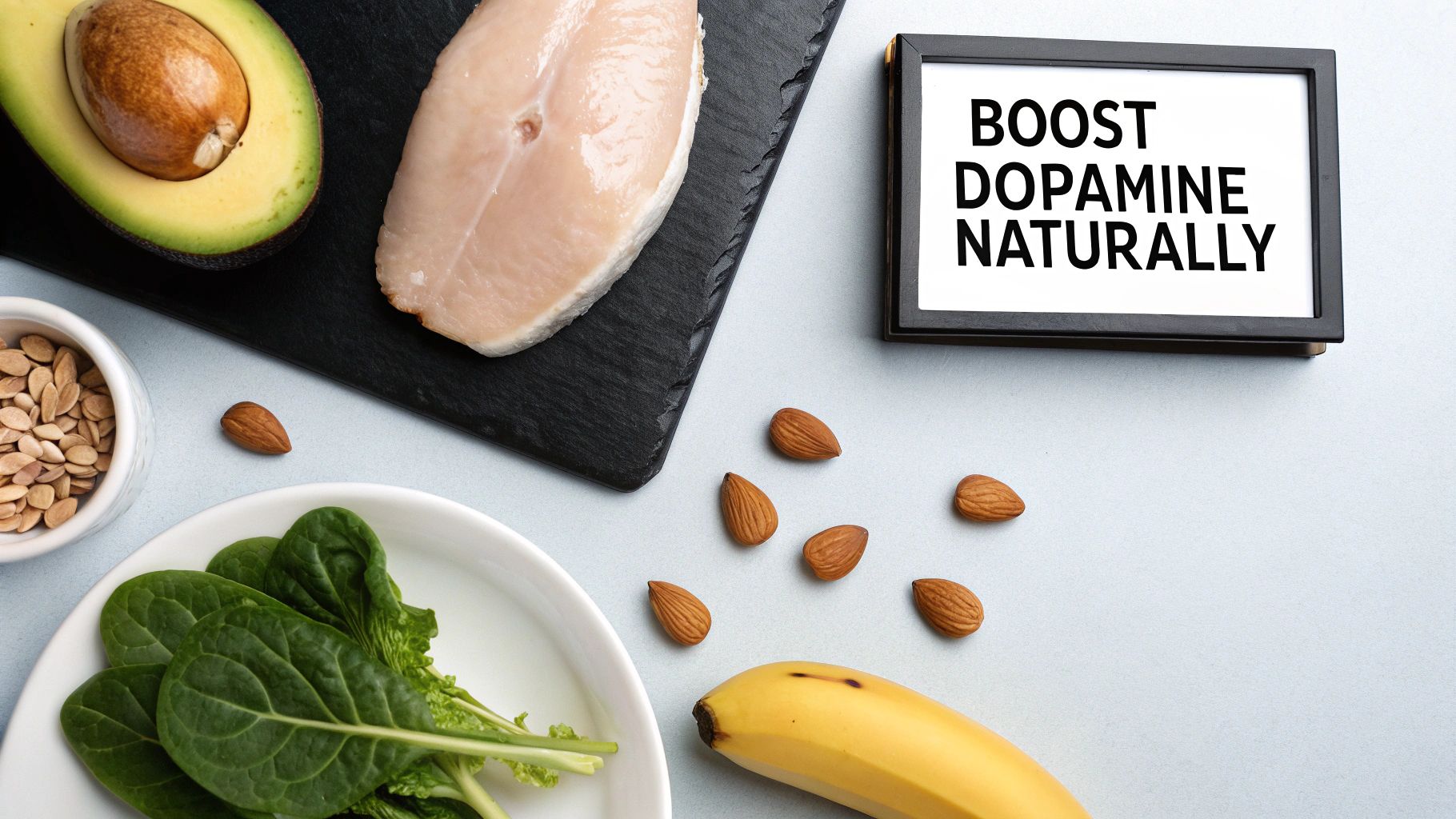
Your brain doesn’t create dopamine out of thin air. It’s a biochemical factory that depends entirely on the raw materials you feed it. The food you eat has a direct line to your mood, motivation, and mental clarity because it supplies the very building blocks for this crucial neurotransmitter.
At the heart of this whole process is an amino acid called L-tyrosine. This is the non-negotiable precursor to dopamine. If you don’t have enough tyrosine on hand, your brain simply can’t manufacture enough of this feel-good chemical. The result? You feel flat, foggy, and unmotivated.
The Power of Tyrosine-Rich Foods
Making sure your diet is packed with tyrosine-rich foods is the single most direct way to support your brain’s dopamine factory. Think of it as stocking the shelves so production never has to slow down.
Foods high in this essential amino acid are your best friends here. Good sources include lean proteins like chicken and turkey, dairy products, avocados, bananas, nuts, and seeds. You can get a deeper look into dopamine and its precursors in this helpful guide on dopamine from Healthdirect Australia.
Here’s how to make this practical without overhauling your entire life:
- Lean Proteins: A grilled chicken breast or a serving of fish gives you a powerful dose of tyrosine.
- Nuts and Seeds: A handful of almonds or pumpkin seeds makes for a perfect brain-fueling snack.
- Dairy & Plant-Based Options: Greek yogurt, cottage cheese, tofu, and edamame are all excellent sources.
- Fruits and Veggies: Avocados and bananas are particularly well-known for their tyrosine content.
This isn’t about some restrictive diet. It’s about smart additions. Adding avocado to your morning toast or swapping chips for a handful of almonds are small changes that make a real difference over time.
Just as a builder needs bricks to construct a house, your brain needs L-tyrosine to build dopamine. Consistently supplying these building blocks is fundamental to maintaining a healthy mood and strong motivation.
Essential Supporting Nutrients
While L-tyrosine is the star of the show, it doesn’t work alone. A whole team of supporting nutrients ensures the entire dopamine system runs smoothly. They protect your brain cells and help with the chemical conversions needed to turn that tyrosine into usable dopamine.
These supporting players are just as critical for long-term brain health and are key to learning how to increase dopamine levels naturally in a way that actually lasts.
Key Dopamine-Supporting Nutrients
| Nutrient | Role in Dopamine System | Common Food Sources |
|---|---|---|
| Omega-3 Fatty Acids | Protects dopamine-producing neurons and improves receptor sensitivity. | Fatty fish (salmon, mackerel), walnuts, chia seeds, flaxseeds. |
| Vitamin D | Regulates enzymes involved in dopamine synthesis. | Sunlight exposure, fortified milk, fatty fish, egg yolks. |
| Antioxidants | Shield brain cells from oxidative stress and damage. | Berries, dark chocolate, leafy greens, turmeric. |
| B Vitamins (B6, B9) | Act as cofactors, helping convert L-tyrosine into dopamine. | Chickpeas, liver, leafy greens, fortified cereals. |
Loading up on these nutrients creates a robust internal environment where your dopamine pathways can truly thrive. For instance, curcumin—the active compound in turmeric—is a potent antioxidant known to help protect dopaminergic neurons.
Foods That Can Sabotage Your Dopamine
Just as some foods build your dopamine system up, others can tear it right back down. A diet heavy in processed foods, sugar, and saturated fats is notorious for disrupting dopamine signaling and locking you into a nasty cycle of cravings and crashes.
When you eat a lot of sugar, you get a quick, artificial dopamine spike. It feels great for a minute, but your brain is smart. It quickly downregulates, reducing the number of dopamine receptors to protect itself from being overstimulated.
This blunts your entire reward system. Soon, you need more and more sugar to get that same feeling, and everyday pleasures start to seem less rewarding. Your natural dopamine production feels like it’s not enough, leaving you sluggish and constantly searching for that next quick fix. Cutting back on processed snacks, sugary drinks, and high-fat foods isn’t just about physical health—it’s about protecting your brain’s natural ability to feel motivated and joyful.
The Powerful Link Between Movement and Mood
If you’re looking for one of the most reliable and immediate ways to boost your mood and motivation, look no further than physical activity. It’s one of the simplest answers to the question of how to increase dopamine levels naturally. The connection between body and brain is profound, and exercise is a direct line to your brain’s reward centers.
That uplifting feeling you get after a brisk walk or a good workout isn’t just a placebo effect—it’s your neurochemistry at work. When you move, your brain responds by releasing a cascade of neurotransmitters, with dopamine playing a starring role. The result is an almost instant improvement in mental clarity and mood.

Find Your Dopamine-Boosting Rhythm
Here’s the best part: you don’t need to run a marathon to feel the benefits. The real key is consistency and finding a form of movement you genuinely enjoy. When an activity feels like a reward instead of a chore, you’re far more likely to stick with it, creating a powerful positive feedback loop for your brain.
Consider these different approaches to find what works for you:
- Moderate Aerobic Activity: Think of anything that gets your heart rate up but still lets you hold a conversation. This could be a brisk walk, a steady bike ride, swimming, or even just dancing around your living room.
- High-Intensity Interval Training (HIIT): If you’re short on time, HIIT is incredibly effective. It involves short bursts of all-out effort followed by brief recovery periods, which can trigger a significant dopamine response.
- Mindful Movement: Practices like yoga and tai chi connect your body and mind. They not only boost dopamine but also help reduce cortisol—the stress hormone that can get in the way of healthy dopamine signaling.
This isn’t about forcing yourself into a grueling routine you dread. The goal is to make movement a sustainable and enjoyable part of your life. Even a simple 20-minute walk on your lunch break can be enough to shift your entire mental state for the rest of the day.
Exercise isn’t just about changing your body; it’s one of the most effective ways to change your brain. Each workout is an investment in your mental well-being, strengthening the very pathways that drive motivation and joy.
The Science of a Consistent Routine
While a single workout provides a temporary lift, the real magic happens when you make it a habit. Consistent exercise doesn’t just trigger a short-term dopamine release; it actually remodels your brain’s reward system for the better over time.
Regular physical activity can increase the density of dopamine receptors in your brain. Think of it like adding more docking stations for dopamine to land. This makes your brain more sensitive and efficient at using the dopamine it already has, leading to more stable moods and sustained motivation.
In fact, exercise is one of the most scientifically-backed methods for naturally increasing dopamine. Studies show that when people commit to a regular routine, the benefits extend far beyond an immediate mood lift. The dopamine release from exercise not only improves mood but also leads to measurable improvements in memory and overall brain function. You can explore more about the connection between exercise and dopamine on MHA National.
Make Movement Work for You
Integrating exercise into a busy schedule can feel like a huge task, but small, strategic steps make all the difference. The trick is to lower the barrier to entry so much that it feels easy to say yes.
Here are a few practical tips to get started:
- Start Small and Build Momentum. Forget the hour-long gym session for now. Just aim for 10-15 minutes a day. Once that feels like a solid habit, you can gradually increase the time or intensity. The initial goal is consistency, not perfection.
- Schedule It Like an Appointment. Block out time in your calendar for your walk or yoga session. When you treat it with the same importance as a meeting, you’re far more likely to follow through.
- Find a Partner. Accountability can be a powerful motivator. Team up with a friend for morning walks or weekend hikes. The social connection provides an extra layer of reward, further reinforcing the habit.
By embracing movement in a way that feels good to you, you’re not just exercising your body—you’re actively training your brain to be more resilient, focused, and motivated.
Mindful Practices for Your Brain’s Reward System
Boosting dopamine isn’t just about what you eat or how you move—your daily habits and mindset are just as crucial. Things like meditation, good sleep, and even a little sunshine can actively rewire your brain for a more balanced mood.
These aren’t complicated routines you have to shoehorn into a busy life. Instead, think of them as small, intentional shifts that support your brain’s natural chemistry, helping you find motivation and satisfaction in the everyday.
Start a Mindful Meditation Practice
Meditation is known for stress reduction, but its benefits go much deeper, right down to your brain’s neurochemistry. By training your attention, you can stimulate your internal reward system and learn how to increase dopamine levels without needing any external triggers.
The practice works by creating a focused, calm state that leads to real, measurable changes in your brain. And if you’re new to this, meditation isn’t about emptying your mind; it’s about observing your thoughts without getting caught up in them.
Research shows that certain types of meditation can actually increase dopamine production. Studies suggest daily sessions of around 20-30 minutes can create positive effects that linger long after you’re done.
Prioritize Deep, Restorative Sleep
Sleep is the non-negotiable reset button for your brain. During deep sleep, your brain clears out metabolic waste and, importantly, resets its dopamine receptors. This process is essential for keeping you sensitive to dopamine, making sure the dopamine you do produce has a real impact.
When you’re sleep-deprived, your dopamine receptors become sluggish. That’s why a bad night’s sleep often leads to a morning of brain fog, low motivation, and a desperate need for coffee just to feel human.
Think of your dopamine receptors like charging ports. Without a full night of sleep, those ports don’t work right. You can have plenty of dopamine available, but if it can’t “plug in,” you won’t feel its motivating effects.
Creating a consistent sleep schedule is one of the most powerful things you can do. Aiming for 7-9 hours of quality sleep gives your brain the time it needs to restore its reward system for the day ahead.
Get Some Morning Sunlight
Something as simple as getting outside in the morning can have a huge impact on your dopamine. Exposure to natural sunlight, especially early in the day, has been shown to increase the density of dopamine receptors in your brain.
You don’t need to bake for hours. Just 15-20 minutes of morning sunlight—without sunglasses, if you can—helps regulate your internal clock and improves your brain’s ability to use dopamine effectively.
- Try a morning walk: Start your day with a short walk to combine light exposure with gentle movement.
- Work near a window: If you’re indoors, setting up your desk by a window maximizes your natural light exposure.
- Take lunch outside: A midday dose of sun can help you beat the afternoon slump.
Create Dopamine Through Small Wins and Novelty
Your brain is wired to release dopamine when you experience a reward or something new. You can use this to your advantage by intentionally setting up small, achievable wins throughout your day.
Instead of staring at a massive, intimidating project, break it down into smaller, manageable tasks. Every time you check an item off your to-do list, your brain gives you a little hit of dopamine. This fuels your motivation to tackle the next small step.
Introducing novelty also gets the reward system going. It doesn’t have to be a grand adventure. Simple changes are surprisingly effective:
- Try a new recipe for dinner.
- Take a different route on your daily walk.
- Listen to a new type of music.
These little acts of exploration and accomplishment create a positive feedback loop. You’re essentially teaching your brain that effort leads to reward, making it easier to stay motivated over the long haul.
A Cautious Guide to Dopamine Supplements
While lifestyle changes are the safest and most sustainable way to keep your dopamine levels healthy, I get it—the world of supplements is intriguing. It’s also a path you need to walk with caution and, ideally, with professional guidance.
Supplements aren’t a shortcut, and their effects on your brain chemistry can be powerful.
Before you even think about adding a new supplement to your routine, your first and most critical step is to consult with your healthcare professional. They’re the only ones who can properly assess the risks, check for interactions with your current medications, and tell you if a supplement is actually a good fit for you.
Getting to Know Key Dopamine-Supporting Supplements
A few herbal supplements have stood out for their potential to support the dopamine system. Unlike lifestyle tweaks that help your body optimize its own production, some of these compounds work more directly. It’s vital to understand the “how” before you make any decisions.
Here’s a quick look at a few of the most researched options:
- Mucuna Pruriens (Velvet Bean): This tropical bean is a direct natural source of L-Dopa, the precursor molecule your brain turns into dopamine. L-Dopa is just one step away from becoming dopamine, which makes it a particularly potent option. Keter Wellness offers a quality Mucuna L-Dopa supplement that’s standardized for a consistent dose.
- Rhodiola Rosea: This herb is an adaptogen, meaning it helps your body manage stress rather than directly creating dopamine. It’s thought to work by inhibiting the enzyme that breaks down dopamine, potentially helping what you already have stick around longer in your brain. The result? Better mood and resilience.
- Curcumin (from Turmeric): You probably know turmeric as a spice, but its active compound, curcumin, is a potent antioxidant. Some research suggests it might increase dopamine levels by protecting your dopamine-producing neurons from damage caused by oxidative stress.
The infographic below really drives home how simple, mindful practices—like meditation, sleep, and sunlight—are the true foundation for healthy brain chemistry.
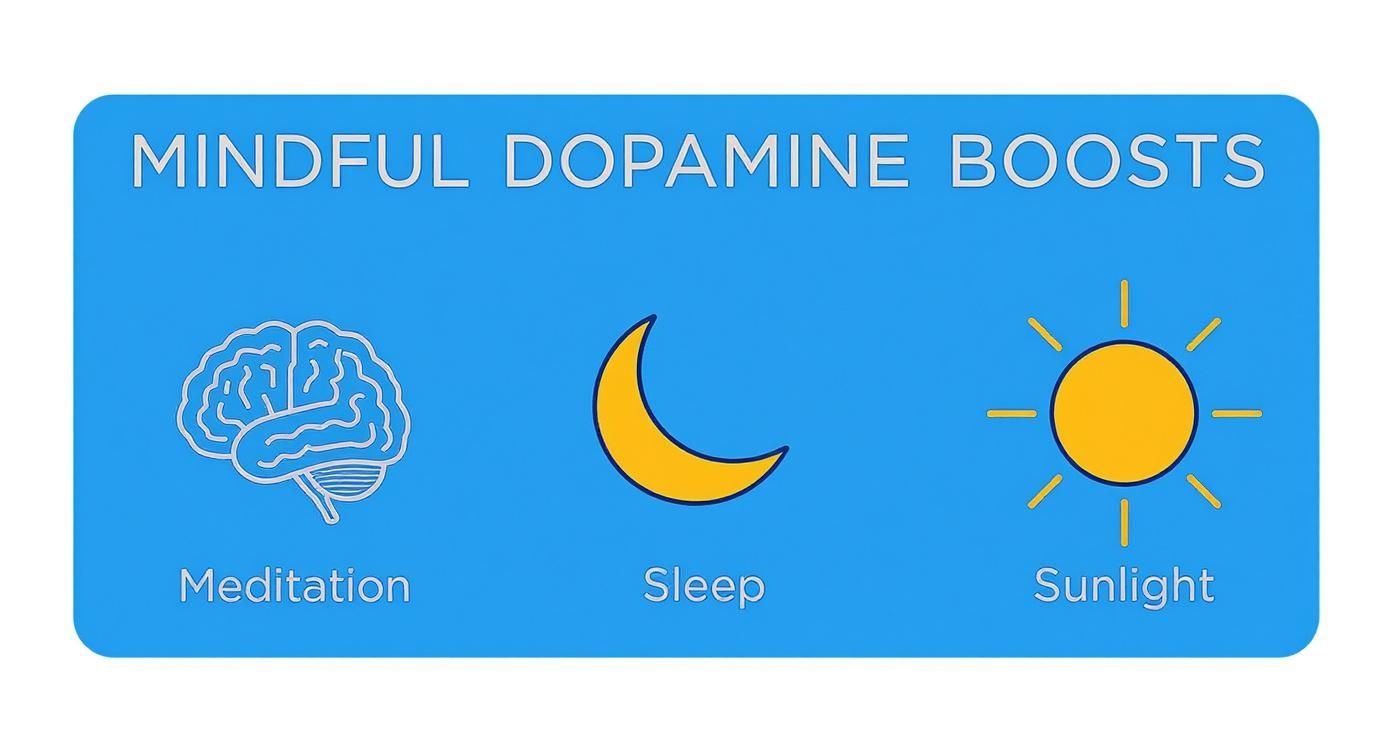
Think of it this way: these lifestyle habits create the stable groundwork that allows any potential supplement to be supportive rather than just a patch.
Risks and Responsible Use
With potential benefits come real risks. Because some supplements—especially a direct precursor like Mucuna pruriens—have such a powerful effect on brain chemistry, they have to be used responsibly.
If you overdo it with a direct precursor like L-Dopa, you could disrupt your brain’s natural ability to regulate dopamine. Over time, that could lead to unwanted side effects or imbalances.
Crucial Takeaway: Supplements are tools, not solutions. They should support a healthy lifestyle, not replace it. Always start with the lowest effective dose and only use them under the guidance of a healthcare provider who knows your full health history.
Potential Side Effects and Interactions
Every supplement carries a risk of side effects, and they can vary a lot from person to person. It’s also incredibly important to be aware of how they might interact with prescription medications you’re taking.
For instance:
- Mucuna pruriens can interact with antidepressants (especially MAOIs), blood pressure medications, and drugs for Parkinson’s disease. Nausea or an upset stomach are common side effects.
- Rhodiola rosea may cause milder side effects like dizziness or dry mouth and could interact with medications for blood pressure or diabetes.
This is exactly why that conversation with your doctor is non-negotiable. They can help you weigh the pros and cons to ensure you’re making a safe choice.
Ultimately, figuring out how to increase dopamine levels naturally is a journey that should always put your safety and long-term health first.
Building Your Sustainable Dopamine Plan

Knowing the theory is one thing, but actually integrating these strategies into your daily life is where the real magic happens. A sustainable routine isn’t about a massive, overwhelming overhaul. It’s built on small, consistent actions that you can actually stick with.
The goal is to weave these dopamine-supportive habits into the rhythm of your existing day.
For instance, instead of forcing yourself to commit to an hour-long gym session you know you’ll skip, start with a 15-minute walk every morning. That simple tweak combines both movement and sunlight exposure. Diet-wise, you could focus on adding just one tyrosine-rich food to lunch, like a handful of almonds or a side of edamame. Easy.
Consistency always trumps perfection. Small, steady efforts create the most significant long-term impact on your brain’s health and your overall well-being. Don’t aim for a perfect week; just aim for a slightly better day.
Creating Your Weekly Framework
Look at your week and find the small pockets of opportunity. Where can you slot in a tiny change? It’s not about finding more time, but about using the time you have differently.
A simple starting framework could look like this:
- Mornings: A 10-minute walk outside right after you wake up.
- Lunch: Make sure you add a solid protein source like chicken or tofu to your meal.
- Afternoon: Take a real 5-minute mindfulness break away from your desk. No phone.
- Evenings: Power down all screens for 30 minutes before your consistent bedtime.
This journey is deeply personal. You have to experiment to find what feels good and, more importantly, what you can stick with. These simple, repeated actions are the secret to increasing dopamine levels naturally for lasting cognitive health.
Common Questions About Boosting Dopamine Naturally
As you start making these changes, a few questions almost always pop up. Getting clear on the details helps you stick with the process and understand what to expect. Let’s tackle some of the most common ones.
How Long Does It Take to Notice a Difference?
This is the big one, and the honest answer is: it depends.
Some strategies give you an almost immediate payback. That mood lift and mental clarity you feel after a brisk 20-minute walk? That’s your dopamine system firing up in real-time.
But for the deep, lasting changes that come from overhauling your diet, fixing your sleep, or building a consistent meditation habit, you need to be more patient. It often takes several weeks, sometimes a few months, to really feel a stable shift in your baseline motivation and focus. Consistency is everything here; these habits are gradually rewiring your brain’s chemistry for the better.
Can You Get Too Much Dopamine from Natural Methods?
It’s practically impossible to push your dopamine to dangerous levels just by eating well, exercising, or getting some sun. Your body has incredibly sophisticated feedback loops designed to keep everything in balance. These natural methods support your system—they don’t override it.
Problematically high dopamine is almost always linked to specific medical conditions or powerful medications, not healthy lifestyle habits. Your body simply won’t let you overdo it with a morning run or a protein-rich meal.
That said, if you’re taking any medications that affect neurotransmitters (like antidepressants), it’s always smart to talk with your doctor before making major changes.
Does Listening to Music Really Increase Dopamine?
Yes, absolutely. Putting on music you love is a proven way to trigger a dopamine release in the reward centers of your brain. Research shows that the effect is strongest when a song gives you “the chills”—that powerful emotional response is a sign your dopamine pathways are fully engaged.
The simple act of discovering new music works, too. It combines novelty and anticipation, two of the most powerful triggers for your brain’s reward system. For a deeper dive into how different precursors work, our article comparing Mucuna vs. L-tyrosine for dopamine support offers some helpful insights.
At Keter Wellness, we believe in empowering your well-being through high-quality, plant-based solutions. Our standardized Mucuna L-Dopa supplement is designed to support your body’s natural pathways for motivation and vitality. Explore our commitment to purity and potency at Keter Wellness.
Leave a Reply