
If you're looking for real, sustainable energy without the jitters, you’re in the right place. The secret isn’t just swapping one stimulant for another. It’s about building genuine vitality from the ground up with foundational habits and targeted herbal support from botanicals like Rhodiola or Mucuna. This is how you create lasting energy, not just borrow it.
Moving Beyond the Daily Caffeine Cycle
Does your day feel like a rollercoaster? A morning high powered by coffee, followed by a brick wall of exhaustion in the afternoon? You're not alone. Grabbing a coffee or energy drink is a reflex for most of us, a quick fix to sharpen focus and just get through the day.
But this reliance on caffeine often just papers over the real issues, trapping us in a cycle of dependency that leaves us more drained in the long run.
True energy—the kind that lasts—isn't about forcing your body to run on fumes. It’s about building a solid foundation of vitality. This approach stands on two core pillars that work together:
- Foundational Lifestyle Habits: These are the non-negotiables—sleep, nutrition, hydration, and movement. Think of them as the bedrock of your body’s natural energy factory.
- Targeted Herbal Support: Once that foundation is solid, specific herbs and adaptogens can help your body manage stress and enhance focus, giving you a smooth, stable lift without the crash.
A huge part of this is learning how to reduce stress naturally. When you do that, you empower your body to generate its own sustained energy instead of constantly seeking it from outside sources.
A Growing Shift Toward Natural Vitality
This move away from stimulants isn't some niche trend. The global herbal supplement market is on track to grow from USD 45.65 billion to an incredible USD 107.43 billion by 2035. That's a massive signal that people everywhere are hungry for healthier solutions.
This boom is being driven by health-conscious adults, busy professionals, and students who are simply tired of caffeine's side effects. They're turning to plant-based options to reclaim their vitality.
This guide is your roadmap to finding the best alternatives for you. To make it easy, here’s a quick overview of the main caffeine-free solutions we're about to dive into.
Your Caffeine-Free Energy Options at a Glance
This table gives you a snapshot of the categories we'll cover, helping you see where you might want to start.
| Alternative Type | How It Works | Best For |
|---|---|---|
| Foundational Habits | Supports the body's core energy production systems. | Everyone seeking long-term, sustainable energy. |
| Herbal Supplements | Enhances resilience, focus, and motivation naturally. | Individuals needing targeted support for stress or focus. |
| Nutrient-Dense Foods | Provides slow-release fuel to stabilize blood sugar. | Preventing afternoon slumps and brain fog. |
Now, let's break down each of these options to find the right path for your unique needs.
Building a Strong Foundation for Natural Energy
Real, sustainable energy isn't something you find in a mug—it's something you build from the ground up, day after day. Forget the quick fixes for a moment. The most powerful alternatives to caffeine are the daily habits that strengthen your body's own power-generating systems. These three pillars—sleep, hydration, and nutrition—are the non-negotiables for a resilient, energized life.
Think of your body like a high-performance engine. Slugging back caffeine is like hitting a shot of nitrous oxide. You get a temporary, forceful burst, but you do absolutely nothing to improve the engine itself. Focusing on these core habits, on the other hand, is like giving your engine a complete tune-up, ensuring every part runs smoothly and efficiently for the long haul.
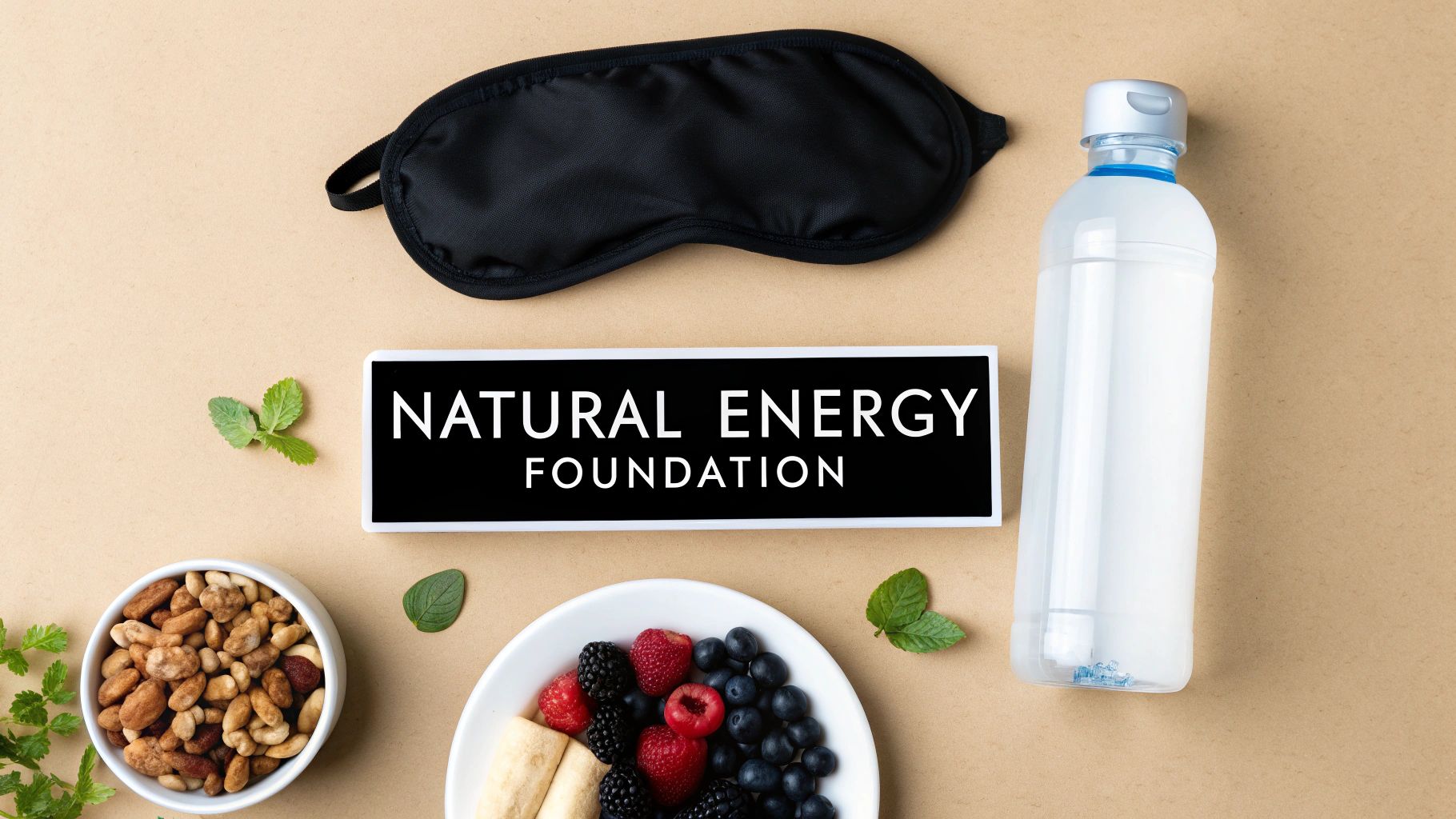
Let's break down how to tune up each of these areas to create a reliable and steady stream of vitality.
Mastering Sleep for Cellular Repair
So many of us see sleep as just "turning off" for the night. In reality, it’s a highly active period of intense repair and restoration. During deep sleep, your body is hard at work clearing out metabolic junk from the brain, solidifying memories, and repairing tissues. Skimping on sleep is like telling your maintenance crew to pack up and leave before the job is done.
The goal isn't just clocking more hours in bed; it's about achieving quality sleep. Consistently poor sleep throws the hormones that regulate your energy and appetite completely out of whack. The result? You wake up groggy and immediately start craving quick-energy hits like sugar and caffeine.
Sleep is the ultimate biological reset button. Prioritizing 7-9 hours of quality sleep per night is one of the most effective ways to ensure your body and brain have the resources they need to perform at their best.
To get there, focus on building a consistent routine. Go to bed and wake up around the same time every single day—even on weekends. This simple discipline helps regulate your body's internal clock (your circadian rhythm), making it far easier to fall asleep and wake up feeling refreshed.
Hydration: The Overlooked Energy Multiplier
Dehydration is one of the biggest and most common culprits behind that afternoon slump and brain fog. Even a tiny drop in your body's water levels can thicken your blood, which forces your heart to work overtime just to pump it through your system. That extra effort leaves you feeling sluggish and drained.
Think of your body’s energy system as an electrical grid. Water is the conductor that allows signals to travel efficiently between your cells. When you're dehydrated, it's like having faulty wiring—everything slows down, and the messages just don't get through as quickly.
Here are a few simple ways to stay on top of it:
- Start Your Day with Water: Drink a large glass of water first thing in the morning to rehydrate after a long night.
- Add Flavor Naturally: If you find plain water boring, infuse it with slices of lemon, cucumber, or mint for a refreshing twist.
- Eat Your Water: Incorporate water-rich foods like watermelon, strawberries, and celery into your diet. They provide hydration along with valuable vitamins and electrolytes.
When you start seeing hydration as an active energy strategy instead of a passive chore, you can make a huge impact on your daily vitality.
Fueling Your Body with Smart Nutrition
The food you eat is literally the raw material your body uses to create energy. The trick is to choose fuels that provide a slow, steady burn rather than a quick, explosive flash. Highly processed foods and sugary snacks cause a rapid spike in blood sugar, which is always followed by an inevitable crash that leaves you feeling more tired than before you ate.
It's like building a fire. Sugary junk is like throwing a piece of paper on the flames—you get a big, bright flare-up that dies out almost instantly. Whole foods, however, are like solid logs of wood. They burn slowly and steadily, providing consistent warmth and energy for hours on end.
To build this steady fire, focus on balancing your meals with three key components:
- Complex Carbohydrates: Sources like oats, brown rice, and sweet potatoes release glucose slowly into your bloodstream.
- Lean Protein: Foods like chicken, fish, beans, and lentils help stabilize blood sugar and keep you feeling full.
- Healthy Fats: Options like avocado, nuts, and olive oil provide long-lasting energy and support brain health.
Building these habits takes time, but the payoff is immense. By addressing these core pillars, you're not just finding alternatives to caffeine; you're fundamentally upgrading your body’s entire operating system. For more ideas on boosting your vitality, you can explore other natural remedies for low energy that complement this foundational approach.
Using Movement and Mindfulness to Boost Vitality
While your core habits lay the foundation for good energy, you also have tools to actively generate and protect it throughout the day. Two of the most immediate and powerful caffeine alternatives are movement and mindfulness. These practices work with your body's own systems to unlock a steady, reliable stream of vitality, completely free from jitters or crashes.
Think of your energy reserves like a battery. Some activities charge it up, while others drain it down. The key is learning which levers to pull to keep that battery in the green, especially when that dreaded afternoon slump hits.

Sparking Energy with Strategic Movement
When you feel sluggish, the absolute last thing you probably want to do is get up and move. But here's the paradox: even a little bit of gentle movement is one of the quickest ways to shake off fatigue. It acts like a biological spark plug for your mitochondria—the tiny power plants inside your cells responsible for creating energy.
Moving gets your blood flowing, delivering a fresh shot of oxygen and nutrients to your brain and muscles. This process signals your mitochondria to ramp up energy production, giving you an almost instant lift. The best part? You don't need a grueling hour-long workout to feel it.
Short, strategic bursts of activity are surprisingly effective. Here are a few simple ways to weave them into your day:
- The 5-Minute Walk: Instead of brewing another coffee, just step outside for a brisk walk around the block. The combo of movement and fresh air is an amazing mental reset.
- Desk Stretches: Simple neck rolls, shoulder shrugs, and torso twists can release muscle tension and get your circulation going without you ever leaving your chair.
- Bodyweight Boosts: A quick set of 10 squats, 10 jumping jacks, or a 30-second plank is enough to get your heart rate up and jolt your system awake.
This flips the script on exercise. It's not just something that spends energy; it's a tool you can use to create it whenever you need it most.
Taming the Silent Energy Thief: Stress
Chronic stress is one of the biggest hidden drains on your vitality. When you're constantly under pressure, your body pumps out stress hormones like cortisol. While useful in short bursts, persistently high cortisol levels exhaust your adrenal glands and leave you feeling utterly depleted.
It’s like leaving a power-hungry app running in the background of your phone all day—it silently drains your battery until there's nothing left.
This is where mindfulness comes in. By practicing simple techniques, you can interrupt this stress response and reclaim the energy that would otherwise be lost to worry and tension. One of the most direct ways is through controlled breathing, which signals your nervous system to shift from "fight or flight" to "rest and digest," conserving precious energy.
Mindfulness isn't about emptying your mind; it's about giving your mind a place to rest. By calming your nervous system, you stop the constant energy leak caused by chronic stress, preserving your vitality for what truly matters.
For example, the box breathing technique is a simple yet potent way to calm your system in minutes. It’s a balanced, four-part cycle:
- Breathe in for a count of four.
- Hold your breath for a count of four.
- Breathe out for a count of four.
- Hold again for a count of four.
Repeat this for just a few minutes, and you can effectively down-regulate your stress response. To dive deeper into these practices, you can learn more about meditation and its benefits for a more grounded approach to energy management.
By combining these mindful moments with strategic movement, you create a powerful, sustainable system for all-day vitality.
Unlocking Herbal Allies for Clean Energy and Focus
Once you’ve locked in the fundamentals—sleep, hydration, and solid nutrition—you can start exploring more targeted herbal support. This is where we go beyond basic fuel and tap into botanicals that work with your body’s own systems to manage stress and sharpen your mind.
These plants often fall into two powerful categories: adaptogens and nootropics.
Think of adaptogens as a thermostat for your body's stress response. Instead of letting stress burn you out, these herbs help you adapt, keeping you steady and resilient. Nootropics, on the other hand, are more like fine-tuners for your brain, directly supporting things like memory, focus, and mental clarity.
This push for natural alternatives is no small trend. Herbal powerhouses like Mucuna pruriens are part of a massive surge in dietary supplements, a market projected to hit a staggering USD 414.5 billion globally by 2033. The herbal market alone is expected to more than double, growing from USD 82.9 billion to USD 166.2 billion by 2034.
A huge driver behind this is people looking for focus without the jitters and crashes. Women, who make up 40% of the herbal market, are leading the charge, especially since studies show that between 30-50% of caffeine drinkers experience a significant energy crash.
Mucuna Pruriens: The Motivation Molecule Precursor
One of the most interesting herbs for drive and motivation is Mucuna pruriens, also known as velvet bean. Its magic comes from being a rich, natural source of L-Dopa, the direct precursor to dopamine.
Dopamine is often called the "motivation molecule" for a reason. It’s the neurotransmitter that fires up your brain's reward and pleasure centers, making you feel driven, focused, and ready to tackle your to-do list. When it’s low, you feel apathetic and foggy. Mucuna helps your brain build its own sustainable supply of dopamine from the ground up, unlike caffeine which just gives you a temporary loan.
Think of your motivation like a car’s gas tank. Caffeine is like a shot of nitrous oxide—a powerful, short-lived boost that leaves you empty. Mucuna pruriens is like having a steady supply of crude oil that your body can refine into the high-quality fuel it needs to run smoothly all day.
This makes Mucuna a fantastic choice when your fatigue feels more mental than physical—that feeling when you know exactly what you need to do but just can't find the willpower to start.
Rhodiola Rosea: The Fatigue Fighter
If your energy drain feels more like total burnout—both physical and mental—then Rhodiola rosea is a classic adaptogen you need to know about. It’s been used for centuries in traditional medicine to help people endure fatigue in harsh, demanding environments.
Rhodiola works by helping your body become more resilient to all kinds of stressors. It helps balance key stress hormones like cortisol, preventing them from constantly draining your energy reserves. The result? Studies show it can significantly reduce feelings of fatigue and sharpen mental performance, especially when you're under pressure.
- Best For: Anyone feeling rundown, stressed out, and mentally exhausted.
- How It Feels: A smooth, non-jittery lift in both physical stamina and mental clarity.
It’s a go-to for people facing intense work projects or periods of high stress who need to perform at their best without hitting a wall.
Panax Ginseng: The Mental Stamina Enhancer
Panax ginseng, also known as Asian or Korean ginseng, is another legendary adaptogen celebrated for its ability to fight fatigue and support brain function. Its power comes from active compounds called ginsenosides, which have been studied for their positive effects on energy metabolism and brain health.
The energy from Panax ginseng isn't like the jarring jolt from a double espresso. It’s a much more gradual and sustained feeling of alertness and mental stamina. It's especially useful for tasks that demand long periods of concentration, helping you stay sharp without feeling wired. Many people find it’s just the thing to cut through brain fog and improve their ability to handle complex problems.
Why Quality and Standardization Are Everything
When you're choosing herbal allies, remember that not all supplements are created equal. An herb's effectiveness hinges entirely on its quality and the concentration of its active compounds. This is where standardization is non-negotiable.
A standardized extract guarantees that every single dose contains a specific, verified amount of the key active ingredient. For example, a quality Mucuna supplement will be standardized to a certain percentage of L-Dopa. This ensures you get a consistent, reliable effect every time. Without it, you could be buying little more than powdered plant matter with no real benefit.
Here’s what to look for on a label:
- Standardized Extract: Look for phrases like "standardized to X% of [active compound]." This is your proof of potency.
- Third-Party Testing: Reputable brands send their products to independent labs to verify purity and strength. Look for seals or mentions of this.
- Clear Dosage Information: The label should give you clear, easy-to-follow instructions on how much to take and when.
As you dive deeper, resources on the best non-caffeinated teas can also be a great starting point for discovering new herbal options. By insisting on high-quality, standardized supplements, you’re not just buying an herb—you’re investing in a reliable tool to support your body's natural energy for the long haul.
How to Choose the Right Natural Energy Boosters
Diving into the world of natural energy can feel a bit like staring at a giant menu with way too many options. It's easy to get overwhelmed. But the secret isn't to just start trying things at random; it's about matching the right tool to your specific energy problem.
Think of yourself as a detective investigating your own fatigue. What are the clues your body is giving you? Finding the perfect fit starts with a little self-assessment. Are you constantly wrestling with morning grogginess, just trying to get your brain online? Or is your real enemy that dreaded 3 PM slump where your focus just vanishes?
Maybe your challenge is more of a constant, low-grade burnout that leaves you feeling unmotivated day after day. Pinpointing the when and why of your energy dips is the most important first step. It guides you toward a solution that actually works.
Assess Your Primary Energy Goal
Before you grab a supplement, get crystal clear on what you're trying to fix. Different caffeine alternatives are good at different things. Your goal might be to feel more awake, find more motivation, or just become more resilient to the daily grind.
Which one of these sounds the most like you?
- You need to wake up faster. If mornings are a slog and you need help shaking off that "just woke up" fog, you'll want immediate, invigorating solutions. Think a big glass of cold water, a quick burst of movement, or a citrus-based drink.
- You're fighting the afternoon crash. When your energy nosedives after lunch, the culprit is often a blood sugar rollercoaster. A protein-rich snack or a short walk can be far more effective than reaching for another stimulant.
- You lack motivation and drive. If your fatigue feels more mental—you know what you should do but can't find the willpower—then an herbal ally like Mucuna pruriens, which supports your dopamine pathways, might be the right tool for the job.
- You feel completely burned out. For that deep physical and mental exhaustion that comes from chronic stress, an adaptogen like Rhodiola is built to help your body build resilience and bounce back over time.
This decision tree gives you a quick visual guide for picking between some of the most common herbal options based on what you need most.
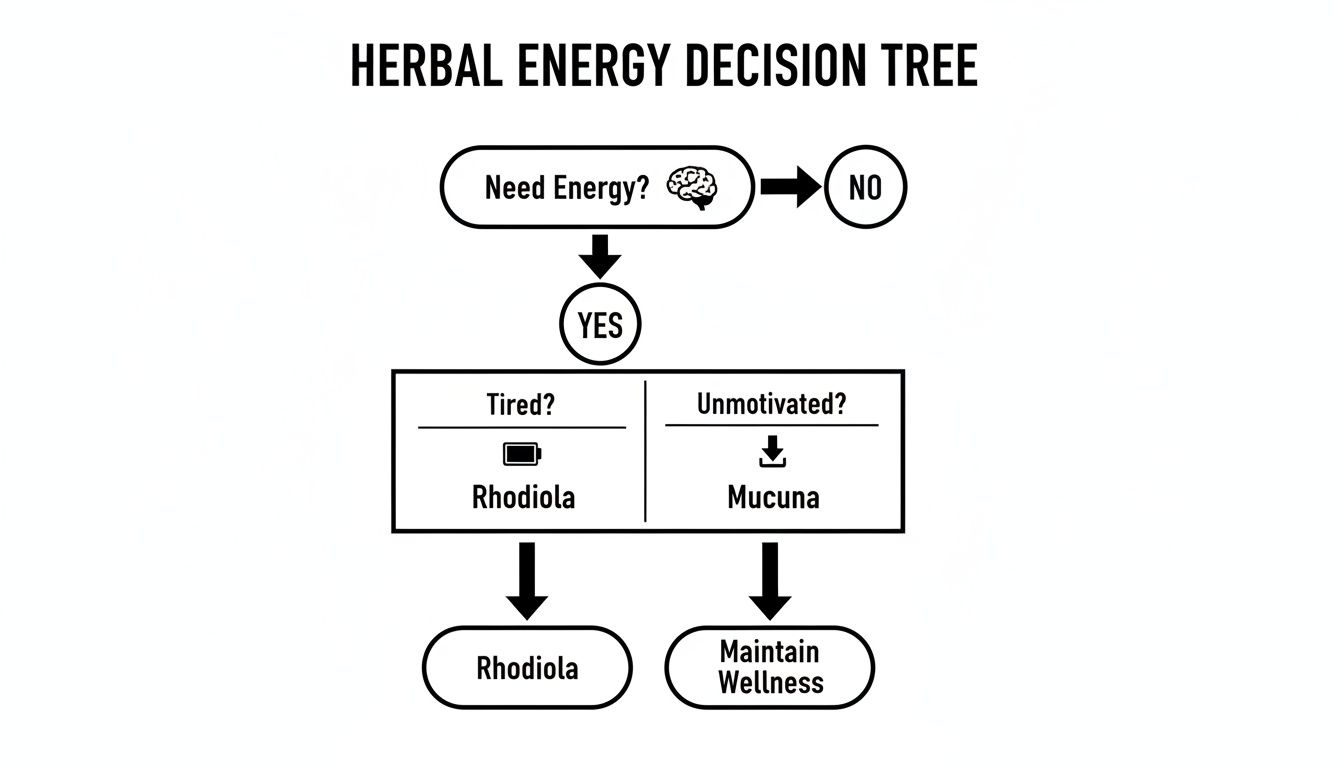
As you can see, just figuring out if your core issue is physical tiredness or a lack of motivation can quickly point you toward the right kind of herbal support.
To make things even simpler, here’s a quick comparison of some of the solutions we've covered.
Finding Your Natural Energy Solution
This table breaks down the different options to help you see at a glance which approach might fit your goals and lifestyle best.
| Solution | Primary Benefit | Best For | Considerations |
|---|---|---|---|
| Sleep & Timing | Foundational Energy | Chronic fatigue, grogginess | Requires lifestyle changes; takes time |
| Hydration | Immediate Alertness | Morning fog, afternoon slumps | Simple but often overlooked |
| Nutrition | Sustained Energy | Blood sugar crashes, overall vitality | Needs consistent, mindful eating habits |
| Exercise | Endorphin & Oxygen Boost | Low motivation, sluggishness | Can be hard to start when tired |
| Adaptogens (e.g., Rhodiola) | Stress Resilience | Burnout, mental/physical exhaustion | Works cumulatively; not an instant fix |
| Dopamine Support (e.g., Mucuna) | Motivation & Drive | Procrastination, lack of focus | Timing is key; avoid high protein meals |
| B-Vitamins | Cellular Energy Production | General fatigue, poor diet | Best from food or a quality B-complex |
Each path offers a unique way to build energy. The key is to pick the one that addresses the root cause of your fatigue instead of just masking the symptoms.
Prioritize Safety and Quality
Once you've zeroed in on an option—especially an herbal supplement—quality is everything. The effectiveness of any botanical depends entirely on its purity and potency. A cheap, unregulated product isn't just a waste of money; it can be downright unsafe.
Always look for transparency and verification when choosing a supplement. Find brands that are open about their sourcing, manufacturing, and third-party testing. That's how you know you're getting a product that's both safe and effective.
Here are a few non-negotiables to look for on any label:
- Standardized Extracts: This is a guarantee that each dose contains a consistent amount of the active compound, like the L-Dopa in Mucuna.
- Third-Party Testing: Look for seals or mentions of independent lab tests. This confirms that what's on the label is actually in the bottle.
- Minimal Fillers: A clean ingredient list without a bunch of unnecessary binders, artificial colors, or allergens is a great sign of a high-quality product.
The demand for good botanicals is exploding. The herbals market is on track to grow from USD 46.8 billion to USD 87.2 billion by 2032. This is being driven by people—especially busy professionals and wellness-focused women—looking for real alternatives to avoid issues like adrenal fatigue, which some health surveys suggest affects up to 75% of heavy caffeine users. With e-commerce now handling 30% of herbal sales, it's never been easier to find high-potency, standardized products. You can learn more about the herbal supplements market trends to see how consumer habits are shaping the industry.
Start Low and Go Slow
Whenever you introduce a new supplement into your routine, the golden rule is to start with a low dose and see how your body responds. This lets you figure out your personal sensitivity and find the smallest dose that gives you the benefit you're looking for.
And don't expect an overnight miracle. Unlike the instant jolt from a cup of coffee, these alternatives work by supporting your body’s own processes. Give them some time to build up in your system, and just pay attention to the small shifts in your energy, focus, and mood over a few days or weeks.
Most importantly, always chat with a healthcare professional before starting any new supplement. They can help you spot any potential interactions with medications and make sure your plan is safe and right for your health. With a thoughtful, informed approach, you can absolutely find the right natural boosters to build real, sustainable energy.
Common Questions About Caffeine-Free Energy
Thinking about swapping your daily coffee for something more sustainable? It’s a great move, but it's natural to have a few questions. Getting a feel for how these alternatives work will help you find the right fit and set you up for long-term, jitter-free energy.
Let’s clear up a few common uncertainties.
How Long Does It Take for Herbal Alternatives to Work?
Unlike the immediate kick from an espresso shot, herbal supplements work on a completely different timeline. Think of it less like flipping a switch and more like watering a plant—it’s about gradual, steady nourishment.
Some people feel a subtle shift in their focus or motivation within just a few days. For others, the real magic happens over several weeks of consistent use. The goal here isn't a temporary fix; it's about building long-term resilience from the inside out. For a deeper dive, you can learn more about how long it generally takes for supplements to work and what to expect.
Can I Combine Different Caffeine Alternatives?
Absolutely. In fact, that's often where you'll see the best results. The real power comes from pairing foundational habits with targeted herbal support.
Combining a solid sleep schedule with a morning adaptogen like Rhodiola is a fantastic strategy. You get the baseline energy from rest, plus the resilience to handle daily stressors. That synergy is what creates all-day vitality.
A word of advice, though: if you plan to combine several new supplements, introduce them one at a time. This gives you a clear sense of how your body responds to each one. And, as always, it’s a good idea to run your new supplement stack by a healthcare provider first.
Are Natural Energy Boosters Safe for Everyone?
While the basics like good sleep, hydration, and nutrition are safe and beneficial for just about everyone, herbal supplements need a more personal approach. Some botanicals can interact with medications or may not be right for people with specific health conditions.
For example, many aren't recommended for those who are pregnant or nursing. That’s why it’s critical to stick to a few simple safety rules:
- Choose Reputable Brands: Look for companies that are transparent about their sourcing and use third-party testing to verify what’s actually in the bottle.
- Read the Label: Don't guess. Always follow the dosage instructions on the package.
- Consult a Professional: Before adding anything new to your routine, have a quick chat with your doctor to make sure it’s a safe choice for your unique health profile.
Ready to unlock your natural potential for motivation and focus? Keter Wellness offers a high-potency Mucuna Pruriens supplement standardized to 20% L-Dopa, designed to support your body's dopamine pathways for clean, sustainable drive.
Leave a Reply