

Dopamine is often called the “feel-good” neurotransmitter, but its role extends far beyond pleasure. It’s the primary driver of your brain’s reward system, fundamentally shaping your motivation, focus, and drive. When your dopamine levels are balanced, you feel more engaged, alert, and capable of pursuing your goals. However, factors like chronic stress, poor sleep, and inadequate nutrition can disrupt this delicate system, leaving you feeling lethargic, unmotivated, and mentally foggy. This is why understanding ways to increase dopamine naturally is a critical component of modern wellness and cognitive performance.
This guide moves beyond generic advice to provide a comprehensive, evidence-based toolkit for supporting your brain’s dopamine production. We will explore a curated list of actionable strategies that you can integrate into your daily life, starting today. You won’t find vague suggestions here. Instead, you’ll discover practical steps and specific techniques for optimizing everything from your diet and exercise routine to your environment and social interactions.
Inside this article, you will learn how to:
- Leverage specific physical activities to trigger dopamine release.
- Optimize your sleep and light exposure for better neurological function.
- Use goal-setting and novelty to activate your brain’s reward pathways.
- Identify key nutrients and foods that serve as precursors to dopamine.
- Explore the role of supplements, including standardized Mucuna pruriens (L-Dopa), for targeted support.
This listicle is designed to empower you with the knowledge to take control of your motivation and mental clarity. By implementing these natural methods, you can create a sustainable foundation for enhanced productivity, improved mood, and a more driven, focused life. Let’s begin exploring these powerful techniques.
1. Fuel Your Brain with Tyrosine-Rich Foods
One of the most direct and foundational ways to increase dopamine naturally is through your diet, specifically by consuming foods rich in the amino acid L-tyrosine. L-tyrosine is the direct precursor, or building block, that your body uses to synthesize dopamine. Without sufficient tyrosine, your brain simply cannot produce the dopamine it needs for motivation, focus, and mood regulation.
This process, known as dopamine synthesis, happens directly within your neurons. An enzyme converts the L-tyrosine you get from food into L-DOPA, which is then converted into dopamine. Think of it like supplying a factory with raw materials; the more high-quality material you provide, the more efficiently it can produce the final product.
How to Implement This Strategy
Incorporating tyrosine-rich foods into your daily meals is a simple yet powerful habit. Aim to include at least one high-tyrosine source in two of your three main meals.
- Animal-Based Sources: Lean meats like turkey and chicken, eggs, and dairy products such as cottage cheese and Greek yogurt are excellent sources. A breakfast of scrambled eggs or a turkey sandwich for lunch can significantly boost your tyrosine intake.
- Plant-Based Sources: For those following a plant-based diet, options include legumes (like lentils and beans), tofu, seeds (pumpkin and sesame), nuts (especially almonds), and even avocados.
Practical Tip: Start your day with a dopamine-supportive breakfast. A smoothie with Greek yogurt, a scoop of almond butter, and a sprinkle of pumpkin seeds provides a potent dose of tyrosine to set your brain up for a focused and motivated day. This is one of the most effective and sustainable ways to increase dopamine naturally through nutrition.
2. Meditation and Mindfulness Practices
Beyond diet, training your mind through meditation and mindfulness can significantly influence your brain’s chemistry. These practices work by calming the nervous system, reducing the production of stress hormones like cortisol that can interfere with dopamine function, and strengthening neural pathways associated with reward and positive emotions. Regular meditation essentially reshapes the brain’s dopamine system, enhancing its efficiency and resilience.
This mental training helps you shift from a state of chronic stress to one of focused calm, allowing the dopamine system to function optimally. Studies on long-term practitioners, such as Buddhist monks, have shown significantly higher baseline dopamine levels and increased gray matter in the prefrontal cortex, the area of the brain crucial for focus and mood regulation. By creating a state of deep relaxation and present-moment awareness, you create an internal environment where dopamine can flourish.

How to Implement This Strategy
Integrating mindfulness into your routine doesn’t require hours of silent sitting. Consistency is far more important than duration, especially when you are just starting out. The goal is to build a sustainable habit that supports your mental well-being over the long term.
- Start Small: Begin with just 5 to 10 minutes of practice each day. This makes the habit feel manageable and easy to stick with.
- Use Guided Resources: Apps like Calm or Headspace offer structured, guided meditations that are perfect for beginners, helping you focus your attention.
- Focus on the Breath: A simple and powerful mindfulness technique is to concentrate on the sensation of your breath entering and leaving your body. This anchors you in the present moment.
- Establish a Routine: Practice at the same time each day, such as first thing in the morning or just before bed, to help solidify the habit.
Practical Tip: Link your new meditation habit to an existing one. For example, decide to meditate for five minutes immediately after brushing your teeth in the morning. This technique, called habit stacking, makes it easier to incorporate this practice into your daily life, making it one of the most accessible ways to increase dopamine naturally.
3. Prioritize Quality Sleep and Optimize Your Rest
One of the most restorative and non-negotiable strategies for healthy dopamine levels is prioritizing consistent, high-quality sleep. While you sleep, your brain undergoes a critical reset process. This includes restoring the sensitivity of your dopamine receptors and clearing out metabolic waste, which allows for more efficient dopamine production and signaling the next day.
Chronic sleep deprivation has a significant negative impact on the dopamine system. It blunts dopamine receptor sensitivity, meaning you need more dopamine to feel the same level of motivation and reward. This creates a vicious cycle where low energy and motivation from poor sleep make it harder to engage in healthy habits, further disrupting sleep patterns. Ensuring adequate rest is fundamental to maintaining a balanced and responsive dopamine system.
How to Implement This Strategy
Optimizing your sleep environment and daily habits is crucial for reaping the dopaminergic benefits of rest. The goal is to create a consistent routine that signals to your body it’s time to wind down and repair.
- Maintain a Strict Schedule: Go to bed and wake up at the same time every day, even on weekends. This consistency reinforces your body’s natural sleep-wake cycle, or circadian rhythm.
- Create a Restful Sanctuary: Your bedroom should be dark, quiet, and cool, ideally between 65-68°F (18-20°C). Use blackout curtains, earplugs, or a white noise machine if necessary.
- Establish a Pre-Sleep Ritual: Avoid stimulating activities and blue light from screens for at least an hour before bed. Instead, opt for calming activities like reading a physical book, gentle stretching, or practicing meditation.
- Mind Your Consumption: Avoid caffeine after 2 PM and limit alcohol in the evening, as both can significantly disrupt your sleep architecture and a key factor in how to manage your energy. If you are struggling with this, you can learn more about how natural remedies can help combat low energy.
Practical Tip: Commit to a one-week “sleep reset.” For seven consecutive days, aim for 8 hours of sleep per night with a consistent bedtime and wake-up time. By the end of the week, many people notice a marked improvement in daytime energy, focus, and overall mood, demonstrating how effective this is as one of the best ways to increase dopamine naturally.
4. Sunlight Exposure and Light Therapy
Harnessing the power of natural light is a surprisingly potent method for supporting your dopamine system. Exposure to sunlight, particularly in the morning, directly triggers dopamine release in the brain. This biological response is mediated by specialized cells in your eyes called intrinsically photosensitive retinal ganglion cells, which communicate directly with key brain regions that regulate mood, alertness, and your internal body clock.
When these cells detect bright light, they send signals that not only help set your circadian rhythm but also stimulate dopamine production. This mechanism explains why sunlight can feel so energizing and mood-lifting. Think of morning light as a natural “on” switch for your brain’s motivation circuits, calibrating them for the day ahead. This is a key reason why insufficient light exposure, as seen in Seasonal Affective Disorder (SAD), is linked to lower dopamine levels and mood disturbances.
How to Implement This Strategy
Integrating light exposure into your daily routine is free, accessible, and highly effective. Consistency is crucial, especially when establishing a new habit.
- Prioritize Morning Sun: Aim for 15-30 minutes of direct sunlight exposure within the first hour of waking. If possible, do this without sunglasses to allow the full spectrum of light to reach your eyes, but never stare directly at the sun.
- Combine with Movement: Amplify the benefits by pairing your morning sun exposure with a brisk walk or light exercise. This combination provides a powerful, synergistic dopamine boost from both the light and the physical activity.
- Consider Light Therapy: During darker winter months or if you live in a northern latitude, a light therapy box (10,000 lux) can be an excellent substitute. Use it for 20-30 minutes each morning, keeping it at a distance of about 2-3 feet.
Practical Tip: Make it a non-negotiable part of your morning routine. Before checking your phone or email, step outside with your morning coffee or tea. This simple act of “photon bathing” is one of the most effective ways to increase dopamine naturally and anchor a positive, motivated mindset for the entire day.
5. Leverage the Power of Goal-Setting and Achievement
Your brain is hardwired to seek rewards, and setting and pursuing goals is a powerful way to tap into this system. The process of establishing a target, working toward it, and anticipating the outcome triggers a sustained release of dopamine. This isn’t just a one-time burst upon completion; the brain releases dopamine in response to making progress, creating a motivating feedback loop that fuels persistence and focus.
This biological mechanism provides a clear sense of direction and purpose, which is intrinsically rewarding. When you set a goal, your brain recognizes a gap between your current state and a desired future state. The anticipation of closing that gap is a potent dopamine trigger, turning the journey itself into a source of motivation. This is why a study of over 2,000 individuals found that those with clearly written goals were 42% more likely to achieve them; the act of defining and pursuing them activates the brain’s reward circuitry.
How to Implement This Strategy
To make goal-setting an effective dopamine-boosting tool, it’s crucial to be strategic and intentional. The key is to break down large ambitions into manageable steps that provide frequent opportunities for reward and recognition.
- Adopt the SMART Framework: Ensure your goals are Specific, Measurable, Achievable, Relevant, and Time-bound. This clarity transforms a vague desire into an actionable plan that your brain can process and pursue.
- Deconstruct Large Goals: Break a year-long objective into quarterly milestones, monthly targets, and even weekly tasks. Each small step you complete acts as a mini-reward, delivering a small but steady supply of dopamine.
- Track Progress Visibly: Use a journal, a whiteboard, or a progress-tracking app to monitor your journey. Visually seeing your progress, like a fitness tracker showing a consistent workout streak, reinforces the feeling of accomplishment and keeps motivation high.
- Celebrate Small Wins: Acknowledge and celebrate each milestone you reach. This positive reinforcement strengthens the neural pathways associated with achievement, making it easier to stay engaged for the long haul.
Practical Tip: Choose one meaningful goal for the upcoming month. Break it down into four weekly “micro-goals” and write them down. As you complete each one, physically check it off the list. This simple act of marking progress is one of the most effective ways to increase dopamine naturally by creating a tangible sense of forward momentum and accomplishment.
6. Embrace Cold Exposure for a Lasting Surge
One of the more intense yet remarkably effective strategies for boosting dopamine involves deliberately exposing your body to cold temperatures. Short-term cold exposure, such as a cold shower or ice bath, activates the sympathetic nervous system. This “fight-or-flight” response triggers a significant and prolonged release of dopamine, along with norepinephrine, creating a state of heightened alertness, focus, and improved mood that can last for hours.

This biological reaction is not just a fleeting sensation; groundbreaking research has shown that immersion in cold water (around 57°F or 14°C) can increase dopamine concentrations by an astounding 250%. This makes it one of the most potent ways to increase dopamine naturally. Think of it as a reset button for your brain’s reward circuitry, providing a powerful, non-addictive stimulus that enhances resilience and mental clarity. This practice has been popularized by figures like Wim Hof and neuroscientist Dr. Rhonda Patrick.
How to Implement This Strategy
The key to leveraging cold exposure is to start slowly and listen to your body. You don’t need to jump into an ice-filled tub on your first day. Instead, build up your tolerance gradually to make the practice sustainable and safe.
- Start Small: Begin by finishing your regular warm shower with 15-30 seconds of cold water. Focus on controlled, steady breathing to manage the initial shock.
- Progress Gradually: As you adapt, extend the duration of the cold portion of your shower to 60 seconds, then to two or three minutes over several weeks.
- Consider Immersion: For a more profound effect, you can advance to cold water immersion in a tub or a cold plunge. Start with just 1-3 minutes and never do it alone.
- Limit Frequency: To prevent your body from fully adapting and diminishing the dopamine response, limit intense cold exposure to 2-3 times per week.
Practical Tip: To maximize the mental benefits, practice mindful breathing before, during, and after the cold exposure. Inhale deeply through your nose and exhale slowly through your mouth. This helps regulate your nervous system’s response, turning a stressful shock into a controlled, invigorating experience that floods your brain with dopamine.
7. Nutritional Optimization and Dopamine-Supporting Foods
Beyond simply consuming tyrosine, a broader nutritional strategy is essential for optimizing the entire dopamine system. Your brain requires a synergistic team of vitamins, minerals, and antioxidants to not only produce dopamine but also protect its neurons and ensure its receptors function correctly. This holistic approach supports the entire lifecycle of dopamine, from synthesis to signaling.
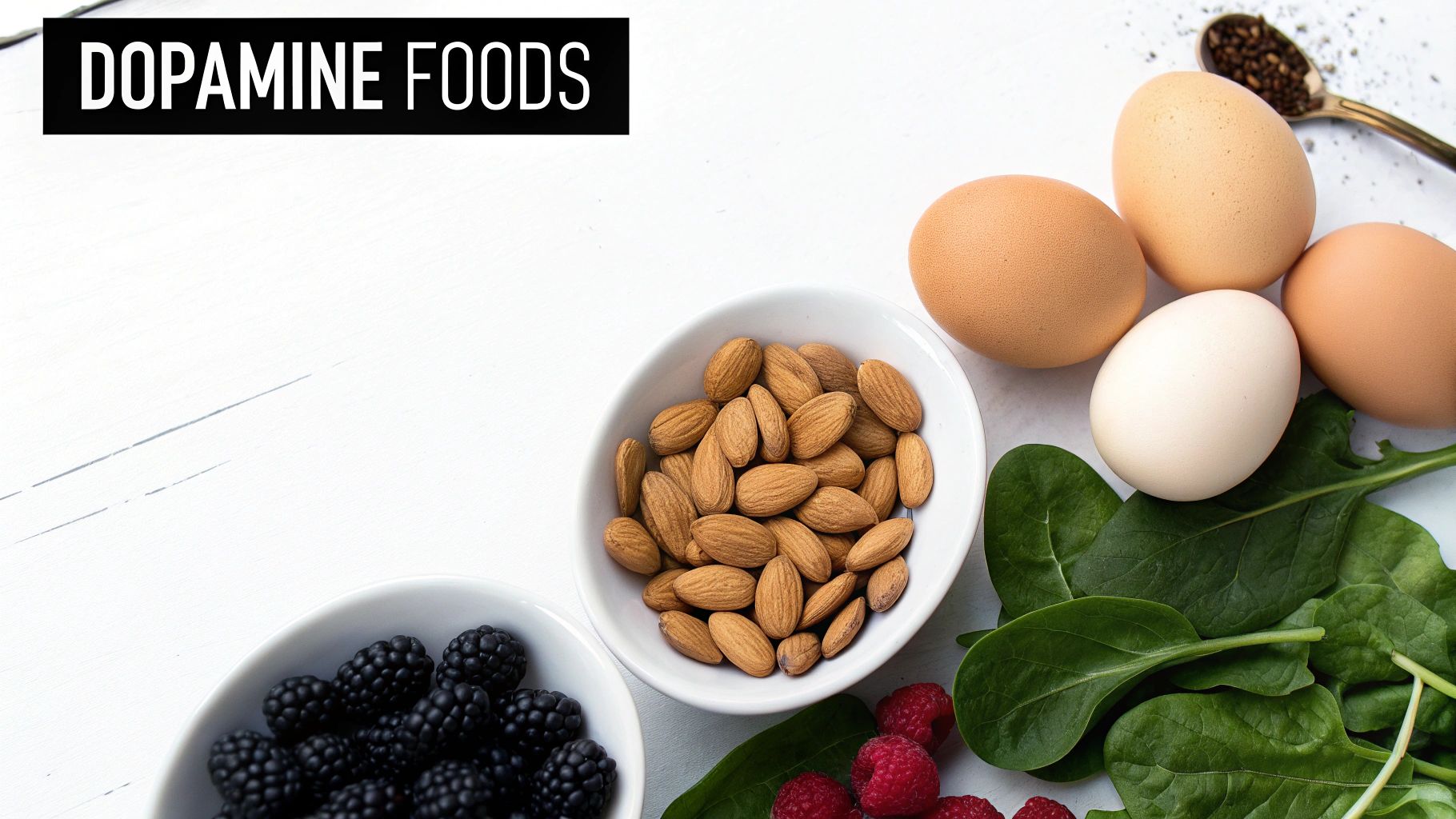
This process involves more than just raw materials. Nutrients like B vitamins (B6, B9-folate, B12) and minerals such as magnesium and iron act as critical cofactors in the enzymatic reactions that convert tyrosine into dopamine. Meanwhile, antioxidants found in colorful fruits and vegetables help protect dopamine-producing neurons from oxidative stress, preserving their function long-term. Even specific compounds like L-DOPA, found in sources like Mucuna pruriens, can provide a direct precursor to boost production. For a deeper understanding of this powerful plant, you can explore the definitive guide to Mucuna pruriens on keterwellness.com.
How to Implement This Strategy
Adopting a diet rich in these supporting nutrients is a cornerstone of brain health. Focus on whole, unprocessed foods that deliver a wide spectrum of these essential compounds.
- Embrace the Mediterranean Diet: This eating pattern, rich in fruits, vegetables, whole grains, fish, and olive oil, is consistently linked to better brain health and mood regulation. It naturally provides the vitamins, minerals, and antioxidants needed for dopamine support.
- Boost B Vitamins: Include folate-rich foods like spinach, asparagus, and broccoli, and ensure adequate B6 from sources like chicken, fish, and potatoes. These are crucial for the dopamine synthesis pathway.
- Incorporate Dark Chocolate: High-quality dark chocolate (70% cacao or higher) contains phenylethylamine, a compound that can stimulate the release of dopamine, leading to a temporary mood lift.
- Limit Dopamine Depleters: Reduce your intake of highly processed foods, excessive sugar, and saturated fats, which can lead to inflammation and disrupt dopamine signaling, causing sharp spikes followed by crashes.
Practical Tip: Create a “Dopamine Support” plate for one meal each day. Ensure it includes a lean protein (chicken/fish/tofu), a dark leafy green (spinach/kale), a colorful vegetable (bell peppers/beets), and a healthy fat source (avocado/olive oil). This simple visual guide ensures you’re covering the key micronutrients and makes nutritional optimization one of the most effective ways to increase dopamine naturally.
8. Social Connection and Meaningful Relationships
Beyond diet and exercise, a profoundly effective way to boost dopamine involves nurturing our innate need for social connection. Meaningful relationships and positive social interactions are powerful activators of the brain’s reward system. The anticipation of seeing a loved one, the comfort of physical touch, and the satisfaction of cooperative efforts all trigger a significant release of dopamine.
This biological mechanism underscores why we feel good when we connect with others. The brain rewards behaviors that are essential for survival, and for humans, social bonding is paramount. Activities like sharing a laugh, having a deep conversation, or working together on a team activate the same neural pathways associated with motivation and pleasure, reinforcing these pro-social behaviors.
How to Implement This Strategy
Intentionally cultivating your social life is a key habit for sustained well-being. The goal is to integrate consistent, high-quality social interactions into your routine rather than leaving them to chance.
- Schedule Social Time: Treat social plans with the same importance as a work meeting. Schedule a weekly coffee with a friend, a family dinner, or a video call with a loved one who lives far away.
- Prioritize Quality Interactions: Focus on depth over breadth. One meaningful, supportive conversation is more beneficial for your dopamine system than a dozen superficial exchanges. Ask open-ended questions and practice active listening.
- Join a Group: Find a community built around a shared interest. This could be a sports team, a book club, a volunteer organization, or a local hobby group. Collaborative activities and shared goals are particularly potent dopamine triggers.
- Embrace Physical Touch: If appropriate and comfortable, don’t underestimate the power of physical affection. Research shows that actions like hugging a friend or holding a partner’s hand can cause a spike in both dopamine and oxytocin, the “bonding hormone.”
Practical Tip: Make a commitment to engage in one meaningful social activity each week. This could be volunteering for a cause you care about or joining a team sport. These structured activities provide consistent social engagement and a sense of shared purpose, making them one of the most reliable ways to increase dopamine naturally through community and connection.
9. Learning New Skills and Novelty-Seeking
Engaging your brain with novel experiences and the process of learning new skills is a potent and sustainable way to stimulate your dopamine system. The brain is wired to reward exploration and discovery, releasing dopamine not just upon achieving a goal, but throughout the entire learning journey. This neurochemical reward reinforces learning behavior, making you more likely to seek out new information and master new abilities.
This process is directly tied to neuroplasticity, the brain’s ability to reorganize itself by forming new neural connections. When you challenge yourself with a new task, like learning a musical instrument or a new language, the anticipation of progress and the small victories along the way trigger consistent dopamine release. This creates a powerful feedback loop: learning feels good, so you continue doing it, which further strengthens the neural pathways involved.
How to Implement This Strategy
The key to leveraging novelty for dopamine is to choose activities that are genuinely interesting to you and offer a clear path for progressive improvement. The goal is to find the sweet spot between a task being too easy (boring) and too difficult (frustrating).
- Choose Your Challenge: Select a skill that sparks your curiosity. This could be anything from coding, painting, or learning a language to a physical skill like rock climbing or dancing. Personal interest is the primary driver of motivation.
- Embrace Progressive Difficulty: Break down the skill into small, manageable steps. Online learning platforms are excellent at this, guiding you through progressively harder lessons. For instance, if learning guitar, start by mastering a single chord before moving on to a simple song.
- Focus on the Process: Concentrate on the act of learning and incremental improvement rather than demanding immediate perfection. Celebrate small milestones, such as understanding a new concept or successfully practicing a technique for 15 minutes. This is one of the most rewarding ways to increase dopamine naturally because the rewards are self-generated.
Practical Tip: Schedule a dedicated “learning hour” into your week. Use this time to engage with your chosen skill without distraction. Joining an online community or a local class can also enhance this process by adding social connection and accountability, further boosting the dopamine-driven rewards of learning. This cognitive engagement not only supports mood but also bolsters overall brain health. Learn more about supplements that enhance cognitive function to complement these lifestyle strategies.
10. Engage with Music and Creative Expression
Engaging with music is a profoundly effective method for stimulating dopamine release, tapping directly into the brain’s pleasure and reward systems. When you listen to a piece of music you love, your brain responds not just to the sound but to the emotional journey it creates, releasing dopamine in anticipation of peak moments like a chorus or a powerful crescendo. This response is a core reason why music feels so good.
The neurological magic isn’t limited to passive listening. Actively creating music, whether by playing an instrument, singing, or even composing, engages the brain even more deeply. This active participation strengthens neural circuits associated with reward, motor skills, and emotional processing, making creative expression one of the most holistic ways to increase dopamine naturally. Research even shows that festival attendees experience significant dopamine spikes, and active musicians often have higher baseline dopamine levels.
How to Implement This Strategy
Integrating music and creativity into your life doesn’t require professional talent; the key is personal engagement and emotional connection. The goal is to make it a regular, enjoyable practice.
- Curate Your Soundtrack: Create playlists specifically designed to evoke certain moods. Have an upbeat, motivating playlist for workouts or morning routines, and a calming one for winding down.
- Active Participation: You don’t need to be a virtuoso. Sing in the car or shower, learn a few chords on a guitar, or join a local choir. Group activities like choirs have been shown to improve mood metrics on a level comparable to exercise.
- Combine with Movement: Amplify the dopamine effect by combining music with physical activity. Dancing, running to a beat, or attending a live concert where you can move and immerse yourself in the sound creates a powerful synergistic effect on your brain’s reward system.
Practical Tip: Use music intentionally to navigate your day. If you’re facing a difficult or tedious task, put on an instrumental track or a favorite album. The dopamine released can help increase your focus and motivation, transforming a chore into a more pleasant and productive experience.
10 Natural Dopamine Boosters Comparison
| Method | Implementation complexity 🔄 | Resource requirements ⚡ | Expected outcomes 📊⭐ | Ideal use cases 💡 | Key advantages ⭐ |
|---|---|---|---|---|---|
| Regular Exercise and Physical Activity | Medium — needs planning & consistency | Moderate time (30–150 min/week); minimal cost; possible equipment | High — immediate boosts and long-term dopamine regulation | Mood/energy improvement, depression support, routine building | Multi-system health benefits; dose-dependent, measurable effects |
| Meditation and Mindfulness Practices | Low–Medium — learning curve for focus | Low time (5–20 min/day); free or app-based | Medium — gradual increases in baseline dopamine and stress reduction | Stress management, attention, portable daily practice | Low barrier, scientifically validated; portable |
| Quality Sleep and Sleep Optimization | Medium — habit changes; may need clinical help | Time-intensive (7–9 hrs/night); environmental adjustments; low cost | High — rapid restoration of dopamine sensitivity and cognition | Root-cause treatment for low dopamine; recovery & performance | Addresses underlying physiology; quick noticeable effects |
| Sunlight Exposure and Light Therapy | Low — simple habit but seasonal limits | Minimal time (15–30 min morning); free; light box in winter | Medium–High — immediate alertness, stronger circadian dopamine rhythms | Seasonal affective issues, morning routines, sleep alignment | Free, boosts vitamin D and circadian regulation |
| Goal-Setting and Achievement | Medium — requires planning & tracking | Low cost; time for planning and milestone tracking | High — sustained motivational dopamine via progress & rewards | Productivity, habit change, long-term motivation | Creates structured reinforcement and lasting motivation |
| Cold Exposure and Ice Therapy | Medium–High — uncomfortable; safety needed | Low equipment (showers, tubs); short sessions; supervision for some | High — rapid, large dopamine spikes lasting hours | Acute alertness, mood boost, resilience training | Fast, potent dopamine increase; hormetic benefits |
| Nutritional Optimization and Dopamine Foods | Low–Medium — dietary planning required | Variable cost; sustained adherence; supplements optional | Medium — foundational support with cumulative benefits | Correcting deficiencies, long-term neurochemical support | Supports synthesis cofactors; few side effects with whole foods |
| Social Connection and Meaningful Relationships | Medium — effortful to initiate & maintain | Time investment; generally low cost | High — powerful, sustainable dopamine & well‑being effects | Loneliness, mental health, sustained motivation | Fulfills basic needs; broad mental and physical health gains |
| Learning New Skills and Novelty-Seeking | Medium–High — sustained effort and challenge | Time, possible courses/materials; variable cost | High — continuous dopamine during learning and mastery | Cognitive growth, engagement, long-term stimulation | Enhances neuroplasticity and sense of accomplishment |
| Music and Creative Expression | Low–Medium — listening easy; creating takes practice | Minimal for listening; instruments or classes if creating | Medium–High — immediate emotional dopamine surges | Quick mood lifts, emotional regulation, combined activities | Highly accessible, enjoyable, immediate impact on reward circuits |
Integrating These Practices: Your Path to Sustained Motivation
Navigating the landscape of your own neurochemistry can feel complex, but as we’ve explored, you hold a remarkable degree of influence over your dopamine system. The journey to enhancing motivation, focus, and overall well-being isn’t about finding a single magic bullet. Instead, it’s about building a sustainable, interconnected ecosystem of positive habits. The ten strategies detailed in this article are not isolated fixes; they are synergistic tools that, when combined, create a powerful upward spiral of neurological health and personal satisfaction.
Think of these practices as a personalized toolkit. On days when motivation feels low, a brisk walk in the sun (combining exercise and sunlight exposure) might be the perfect catalyst. When you’re feeling scattered, a short meditation session can help recalibrate your focus. By consciously weaving these elements into your life, you are actively participating in the process of shaping your brain’s reward circuitry, moving from a passive state to one of empowered self-regulation. This is the core principle behind finding effective ways to increase dopamine naturally.
Key Takeaways and Actionable Next Steps
To truly harness these insights, it’s crucial to move from understanding to implementation. The most profound changes come not from knowing, but from doing.
- Start Small and Build Momentum: Don’t try to overhaul your entire life overnight. Choose just one or two strategies that resonate most with you right now. Perhaps it’s committing to a 15-minute walk after lunch or setting a single, achievable micro-goal for your day. Success breeds success, and each small win primes your brain for the next.
- The Power of Stacking: Combine habits for a greater effect. Listen to an engaging new album (music and novelty) while you exercise. Share a new skill you’re learning (novelty and learning) with a close friend (social connection). This “habit stacking” makes integration feel more natural and efficient.
- Listen to Your Body’s Feedback: Pay attention to how you feel after implementing a new practice. Do you feel more focused after a good night’s sleep? More energized after a nutritious, tyrosine-rich meal? This biofeedback is your most valuable guide, helping you tailor a routine that is uniquely effective for you.
Your daily choices are the architects of your long-term mental environment. Every conscious decision to move, connect, learn, or rest is a direct investment in a more resilient and motivated mind.
The Long-Term Vision: Beyond a Quick Fix
Mastering these natural approaches is about more than just a temporary mood boost. It’s about cultivating a baseline of well-being that makes you more resilient to stress, more engaged in your work, and more present in your relationships. When your dopamine system is functioning optimally, you don’t just feel better; you become more capable of pursuing your long-term goals and finding genuine fulfillment in the process of achievement.
The true value lies in consistency. A single workout or one healthy meal is beneficial, but a consistent routine transforms your neurochemical landscape for lasting change. By embracing these ways to increase dopamine naturally, you are not just chasing a fleeting feeling of pleasure. You are fundamentally rewiring your brain for sustained drive, curiosity, and a profound sense of purpose. This proactive approach empowers you to become the chief architect of your own motivation, building a foundation for a vibrant and engaged life.
For those looking to complement their lifestyle efforts with targeted nutritional support, Keter Wellness offers a high-potency, standardized Mucuna Pruriens supplement designed to support the body’s natural dopamine pathways. Our filler-free, plant-based formula provides a direct precursor to dopamine, making it an excellent addition to a holistic wellness routine. Explore how you can further support your goals at Keter Wellness.
Leave a Reply