
Dopamine is far more than a simple ‘feel-good’ chemical; it functions as the very engine of our motivation, focus, and drive. When your dopamine system is functioning optimally, you feel energized, purposeful, and capable of tackling challenges with enthusiasm. Conversely, when these crucial levels are depleted, the world can seem dull and colorless, leaving you feeling flat, uninspired, and struggling to find joy or satisfaction in daily activities.
The demands of modern life, characterized by chronic stress, inadequate sleep, and diets high in processed foods, can significantly disrupt this delicate neurochemical balance. This disruption often manifests as procrastination, low mood, and an inability to concentrate. The encouraging news is that you possess a remarkable degree of influence over your brain’s chemistry. This is not about seeking a temporary high but about cultivating sustainable habits that support long-term neurological health and well-being.
This comprehensive guide moves beyond generic advice to provide a clear, actionable roadmap. We will explore ten powerful and evidence-informed natural ways to increase dopamine, empowering you to restore your brain’s reward system. You will learn how to leverage targeted nutrition, specific exercise protocols, mindfulness practices, and even strategic lifestyle adjustments to enhance your mental clarity and drive. We will detail the science behind each method, offering practical steps to help you reclaim your motivation, sharpen your focus, and build a more resilient and rewarding life from the inside out. This article is your practical toolkit for unlocking your brain’s full potential.
1. Regular Exercise and Physical Activity
Physical activity is one of the most powerful and accessible tools for naturally increasing dopamine. When you engage in exercise, particularly activities that elevate your heart rate and challenge your muscles, your brain responds by increasing the synthesis and release of dopamine in key areas associated with motivation and reward. This neurochemical shift not only creates a feeling of accomplishment and pleasure post-workout but also reinforces the behavior, making you more likely to exercise again.

Dr. Andrew Huberman, a neuroscientist at Stanford, frequently highlights exercise as a primary driver for dopamine regulation. The mechanism involves both immediate release during the activity and a long-term upregulation of dopamine receptors, which can improve your baseline mood and motivation levels over time.
How to Implement Exercise for Dopamine Support
To harness the dopamine-boosting effects of exercise, focus on consistency and enjoyment rather than just intensity. While high-intensity interval training (HIIT) can provide a rapid dopamine surge, sustained activities like jogging, swimming, or cycling also effectively elevate levels.
Actionable Tips:
- Find Your Joy: Choose an activity you genuinely like, whether it’s dancing, hiking, team sports, or weightlifting. Enjoyment is key to building a sustainable habit.
- Schedule It: Aim for 30-45 minutes of moderate-intensity exercise, 3 to 5 times per week. Morning workouts can be particularly effective for setting a positive, motivated tone for the entire day.
- Add Variety: Mix different types of activities to keep your brain and body engaged. Combining strength training with cardiovascular exercise provides comprehensive benefits. Learn more about the power of cardio blasting to diversify your routine.
- Make It Social: Exercising with a partner or in a group class can amplify the dopamine release through social connection, adding another layer of reward and accountability.
2. Cold Water Exposure and Cold Showers
Exposing your body to cold temperatures is a potent and fast-acting strategy for naturally increasing dopamine. When you immerse yourself in cold water, whether through a quick shower or an ice bath, your body’s sympathetic nervous system is activated. This response triggers a significant release of dopamine in the brain that can elevate your mood, focus, and alertness for hours afterward.

Popularized by figures like Wim Hof and supported by research discussed by neuroscientists like Dr. Andrew Huberman, this method leverages the body’s adaptive stress response. Studies have shown that cold water immersion can cause a prolonged increase in dopamine levels, making it a powerful tool for building mental resilience and enhancing your baseline state of motivation. The practice is accessible to nearly everyone and requires no special equipment, just a willingness to embrace the cold.
How to Implement Cold Exposure for Dopamine Support
To get the dopamine-boosting benefits of cold water, you don’t need to jump into an icy lake. The key is to start small and build a consistent practice that challenges you without being overwhelming. A morning cold shower can be an excellent way to start your day with a surge of energy and focus.
Actionable Tips:
- Start Gradually: Begin with just 30 seconds of cold water at the end of your regular warm shower. Slowly increase the duration over several weeks as you adapt.
- Control Your Breath: The initial shock of the cold can cause you to gasp. Focus on maintaining slow, controlled breathing (long exhales) to calm your nervous system and manage the response.
- Time It Right: Practice cold exposure in the morning. The sustained dopamine release can help improve alertness and motivation throughout the day, whereas doing it late at night may interfere with sleep.
- Listen to Your Body: This is not about enduring pain. Find a temperature that is uncomfortably cold but safe for you. Always prioritize safety and consult a doctor if you have any pre-existing health conditions, especially cardiac issues.
3. Sunlight Exposure and Outdoor Time
Getting adequate natural sunlight is a fundamental and often overlooked strategy for supporting healthy dopamine levels. Exposure to sunlight, especially early in the day, directly stimulates dopamine production and release in the brain. This mechanism is tied to our body’s internal clock, or circadian rhythm, where morning light signals the brain to increase alertness, mood, and motivation by modulating key neurotransmitters, including dopamine.
This connection between light and dopamine is a key focus of neuroscientists like Dr. Andrew Huberman, who explains that photons from sunlight entering the eye trigger retinal neurons that communicate directly with brain regions responsible for dopamine synthesis. This is why morning light is so effective at “waking up” the brain’s motivation circuits. This is one of the most effective natural ways to increase dopamine without significant effort.
How to Implement Sunlight Exposure for Dopamine Support
To leverage the dopamine-enhancing benefits of sunlight, timing and consistency are crucial. The goal is to establish a daily routine that provides your brain with a clear and powerful signal to kickstart its motivational systems. This practice helps anchor your circadian rhythm, leading to better mood, focus, and even sleep quality over time.
Actionable Tips:
- Prioritize Morning Light: Aim to get outside for 10-30 minutes within the first hour of waking. The low-angle morning sun has a specific light spectrum that is particularly effective for this purpose.
- Go Without Sunglasses (Briefly): For the dopamine-triggering mechanism to work, light needs to enter your eyes. Allow a few minutes of exposure without sunglasses, but never stare directly at the sun.
- Stay Consistent, Rain or Shine: Even on overcast days, the amount of natural light (lux) outdoors is significantly greater than typical indoor lighting. Make it a non-negotiable part of your daily routine.
- Combine with Movement: Amplify the benefits by taking a brisk morning walk. This stacks the dopamine release from sunlight with the release from physical activity, creating a powerful synergistic effect.
- Consider Light Therapy: If you live in a region with limited winter sunlight, a 10,000-lux light therapy lamp can be a viable alternative to simulate morning sun exposure.
4. Meditation and Mindfulness Practices
Meditation and mindfulness are not just about finding calm; they are powerful practices for intentionally reshaping your brain’s neurochemistry. Regular practice has been shown to increase dopamine levels by enhancing the brain’s ability to regulate this crucial neurotransmitter. It achieves this by reducing the stress hormone cortisol, which can interfere with dopamine production, and by strengthening neural circuits in the prefrontal cortex associated with focus and reward.
The neuroscience behind this is compelling. Research on long-term meditators, such as Tibetan Buddhist monks, has revealed increased dopamine receptor density, suggesting their brains are more sensitive and responsive to dopamine. This neuroplastic change means that over time, meditation can help establish a higher baseline level of mood, motivation, and mental clarity, making it one of the most sustainable natural ways to increase dopamine.
How to Implement Meditation for Dopamine Support
The key to unlocking the dopamine-boosting benefits of meditation is consistency. It’s about training your attention and emotional regulation skills, which strengthens the underlying neural pathways. Even short, daily sessions can create significant positive changes over time.
Actionable Tips:
- Start Small: Begin with guided meditations for just 5-10 minutes each day. Apps like Headspace, Calm, or Insight Timer offer structured programs for beginners.
- Focus on the Breath: A simple yet powerful technique is to focus on the sensation of your breath. When your mind wanders, gently guide it back. This trains your attention and activates the prefrontal cortex.
- Schedule Morning Sessions: Practicing mindfulness in the morning can help set a calm, focused, and motivated tone for your entire day, regulating dopamine from the start. Learn more about the foundations of meditation and mindfulness.
- Join a Community: Meditating in a group setting can enhance the experience. The social connection provides an additional layer of reward and accountability, further stimulating the dopamine system.
5. Nutritional Optimization and Dopamine-Supporting Foods
Consuming foods rich in dopamine precursors and essential co-factors is a cornerstone of naturally increasing dopamine levels. Your brain requires specific building blocks to synthesize this critical neurotransmitter, primarily an amino acid called tyrosine. Without adequate dietary intake of tyrosine and supporting nutrients like B vitamins and magnesium, dopamine production can falter, impacting your motivation, focus, and mood. Proper nutrition provides the fundamental biochemical foundation for a healthy dopamine system.
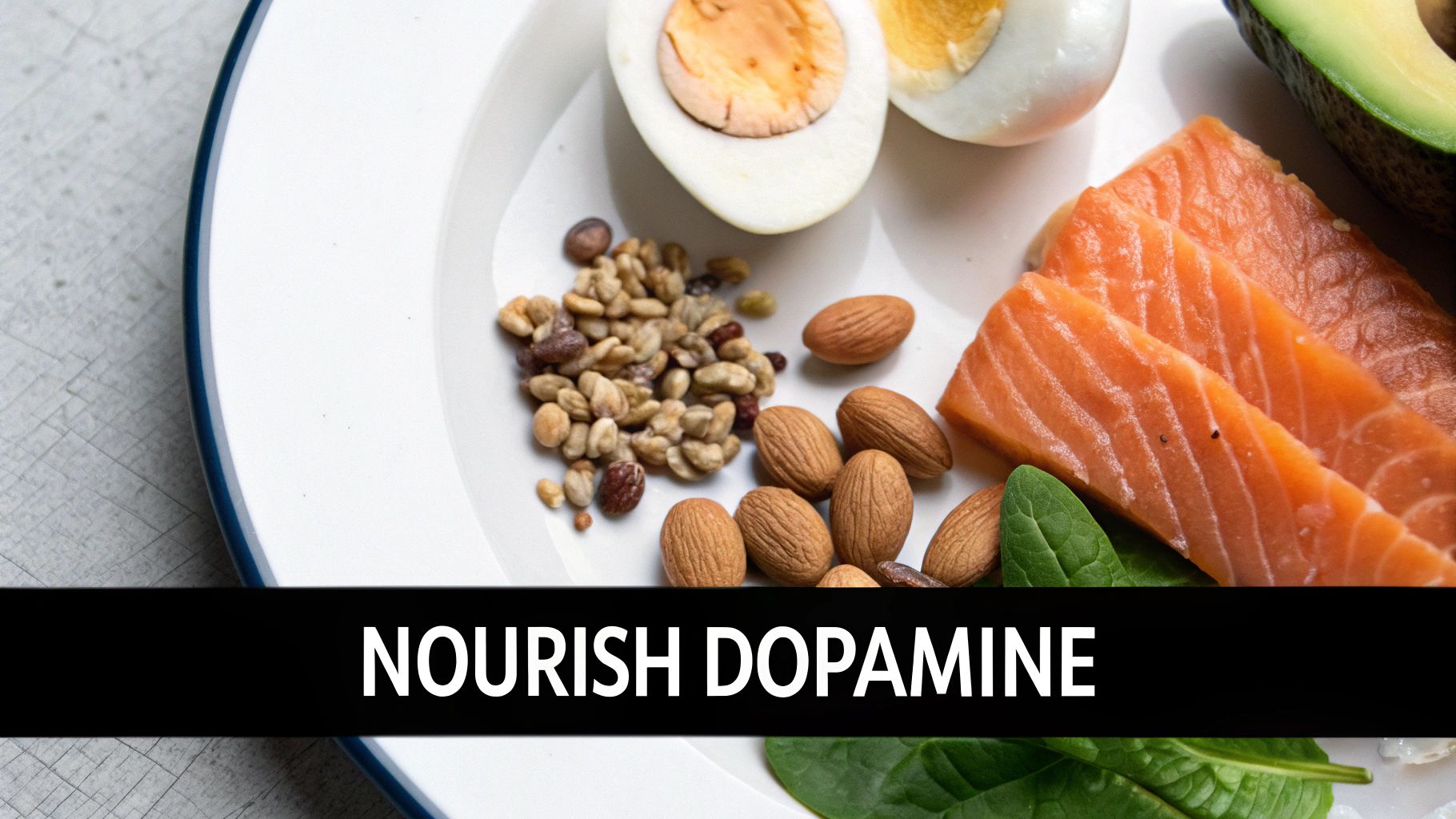
Dr. Mark Hyman, a leading voice in functional medicine, emphasizes that food is not just calories but information that controls our gene expression and brain chemistry. The logic is simple: providing your brain with the raw materials it needs, like tyrosine from protein-rich foods, enables it to function optimally. This dietary approach is a powerful, proactive strategy for supporting long-term mental wellness and cognitive function.
How to Implement Nutrition for Dopamine Support
To effectively use nutrition as one of the natural ways to increase dopamine, focus on incorporating key foods consistently rather than making drastic, short-term changes. The goal is to create a sustainable eating pattern that continuously supplies your brain with what it needs for neurotransmitter synthesis.
Actionable Tips:
- Prioritize Protein: Include a source of high-quality protein with every meal to ensure a steady supply of tyrosine. Excellent sources include lean meats, fish, eggs, dairy, legumes, nuts, and seeds.
- Time Your Tyrosine: Consume tyrosine-rich foods earlier in the day, such as in your breakfast or lunch, to support daytime focus, drive, and alertness when dopamine is most needed.
- Eat Nutrient-Dense Foods: Focus on whole foods rich in antioxidants and B vitamins, such as leafy greens, colorful vegetables, and fruits. These nutrients protect dopamine neurons from oxidative stress and act as co-factors in its creation.
- Support Gut Health: A healthy gut microbiome is linked to neurotransmitter production. Incorporate fiber-rich foods and fermented foods like yogurt, kefir, and sauerkraut to nurture beneficial gut bacteria.
- Reduce Processed Foods: Minimize your intake of refined sugars and highly processed foods, which can lead to inflammation and disrupt dopamine signaling, causing sharp spikes followed by crashes. While dietary strategies are foundational, some individuals explore targeted supplements. You can discover more about the role of specific plant-based compounds by reading The Definitive Guide to Mucuna Pruriens L-Dopa.
6. Social Connection and Community Engagement
Meaningful social interaction is a fundamental human need and a potent, natural way to increase dopamine. As highly social beings, our brains are hardwired to release dopamine in response to positive social cues, fostering feelings of belonging, trust, and happiness. This neurochemical reward reinforces behaviors like cooperation, bonding, and community building, which have been essential for human survival and well-being throughout history.
This concept is heavily supported by researchers like Johann Hari, who explores the deep connection between loneliness and mental health challenges. Positive social engagement, from a deep conversation to a shared laugh, activates the brain’s reward circuitry. This mechanism explains why communities built around shared activities, such as sports teams, recovery groups like AA, or volunteer organizations, report higher member retention and improved mental health outcomes.
How to Implement Social Connection for Dopamine Support
To leverage social connection for a dopamine boost, focus on the quality and authenticity of your interactions. The goal is to cultivate a sense of genuine belonging and shared purpose, which provides a more sustainable lift than superficial contact. This is one of the most fulfilling natural ways to increase dopamine and improve overall life satisfaction.
Actionable Tips:
- Prioritize Quality: Focus on nurturing a few deep, meaningful relationships rather than accumulating a large number of acquaintances. Vulnerability and authentic communication are key.
- Join a Group: Find a club, team, or organization that aligns with your interests, whether it’s a book club, hiking group, volunteer fire department, or a local sports league. Consistent engagement is crucial.
- Practice Acts of Service: Volunteering or helping others provides a powerful dopamine boost linked to pro-social behavior. This “helper’s high” creates a strong sense of purpose and connection.
- Choose In-Person Interaction: Whenever possible, opt for face-to-face meetups over virtual ones. In-person contact provides richer social cues (body language, eye contact) that more effectively stimulate dopamine release.
7. Goal-Setting and Achievement-Based Activities
The very act of setting, pursuing, and achieving goals is a fundamental driver of the brain’s reward circuitry. This process is one of the most sustainable natural ways to increase dopamine because it leverages the system’s core design: motivating you to seek and accomplish meaningful objectives. Your brain releases a small amount of dopamine in anticipation of a reward (the pursuit) and a larger amount upon its achievement, creating a powerful, reinforcing cycle.
This mechanism isn’t just about massive life achievements; it’s about the consistent feeling of progress. By breaking down large ambitions into smaller, manageable milestones, you create more frequent opportunities for these rewarding dopamine releases. This reinforces your motivation and builds momentum, making the journey feel as rewarding as the destination.
How to Implement Goal-Setting for Dopamine Support
To effectively harness this system, the focus must be on creating a clear path with measurable progress and celebrating wins along the way. This strategy turns abstract ambitions into a tangible, dopamine-driven process. The key is structuring your goals to provide a steady stream of feedback and accomplishment.
Actionable Tips:
- Set Intrinsically Meaningful Goals: Choose objectives that align with your personal values and interests, not just external pressures. This internal drive amplifies the sense of reward.
- Break It Down: Deconstruct a large goal into smaller, weekly or even daily tasks. Finishing a small task on a checklist provides a quick dopamine hit that fuels the next step.
- Track Progress Visually: Use a journal, a whiteboard, or an app to create a visual representation of your progress, like a progress bar or a checklist. Seeing how far you’ve come is highly motivating.
- Celebrate Small Wins: When you complete a milestone, consciously acknowledge it. This doesn’t have to be a big celebration; it can be as simple as telling a friend or taking a moment to appreciate your effort.
- Focus on the Process: As James Clear outlines in Atomic Habits, focusing on the system and the small, daily actions (the process) rather than just the final outcome (the goal) ensures consistent engagement and dopamine release.
8. Music Listening and Playing Instruments
Music is a universal language that powerfully engages the brain’s reward system, making it one of the most enjoyable natural ways to increase dopamine. Listening to music, especially songs you love, triggers the release of dopamine in the striatum, the same brain region activated by pleasurable stimuli like food and money. This neurochemical response is responsible for the chills or feelings of euphoria you might experience when hearing a particularly moving piece of music.
Neurologist Dr. Daniel Amen has extensively studied music’s effect on the brain, noting its ability to improve mood, focus, and emotional regulation by directly stimulating these dopamine pathways. The act of creating music by playing an instrument adds another layer of benefit, as the process of learning, practicing, and mastering a skill provides a sustained sense of accomplishment and goal achievement, which further supports healthy dopamine function.
How to Implement Music for Dopamine Support
To harness the dopamine-boosting power of music, focus on both passive listening and active participation. The key is to engage with sounds that resonate with you personally and to create opportunities for novel and rewarding musical experiences.
Actionable Tips:
- Curate Personal Playlists: Create playlists for different moods and activities. An upbeat, energizing playlist can be a powerful motivator for a workout, while a calming playlist can help reduce stress, both of which support dopamine balance.
- Listen Actively: Instead of having music as background noise, set aside time to listen attentively without distractions. This focused listening can deepen the emotional and neurological response.
- Learn an Instrument: Pick up an instrument like a guitar, piano, or even a ukulele. The structured process of learning and achieving small milestones provides consistent dopamine reinforcement.
- Engage Socially: Join a choir, a local drum circle, or a community band. Combining music with social connection can amplify its positive effects, creating a powerful synergy of reward signals in the brain.
9. Novelty and New Experiences
Seeking and engaging in new experiences is a potent, built-in mechanism for stimulating your brain’s reward system. The human brain is wired to respond to novelty; when you encounter something new, unexpected, or interesting, your brain releases a burst of dopamine. This neurochemical response is not just about the experience itself but also about the anticipation of it, driving curiosity and motivating exploration.
This process is a fundamental part of learning and adaptation. Regularly exposing yourself to novel stimuli keeps your dopamine pathways sensitive and responsive, preventing the adaptation that can occur with routine activities. Think of it as a way to keep your brain’s reward circuitry “fresh” and engaged, which is one of the most effective natural ways to increase dopamine over the long term.
How to Implement Novelty for Dopamine Support
Incorporating novelty doesn’t always require grand adventures; it can be woven into your daily and weekly routines. The key is to consciously step outside of your comfort zone and break from autopilot mode, whether in big or small ways.
Actionable Tips:
- Schedule Exploration: Plan one new activity each month, like visiting a different neighborhood, trying an exotic cuisine, or going to a museum you’ve never been to.
- Learn a New Skill: Sign up for a class to learn something completely new, such as a musical instrument, a language, or coding. The initial learning phase provides a powerful dopamine spike.
- Vary Your Routines: Make small changes to daily habits. Take a different route to work, rearrange your furniture, or try a new workout class instead of your usual gym session.
- Embrace Local Travel: You don’t need to book an international flight to find novelty. Explore a local park, hike a new trail, or take a day trip to a nearby town.
- Share the Experience: Experiencing something new with a friend or partner can amplify the dopamine boost through social connection, creating a shared sense of reward and discovery.
10. Creative Expression and Artistic Pursuits
Engaging in creative activities is a profound way to stimulate the brain’s reward system and naturally increase dopamine. Whether you are painting, writing, composing music, or crafting, the entire creative process activates dopamine pathways. This happens through the anticipation of a novel outcome, the focused “flow state” during creation, and the sense of accomplishment upon completing a project. This mechanism makes creative expression both an intrinsically rewarding pursuit and a sustainable source of motivation.
Authors like Elizabeth Gilbert, in her book “Big Magic,” explore how the act of creation itself is a source of joy and fulfillment, separate from external validation. This internal reward is driven by dopamine, reinforcing the behavior and encouraging continued engagement. The act of bringing something new into existence provides a powerful, self-generated sense of achievement.
How to Implement Creativity for Dopamine Support
To leverage creative expression for a dopamine boost, the key is to focus on the process rather than a perfect outcome. It’s about personal expression and enjoyment, which removes the pressure that can stifle the dopamine response.
Actionable Tips:
- Align with Your Interests: Choose a creative outlet that genuinely excites you, whether it’s journaling, digital design, pottery, or learning a new instrument. Personal interest is the foundation for a rewarding habit.
- Set Small, Achievable Goals: Instead of aiming to write a novel, start with a goal of writing 100 words a day. Completing these small milestones provides consistent dopamine hits and builds momentum.
- Embrace the Process: Let go of perfectionism. The goal is to engage your brain in a novel and fulfilling way. Focus on the feeling of creating, not just the final product.
- Join a Community: Participate in a workshop, a writing group, or an online crafting forum. Sharing your progress and connecting with others adds a social layer of reward, further amplifying dopamine release.
Comparison of 10 Natural Dopamine-Boosting Methods
| Method | Implementation complexity 🔄 | Resource & time efficiency ⚡ | Expected outcomes ⭐📊 | Ideal use cases 💡 | Key advantages ⭐ |
|---|---|---|---|---|---|
| Regular Exercise and Physical Activity | 🔄🔄 | ⚡⚡ | ⭐⭐⭐⭐ — Immediate + sustained dopamine; improves sleep & health | Daily routines, mood/motivation boosts, habit building | Immediate & lasting dopamine; broad health benefits |
| Cold Water Exposure and Cold Showers | 🔄🔄🔄 | ⚡⚡⚡ | ⭐⭐⭐ — Very rapid large spike lasting hours | Morning boost, resilience training, short recovery sessions | Fast effects, low cost, short duration |
| Sunlight Exposure and Outdoor Time | 🔄 | ⚡⚡ | ⭐⭐⭐ — Regulates circadian rhythm; improves mood & sleep | Morning routines, seasonal mood support, outdoor walks | Free, supports sleep and vitamin D synthesis |
| Meditation and Mindfulness Practices | 🔄🔄 | ⚡ | ⭐⭐⭐ — Gradual regulation of dopamine; improves attention & stress | Stress reduction, focus training, daily calm practice | Accessible, improves attention and emotional regulation |
| Nutritional Optimization and Dopamine Foods | 🔄🔄 | ⚡⚡ | ⭐⭐⭐ — Foundational biochemical support; sustained effects over weeks | Chronic support, cognitive performance, long-term health | Addresses root causes; supports overall brain function |
| Social Connection and Community Engagement | 🔄🔄 | ⚡⚡ | ⭐⭐⭐⭐ — Strong social reward activation; reduces loneliness | Behavior change, accountability, mental health support | Highly rewarding; amplifies other interventions |
| Goal-Setting and Achievement Activities | 🔄🔄 | ⚡⚡ | ⭐⭐⭐⭐ — Repeated anticipation + achievement hits; builds momentum | Performance, habit formation, skill development | Creates structure, repeated reinforcement of motivation |
| Music Listening and Playing Instruments | 🔄🔄 | ⚡⚡⚡ | ⭐⭐⭐ — Immediate mood lift; long-term gains with practice | Mood regulation, during exercise, creative outlets | Immediate enjoyment; versatile solo or social benefits |
| Novelty and New Experiences | 🔄🔄 | ⚡⚡ | ⭐⭐⭐⭐ — Prevents habituation; boosts anticipation and learning | Breaking plateaus, creativity, personal growth | Maintains reward sensitivity; enriches experience |
| Creative Expression and Artistic Pursuits | 🔄🔄 | ⚡⚡ | ⭐⭐⭐⭐ — Process + completion + sharing yield multiple dopamine hits | Emotional processing, skill mastery, wellbeing routines | Intrinsically motivating; supports flow and accomplishment |
Crafting Your Personalized Dopamine Toolkit
The journey to naturally increase dopamine is not a treasure hunt for a single, elusive secret. Instead, it’s about the art of conscious living, about building a sustainable, holistic lifestyle that nourishes your brain’s intricate reward and motivation systems. Think of it less as a rigid prescription and more as assembling a personalized toolkit, where each strategy is a valuable instrument you can learn to use effectively.
We’ve explored a diverse landscape of powerful methods, from the invigorating rush of a cold shower to the deep, resonant calm of meditation. We’ve seen how the simple act of stepping into sunlight or sharing a genuine laugh with a friend can fundamentally alter your brain chemistry for the better. The true power lies not in choosing one of these strategies, but in understanding how they can be woven together into the fabric of your daily life.
The Synergy of Stacking Strategies
The most profound and lasting results come from “stacking” these habits. This approach creates a synergistic effect, where the combined impact is far greater than the sum of its parts. By layering different dopamine-supportive activities, you create a robust foundation for mental well-being that is resilient to the stresses of modern life.
Consider these practical examples of habit stacking:
- Movement + Nature + Novelty: Instead of your usual gym routine, try hiking a new trail. You combine the proven dopamine boost of physical activity with sunlight exposure and the inherent novelty of an unexplored environment.
- Social Connection + Achievement: Join a recreational sports team or a book club. This merges the deep-seated human need for community with the satisfaction that comes from setting and achieving collective goals.
- Creativity + Mindfulness: Practice mindful photography on a walk. This engages your creative faculties while grounding you in the present moment, a powerful combination for enhancing focus and reducing stress.
The goal is to move beyond simply checking items off a list. It’s about creating routines that feel enriching and genuinely enjoyable. This enjoyment itself is a signal that your dopamine system is responding positively, creating a self-reinforcing cycle of motivation and reward.
From Knowledge to Action: Your Next Steps
Understanding these natural ways to increase dopamine is the first step; consistent implementation is where the transformation happens. To start building your toolkit, begin by identifying which of the ten strategies discussed in this article resonate most with you. You don’t need to implement everything at once.
Key Insight: Start small and be intentional. Choose just one or two new habits to focus on for the next few weeks. Perhaps it’s a 15-minute walk in the morning sun or dedicating 10 minutes to a creative hobby before bed. Track how you feel, notice the shifts in your energy and mood, and let that positive feedback fuel your momentum.
As you build this foundation of healthy lifestyle habits, you might find that certain moments still call for more direct support. For individuals seeking a more targeted approach, especially to support motivation and cognitive function, supplementation can be a valuable component of a comprehensive wellness strategy. When lifestyle factors are optimized, a high-quality supplement can act as a powerful adjunct.
For those considering this route, a standardized Mucuna pruriens extract offers a direct precursor to dopamine in the form of L-Dopa. It’s a well-researched botanical that directly provides the raw material your brain needs. However, the key is to choose a product that guarantees potency and purity, ensuring you receive a consistent and effective dose.
Ultimately, mastering your dopamine levels is about reclaiming agency over your own well-being. It’s about understanding that your daily choices, from the food you eat to the thoughts you cultivate, have a direct and powerful impact on your focus, drive, and zest for life. By embracing these natural strategies, you are not just chasing a fleeting feeling of pleasure; you are investing in a more vibrant, engaged, and fulfilling existence.
Ready to enhance your wellness toolkit with targeted, high-purity support? Keter Wellness offers a premium, standardized Mucuna L‑Dopa 20% extract designed to support motivation and cognitive function, complementing the natural strategies you’ve learned. Explore how our transparent, filler-free formulation can fit into your holistic health plan at Keter Wellness.
Leave a Reply