

You’ve probably heard whispers about Mucuna pruriens, the tropical legume also known as the velvet bean. It’s been gaining a lot of attention for one key reason: its incredibly high concentration of a compound called L-Dopa. In this article, we will cover what is Mucuna pruriens and how it actually works.
This exploration into What Is Mucuna Pruriens will help you understand its benefits and applications in modern wellness.
L-Dopa is the direct precursor to dopamine—a critical neurotransmitter that essentially runs your brain’s systems for mood, motivation, and physical movement.
Understanding the Velvet Bean
Mucuna pruriens is far more than just a plant; it’s a botanical powerhouse with deep roots in traditional Ayurvedic medicine. For centuries, practitioners in India have relied on this fast-growing, climbing shrub to address everything from nervous system imbalances to male infertility.
But what truly sets Mucuna apart is its rich, natural supply of L-Dopa. Think of your brain’s motivation system like a high-performance engine that runs on a specific fuel: dopamine. L-Dopa is the refined crude oil that your body can easily and directly convert into that premium fuel. This direct pathway is precisely why the velvet bean has such a profound influence on the brain’s reward and pleasure centers.
An Ancient Remedy Meets Modern Science
While its use dates back thousands of years, modern science is now catching up and validating many of its traditional applications. The plant’s remarkable ability to support dopamine levels has made it a major subject of interest in both wellness circles and formal scientific research.
Unlike synthetic sources of L-Dopa, the L-Dopa in Mucuna comes bundled with a whole host of other natural compounds. Many experts believe these work together, enhancing its overall effects and bioavailability in a way that isolated compounds can’t.
At its core, Mucuna pruriens offers a natural, plant-based building block for one of the brain’s most important chemical messengers. It’s a perfect example of an ancient remedy finding its place in modern neurological health.
To get a clearer picture of this unique plant, let’s break down its key features:
- A Natural Dopamine Precursor: It stands as one of the world’s most concentrated natural sources of L-Dopa.
- Rich in Bioactive Compounds: Beyond L-Dopa, it contains a symphony of antioxidants and other phytonutrients that contribute to its powerful profile.
- An Ayurvedic Staple: It has a long and respected history of use for supporting vitality, neurological function, and reproductive health.
Here’s a quick summary to put it all together.
Mucuna Pruriens at a Glance
This table gives you a snapshot of the velvet bean’s most important attributes.
| Attribute | Description |
|---|---|
| Common Name | Velvet Bean, Cowhage |
| Botanical Name | Mucuna pruriens |
| Primary Active | L-Dopa (Levodopa) |
| Traditional Use | Ayurveda (for mood, nervous system, fertility) |
| Key Mechanism | Directly increases dopamine levels in the brain |
With this foundational knowledge, it’s easy to see why Mucuna isn’t just another passing wellness trend. It’s a time-tested botanical with incredibly relevant applications for supporting both mental and physical well-being today.
How L-Dopa from Mucuna Pruriens Supports Your Brain
To really get a handle on how Mucuna works, we need to follow its star player, L-Dopa, on its journey into the brain. Picture your brain as a VIP club, protected by a very discerning bouncer called the blood-brain barrier. This barrier is incredibly strict about who gets in, blocking potential threats while waving through essential nutrients.
Dopamine, the very thing we want more of, can’t get past this bouncer. It’s just not on the list.
But L-Dopa from Mucuna holds a special all-access pass. Thanks to its unique molecular shape, it can stroll right across the blood-brain barrier without any trouble. Once it’s inside, a quick chemical handshake turns it directly into the dopamine your brain is looking for.
It’s a beautifully efficient system. Instead of shipping raw materials that need a lot of processing, Mucuna delivers a nearly finished product right to the assembly line. This allows your brain to quickly boost its supply of the neurotransmitter that drives motivation, focus, and that satisfying sense of accomplishment.
The Natural Advantage of a Whole Plant Extract
Unlike the synthetic L-Dopa you might find in pharmaceuticals, the L-Dopa from Mucuna pruriens doesn’t show up to the party alone. It arrives with a whole entourage of other compounds naturally found in the velvet bean, like antioxidants and supportive amino acids.
This natural teamwork is thought to provide a couple of key advantages:
- Better Absorption: The other compounds in the plant may act like a support crew, helping the body absorb and utilize L-Dopa more effectively.
- Smoother Effects: Having these co-factors present can help buffer and balance the effects of L-Dopa, potentially creating a smoother, more rounded experience than you’d get from its isolated, synthetic cousin.
This visual lays out the simple yet powerful journey from plant to brain.
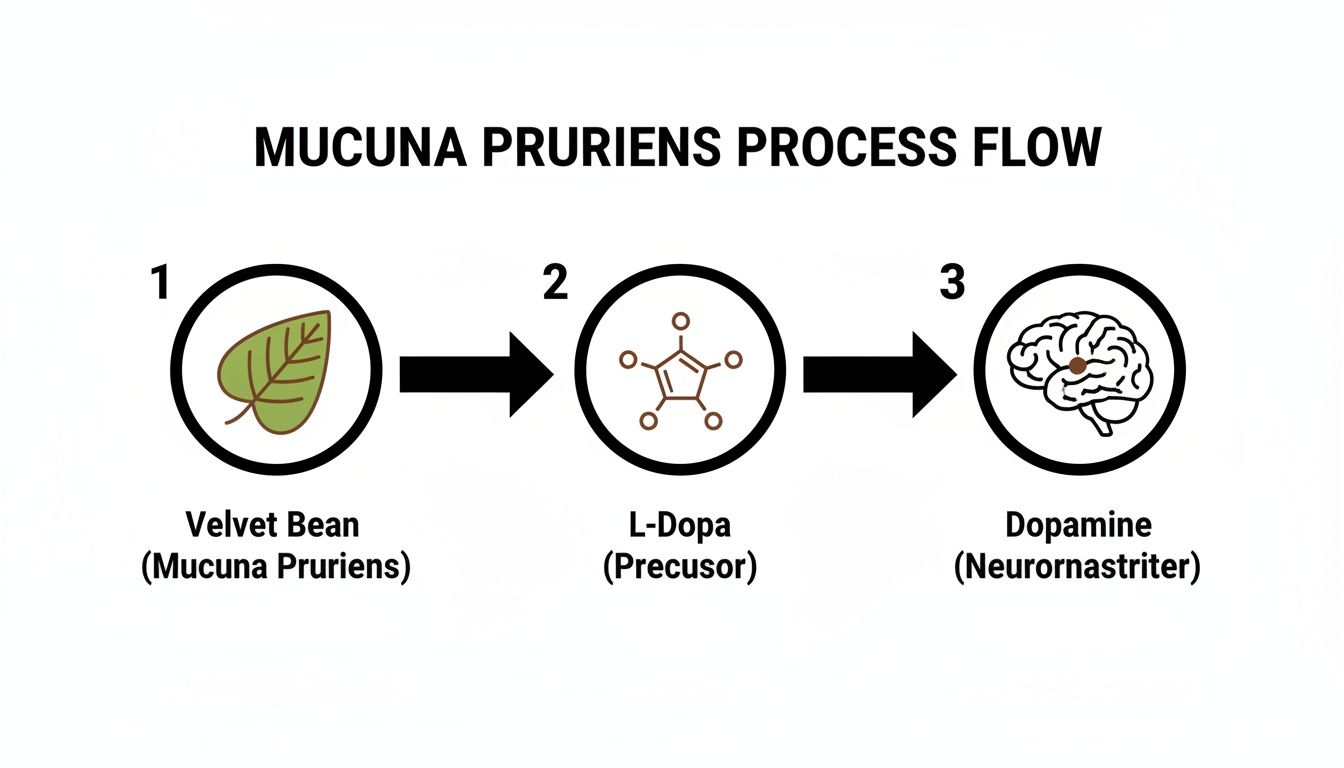
The process is a perfect example of how a natural compound can directly and elegantly influence brain chemistry. By sidestepping the blood-brain barrier and converting into a crucial neurotransmitter, Mucuna gets right to the heart of the matter.
The relationship between L-Dopa and our brain is a fascinating corner of neuroscience. If you want to dive deeper, you can learn more about the science of L-Dopa and its impact on the brain in our detailed guide. Understanding this pathway makes it clear how a humble bean can have such a profound effect on our mental and physical state, shaping everything from our daily drive to our capacity for joy.
What the Science Says About Mucuna’s Health Benefits
It’s one thing to talk about biochemistry, but it’s another to see how it translates into real-world benefits. The exciting part is that modern research is catching up with Mucuna pruriens’ long history in traditional medicine, giving us a clearer picture of what this bean can actually do for the brain and body.
The most talked-about benefit is its impact on mood and motivation. Think of dopamine as the engine of your brain’s reward system—it’s what makes you feel driven, focused, and satisfied when you accomplish something. By supplying a direct precursor to dopamine, Mucuna helps fuel the very circuits responsible for ambition and that get-up-and-go feeling.
This isn’t just about a fleeting mood lift. It’s about restoring the underlying chemical balance that drives purposeful action. For anyone stuck in a slump or feeling a general lack of enthusiasm, supporting dopamine can feel like turning the lights back on in your brain’s motivation control center.
Enhancing Fertility and Vitality
One of Mucuna’s oldest and most respected uses in Ayurveda is for supporting male reproductive health. It turns out this ancient wisdom has a strong scientific basis, and modern studies are starting to confirm its positive effects on male fertility.
Research suggests Mucuna can improve sperm quality, including both count and motility. This is likely tied to its powerful antioxidant properties and its potential to lower psychological stress—two major factors that can interfere with healthy reproductive function.
On top of that, by supporting dopamine, which helps regulate key hormones like testosterone, Mucuna pruriens has long been used to boost libido and vitality in men. It’s a perfect example of ancient herbal knowledge being validated by today’s scientific lens.
“The versatility of Mucuna is remarkable, bridging the gap between traditional use for vitality and modern clinical interest for neurological support. Its impact on dopamine pathways appears to be the central pillar supporting its diverse range of benefits.”
A Natural Ally in Parkinson’s Research
Perhaps the most compelling modern research on Mucuna revolves around its potential in managing Parkinson’s disease. This neurodegenerative condition is defined by a tragic loss of dopamine-producing cells, which leads to the classic symptoms of tremors, stiffness, and difficulty with movement.
Because Mucuna naturally contains L-Dopa—the exact same compound used in the gold-standard pharmaceutical treatment for Parkinson’s—it has become a serious subject of scientific study. A pooled review of both preclinical and clinical studies confirms its tangible pharmacological effects.
Several human trials have put Mucuna preparations to the test, with some randomized crossover studies showing meaningful improvements in motor function. In fact, some small trials found that Mucuna offered comparable symptomatic relief to standard levodopa/carbidopa treatments, sometimes with even fewer side effects like dyskinesias (involuntary movements). You can dive into a review of these findings in this detailed scientific summary.
It’s critical to understand that Mucuna is not a cure or a replacement for conventional medical care. But this research is incredibly promising, highlighting its potential as a complementary natural option and reinforcing why this ancient plant remains at the forefront of neurological health research.
Finding a High-Quality Mucuna Pruriens Supplement
Not all herbal supplements are created equal, and that’s especially true for Mucuna pruriens. With the global market for Mucuna seeds valued at around USD 184.6 million in 2024, there’s a flood of products hitting the shelves to meet demand. This is part of a much bigger trend, with the total L-Dopa market projected to hit nearly USD 2.46 billion by 2034, as more people seek out natural ways to support their brain health. You can see the full analysis of these market trends and their drivers here.
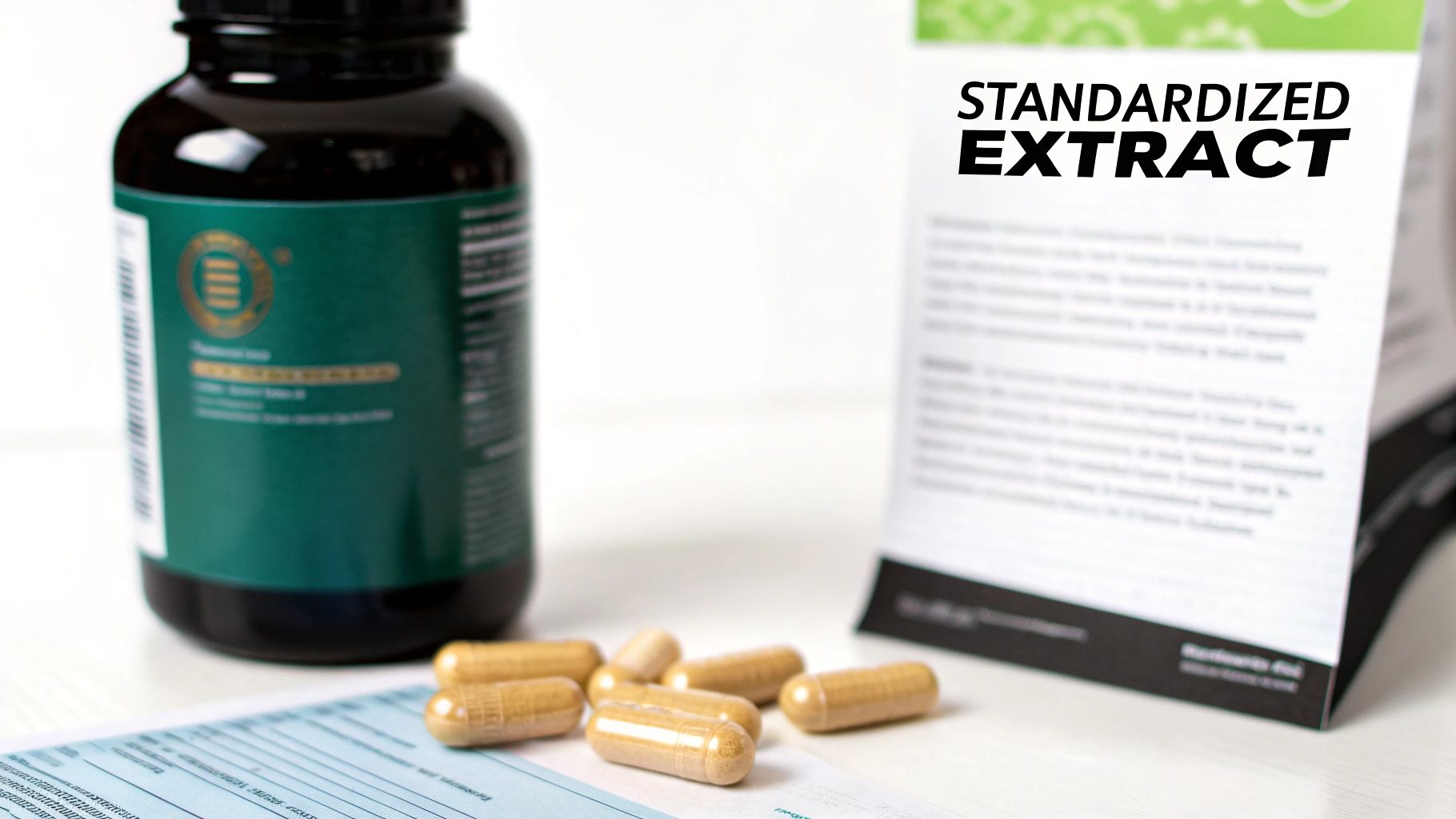
This booming market means you have endless options, but their effectiveness can vary dramatically. The difference between a potent, reliable supplement and an expensive dud comes down to one crucial word: standardization.
Why Standardization Is Non-Negotiable
Standardization is simply the process of guaranteeing that every single batch of a supplement contains a specific, consistent amount of its main active compound. For Mucuna, that active compound is L-Dopa.
An unstandardized product is often just raw, ground-up bean powder. Its L-Dopa levels can be all over the place from one capsule to the next.
Think of it like brewing coffee with a random scoop of beans each morning—some days your cup might be perfect, but other days it could be disappointingly weak or unpleasantly strong. Standardization removes that guesswork, giving you a predictable and consistent effect every single time. We take a deeper dive into this topic in our guide on standardized Mucuna extract versus raw powder.
A standardized extract guarantees that you receive a precise, effective dose of the key bioactive ingredient. Without it, you are essentially purchasing an unknown quantity with unpredictable results.
For example, Keter Wellness’s Mucuna L-Dopa 20% is standardized to contain a minimum of 20% L-Dopa by weight. This means every 700 mg capsule delivers a reliable 140 mg of L-Dopa, ensuring you get the intended benefit with each dose.
Your Quality Checklist for Choosing a Supplement
Beyond standardization, a few other quality markers are essential for making sure you’re investing in a safe and effective product. Always look for these indicators on the label or the company’s website:
- Third-Party Testing: This is your proof that an independent lab has verified the product’s purity and potency. It ensures the supplement is free from contaminants like heavy metals, microbes, or pesticides.
- GMP Certification: Good Manufacturing Practices (GMP) certification means the product was made in a facility that follows strict FDA quality control standards from start to finish.
- Transparent Sourcing: Reputable brands are open about where they source their ingredients. This transparency gives you confidence in the quality of the raw material itself.
A Practical Guide to Safe and Effective Use
Bringing Mucuna pruriens into your routine is straightforward, but a thoughtful approach ensures you get the best results safely. As we’ve seen, standardized extracts in capsule form are the most reliable way to get a consistent dose of L-Dopa, taking the guesswork out of the equation.
The golden rule for any new supplement is to start low and go slow. It’s always best to begin with the smallest effective dose and only increase it gradually if needed, ideally with guidance from a healthcare professional. This simple strategy lets your body adjust and helps you find the precise amount that works for you without overdoing it.
Timing can also make a big difference in how you feel. For a detailed breakdown, check out our guide on when to take Mucuna for the best results.
Understanding Potential Side Effects
While most people tolerate Mucuna well, some may experience side effects, especially with higher doses. These are usually tied to the rapid increase in dopamine and are often mild and temporary.
Common side effects can include:
- Nausea or an upset stomach
- Headaches
- Lightheadedness or dizziness
- In rare cases, heart palpitations
If you notice any of these, the best course of action is to lower your dose or stop taking it and talk to your doctor. Starting small and taking Mucuna with a light meal can often prevent digestive issues right from the start.
Who Should Avoid Mucuna Pruriens
Despite its many benefits, Mucuna isn’t for everyone. Certain health conditions and life stages call for caution, and some people should avoid it altogether. Your safety comes first, so having a conversation with your healthcare provider before you start is non-negotiable.
Safety First: Always consult your physician before adding any new supplement to your regimen, especially if you have pre-existing health conditions or are taking other medications. Being transparent with your doctor is the foundation of responsible supplementation.
You should avoid Mucuna pruriens if any of these apply to you:
- Pregnancy and Breastfeeding: There simply isn’t enough research to confirm its safety for expectant or nursing mothers.
- Melanoma: L-Dopa is a precursor to melanin, so anyone with a history of this type of skin cancer is advised to steer clear.
- Severe Liver or Kidney Disease: If your organ function is compromised, it’s best to avoid Mucuna unless you get the green light from a specialist.
Critical Drug Interactions to Know
Perhaps the most important safety aspect is Mucuna’s potential to interact with certain medications. Because it has such a direct impact on dopamine, it can amplify or interfere with drugs that work on the same brain pathways.
Be especially careful if you’re taking:
- MAOIs (Monoamine Oxidase Inhibitors): Combining L-Dopa with this class of antidepressants can cause a dangerous spike in blood pressure. This is a critical interaction to avoid.
- Parkinson’s Medications: Many of these drugs already contain L-Dopa or are designed to affect dopamine. Adding Mucuna on top requires strict medical supervision to prevent over-stimulation or other complications.
- Blood Pressure Medications: Mucuna can sometimes lower blood pressure, which might intensify the effects of antihypertensive drugs.
Keeping these guidelines in mind is key to having a positive and safe experience with this powerful plant.
Understanding the Global Journey of the Velvet Bean
To really appreciate what’s inside your supplement bottle, it helps to understand the incredible journey Mucuna pruriens takes to get there. This isn’t some compound synthesized in a lab—it’s a product of international agriculture, and its supply chain directly shapes the quality of the final extract.
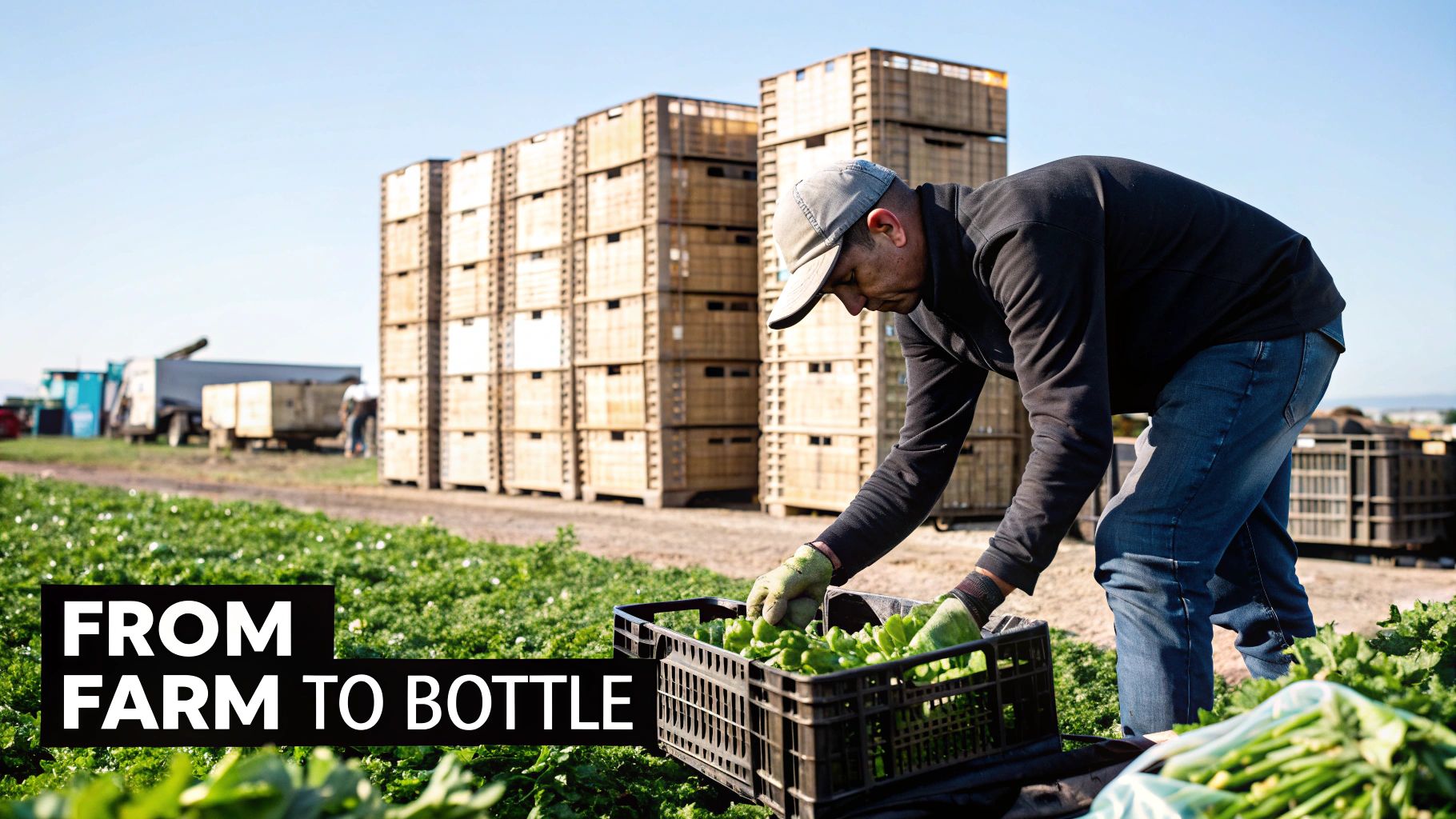
This ancient botanical has become a major player in modern wellness. Its journey starts in the tropical regions where it thrives, particularly in India and China—the two giants dominating the world stage for Mucuna production.
The Path from Farm to Capsule
The global trade for Mucuna is surprisingly concentrated. If you look at recent import data, India supplied roughly 69% of shipments and China about 31%. On the other side of that trade, a single primary buyer—the United States—accounted for a massive 66% of all imports. You can dig into more of this data on the international trade of Mucuna pruriens on Volza.com.
This supply chain isn’t a simple A-to-B trip. It involves several critical stages:
- Cultivation and Harvesting: It all begins with farmers who grow and harvest the velvet beans. The agricultural practices they use can significantly influence the potency of the raw material.
- Processing and Export: After harvesting, the raw beans are dried and processed before they’re shipped out to international markets.
- Manufacturing and Testing: Once the raw material arrives, this is where reputable manufacturers like Keter Wellness step in to perform rigorous testing and standardization to create the final, reliable product.
This global journey highlights a critical point: the quality of your supplement is directly tied to ethical sourcing, transparent partnerships, and meticulous manufacturing standards that span the entire process, from start to finish.
Your Questions About Mucuna, Answered
As we wrap up, let’s tackle a few of the most common questions people ask. Think of this as a quick, practical FAQ to give you clarity and confidence as you explore what this powerful plant can do.
How Long Does It Take for Mucuna Pruriens to Work?
This is a classic “it depends” situation, as everyone’s neurochemistry is a bit different. Some people feel a subtle shift in their mood, focus, or drive within just a few days of consistent use.
For deeper benefits, like significant neurological support or changes in fertility markers, you need to be more patient. It can often take several weeks, or even a couple of months, to see tangible results. Consistency and the right dose are everything here.
Can I Take Mucuna Pruriens with Coffee?
It’s smart to be careful with this combination. Mucuna gives you a lift by increasing dopamine, and caffeine is a well-known central nervous system stimulant. Putting them together can sometimes lead to overstimulation, a feeling of anxiety, or jitteriness—especially if you’re sensitive to stimulants.
Our advice? Try Mucuna on its own first. Get a feel for how your body responds to it before you think about adding another stimulant to the mix. And, as always, talking to your doctor about any new supplement combination is the safest way to go.
Is Mucuna pruriens the same as L-Dopa? Not exactly. Think of Mucuna as the whole, natural package and L-Dopa as its star ingredient. A quality Mucuna supplement provides L-Dopa alongside a whole team of other plant co-factors that help create a more balanced, synergistic effect.
Many experts believe these extra compounds actually improve absorption and lead to a smoother experience compared to taking synthetic, isolated L-Dopa. It’s the difference between eating a whole orange and just popping a vitamin C tablet—both give you the key nutrient, but the whole food delivers it in a more complex, natural matrix.
Ready to experience the benefits of a high-quality, standardized extract? The Keter Wellness Mucuna L-Dopa 20% is formulated for purity and potency, ensuring you receive a reliable and effective dose every time. Explore our commitment to quality and learn more about our Mucuna supplement here.
Leave a Reply