
Feeling overwhelmed is practically a universal experience these days, and it’s no surprise that many of us are searching for safer, more natural ways to manage the pressure. Rather than a quick fix, natural stress relief supplements like adaptogens are like a support crew for your body, helping its own stress-response system find its way back to equilibrium. This guide is your evidence-based roadmap to choosing and using these allies well.
Why We Are Turning to Natural Stress Support

In a world buzzing with notifications, deadlines, and never-ending to-do lists, our bodies often get stuck on high alert. This constant “fight or flight” signal can leave you feeling exhausted, foggy, and perpetually on edge. It makes perfect sense that more and more people are looking past conventional options and into the world of herbal and nutritional support.
This isn’t just a trend; it’s a real shift toward reclaiming control over our own well-being. People want solutions that work with their bodies, not just mask the symptoms. The goal is to build resilience from the inside out, creating a stronger foundation to handle whatever life throws your way.
The Science Behind Natural Resilience
At the core of this approach is the idea of supporting the body’s own regulatory systems. Think of your stress response system—the HPA axis—as a car engine. If you’re constantly flooring it without a break, it’s going to overheat and wear out.
Natural compounds, especially a class of herbs called adaptogens, act like a sophisticated cooling system for that engine. They don’t shut it off, but they help it run more efficiently and prevent it from redlining. These powerful botanicals help modulate stress hormones like cortisol, making sure they’re released when needed but don’t hang around causing problems.
This growing interest isn’t just anecdotal. The global market for stress relief supplements was valued at around USD 605 million in 2024 and is projected to soar to over USD 1,084 million by 2035. That surge reflects a collective demand for gentler, more sustainable ways to manage our mental health.
What This Guide Offers You
This guide is here to cut through the noise and give you clear, science-backed information on the most effective natural stress relief supplements out there. We want to empower you with the knowledge to make smart, informed decisions for your health.
Here’s a look at what we’ll cover:
- Understanding the Mechanisms: How these supplements actually work with your body’s biology.
- A Deep Dive into Key Herbs: We’ll explore the top contenders, like Ashwagandha and Rhodiola.
- Making Smart Choices: You’ll learn how to spot high-quality, potent products that work.
- Safe and Effective Integration: We’ll discuss how to build a supportive routine for long-term balance.
By the end, you’ll have a practical game plan for using these natural allies to support your journey toward a calmer, more balanced life. You can explore more about the growing market for stress relief supplements and see the full analysis of its projected growth.
Your Body’s Stress Response—and How Supplements Can Help
To get a handle on how natural stress relief supplements work, it helps to first understand your body’s own internal alarm system. Think of it as a highly sophisticated survival mechanism hardwired into your biology. When a threat pops up—whether it’s a real physical danger or a looming deadline at work—this system kicks into high gear.
This is the classic “fight or flight” response. Your brain sends out an immediate alert, signaling the release of adrenaline and cortisol. Your heart pounds, your senses sharpen, and blood rushes to your muscles. It’s a brilliant, powerful response designed to help you either face the danger or get away from it, fast. In short bursts, it’s exactly what you need.
The trouble starts when that alarm gets stuck in the “on” position. Modern life is full of stressors that aren’t saber-toothed tigers but are chronic and psychological—work pressure, financial worries, and family responsibilities. This constant low-grade threat keeps the alarm blaring day after day.
The Problem with Chronic Stress
When your body stays in a perpetual state of high alert, your cortisol levels never get a chance to come back down. This prolonged exposure can throw nearly all your body’s systems out of whack, leading to that all-too-familiar feeling of exhaustion, brain fog, irritability, and eventual burnout. It’s like flooring the gas pedal on your car for weeks on end—sooner or later, the engine is going to wear out.
This is where natural supplements, especially a class of herbs known as adaptogens, come into the picture. They don’t just flip an “off” switch on your stress. Instead, they act more like intelligent modulators, helping your body find its balance again.
Think of adaptogens as a smart thermostat for your stress response. When things are running too hot (anxiety, overwhelm), they help dial it down. When you’re feeling drained and depleted, they help gently bring the temperature back up, restoring energy and resilience.
This balancing act helps you avoid the extreme peaks and valleys that come with a haywire stress response. Rather than forcing a change, they work with your body to restore its natural rhythm.
How They Actually Work
So, what’s happening under the hood? These natural compounds primarily work their magic in two key ways: by fine-tuning your stress hormones and by supporting your brain chemistry.
- Regulating Cortisol: Many adaptogens, like Ashwagandha and Rhodiola, have a direct line to the Hypothalamic-Pituitary-Adrenal (HPA) axis—the command center for your entire stress response. They can help gently lower excessive cortisol, preventing the long-term damage that happens when this hormone stays elevated for too long.
- Supporting Neurotransmitters: Other compounds give your brain the raw materials it needs to produce its own “calm-and-collected” chemicals. L-theanine, for example, is well-known for increasing levels of GABA, a neurotransmitter that puts the brakes on an overactive mind. Magnesium is another key player, as it’s crucial for GABA to function correctly and helps regulate the entire nervous system.
By working on these fundamental pathways, natural supplements help your body become more efficient at handling whatever life throws at it. They aren’t a quick fix, but they are powerful allies in building a more resilient internal foundation. They support your biology, making it easier to navigate daily pressures without feeling completely overwhelmed.
Exploring the Most Effective Natural Stress Relievers
Now that we’ve covered the biology of stress, let’s meet the all-stars of the supplement world. Think of them as a team of specialists, each with a unique skill set for tackling different types of stress.
We’ll break down the top contenders: Ashwagandha, Rhodiola Rosea, L-Theanine, Magnesium, and Mucuna Pruriens. You’ll learn where they come from, how they work their magic in your body, and what the science says about them. This should give you a clear picture of which natural stress relief supplements might be the right fit for you.
Ashwagandha: The Resilience Builder
Ashwagandha (Withania somnifera) is a cornerstone of Ayurvedic medicine, where it’s been revered for thousands of years for restoring vitality. Its name even translates from Sanskrit to “smell of the horse,” hinting at its ability to impart strength and stamina.
This powerful herb works by helping to regulate your body’s central stress-response system, the HPA axis. It acts like a buffer against chronic stress by helping to lower elevated cortisol levels. It’s less of a quick fix and more of a long-term trainer for your nervous system, building your overall resilience over time.
Ashwagandha is best for that “wired and tired” feeling that comes with prolonged stress. It helps calm the nervous system while simultaneously restoring energy, getting to the core of burnout.
Its effectiveness is well-documented. Modern studies back up centuries of traditional use, showing it can reduce cortisol levels by up to 30% in stressed adults after 60 days. Typical dosages of a standardized extract range from 300 to 600 mg daily.
This visual shows how chronic stress throws cortisol out of whack and how adaptogens like Ashwagandha help bring it back into balance.
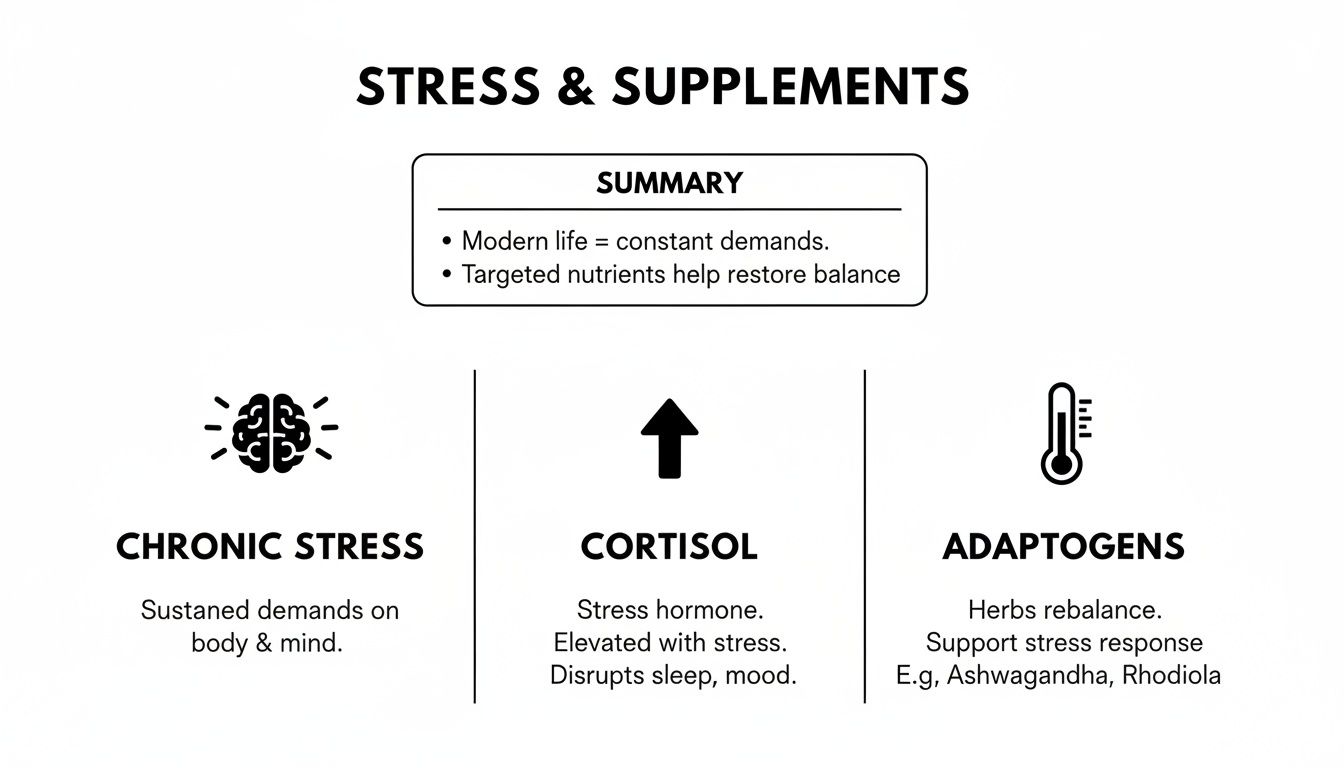
Think of adaptogens as a smart thermostat for your stress response, gently guiding your system back into a healthy, balanced range.
Rhodiola Rosea: The Energy Modulator
Hailing from the cold, mountainous regions of Europe and Asia, Rhodiola Rosea is another formidable adaptogen known for fighting fatigue. Vikings traditionally used it to boost physical endurance, and today, it’s a go-to for anyone struggling with stress-related exhaustion and brain fog.
Rhodiola works by influencing key brain chemicals like serotonin, norepinephrine, and dopamine. By helping balance these neurotransmitters, it can lift mood and sharpen cognitive function, especially when you’re under pressure.
- Best For: Individuals hitting a wall with mental burnout, brain fog, and physical fatigue from stress.
- How It Feels: It provides a clean, non-jittery lift in energy and mental clarity.
- Typical Dosage: Look for 200 to 600 mg per day of an extract standardized for its active compounds, rosavins and salidrosides.
Unlike the more calming Ashwagandha, Rhodiola is distinctly energizing, making it a great choice for daytime use when you need to stay sharp.
L-Theanine: The Calm Focus Agent
Found almost exclusively in tea leaves, L-Theanine is an amino acid famous for its unique ability to promote relaxation without causing drowsiness. It’s the very reason a cup of green tea can feel both calming and clarifying.
L-Theanine works by increasing levels of calming neurotransmitters in the brain, especially GABA. It also stimulates alpha brain waves, which are linked to a state of “wakeful relaxation”—the kind of focused calm you might feel during meditation.
- Perfect for: Taking the edge off anxiety, quieting a racing mind, and improving focus under pressure.
- Practical Use: Ideal before a big presentation, a difficult conversation, or any time you need to perform without the jitters.
- Dosage: A typical dose is around 200 mg, which can be taken as needed.
Magnesium: The Master Mineral
Magnesium is an essential mineral involved in over 300 biochemical reactions, but it’s especially critical for regulating the nervous system. Unfortunately, many of us don’t get enough from diet alone.
This mineral acts as a gatekeeper for NMDA receptors in the brain, helping to prevent your nervous system from getting overstimulated. It also supports GABA function, further promoting a relaxed state of mind.
A magnesium deficiency can show up as anxiety, irritability, muscle tension, and poor sleep. Supplementing can help restore calm and is a foundational piece of any solid stress-management plan.
For stress relief, look for well-absorbed forms like magnesium glycinate or magnesium L-threonate, which are also gentle on the stomach. Dosages often start between 200 and 400 mg per day.
Mucuna Pruriens: The Motivation Booster
Mucuna Pruriens, or velvet bean, is a tropical legume with a long history in Ayurveda for supporting brain health. Its power comes from being a rich natural source of L-Dopa, the direct precursor to the neurotransmitter dopamine.
Dopamine is central to your brain’s reward and motivation system. Chronic stress can drain your dopamine, leading to apathy and a general lack of enjoyment. By providing the raw material for dopamine, Mucuna can help restore your drive and focus. If you want to dive deeper into how different nutrients affect your emotional state, check out our complete guide to mucuna pruriens.
It’s an excellent choice when stress makes you feel stuck or uninspired. Dosage depends on the L-Dopa standardization, so always follow the product’s guidelines.
Comparing Top Natural Stress Relief Supplements
To make things easier, here’s a quick-reference table comparing these powerhouse supplements. It breaks down their main job, who they’re best for, and a typical starting dose so you can see how they stack up at a glance.
| Supplement | Primary Benefit | Best For | Typical Dosage |
|---|---|---|---|
| Ashwagandha | Reduces cortisol, builds long-term resilience | Chronic “wired and tired” stress, burnout | 300–600 mg daily |
| Rhodiola Rosea | Fights fatigue, boosts mental energy | Brain fog, stress-related exhaustion | 200–600 mg daily |
| L-Theanine | Promotes “wakeful relaxation” without drowsiness | Acute anxiety, racing thoughts, focus under pressure | 200 mg as needed |
| Magnesium | Calms the nervous system, eases muscle tension | General anxiety, irritability, poor sleep | 200–400 mg daily |
| Mucuna Pruriens | Boosts dopamine for motivation and mood | Apathy, low drive, lack of enjoyment from stress | Varies by L-Dopa standardization |
Remember, this chart is a starting point. Everyone’s body chemistry is different, so what works perfectly for one person might be different for another. It often takes a little experimentation to find the right fit for your unique needs.
How to Choose High-Quality and Effective Supplements
Walking into the supplement aisle can feel overwhelming. You’re faced with dozens of bottles, all promising stress relief, but here’s the honest truth: not all natural stress relief supplements are created equal.
The difference between a product that works and one that’s just a waste of money comes down to quality, potency, and purity. These are things you can’t always see just by looking at the front of the label. It’s like buying produce—you can grab a generic, limp vegetable, or you can pick a fresh, organic one. They might be the same plant, but their benefits are worlds apart. It’s the same deal with supplements.
Decoding the Label for Potency
The single most important factor to look for is standardization. This is a manufacturing process that guarantees a specific, consistent amount of the active compound in every single dose. It’s your proof of potency.
For instance, a good Ashwagandha supplement won’t just say “Ashwagandha root.” It will get specific, stating that it’s “standardized to contain 5% withanolides.” Those withanolides are the bioactive compounds that actually deliver the stress-reducing benefits. This small detail tells you the product is both potent and reliable.
Without standardization, you’re flying blind. You have no idea how much of the active ingredient you’re actually getting—it could be a lot, a little, or almost none. This makes the supplement’s effects completely unpredictable.
This is exactly why learning how to read supplement labels is a non-negotiable skill. Our detailed guide can walk you through what to look for, so you can evaluate any product with confidence.
Verifying Purity and Safety
Once you’ve confirmed a supplement is potent, your next step is to check for purity. You want a clean product, free from contaminants, heavy metals, and unnecessary junk. The easiest way to do this is to look for third-party testing certifications.
These are independent organizations that test products to make sure they meet strict quality and safety standards. Keep an eye out for their seals on the bottle:
- NSF International: Certifies that what’s on the label is actually in the bottle and that it’s been tested for contaminants.
- USP (U.S. Pharmacopeia): Verifies a supplement’s identity, potency, purity, and performance.
- Informed Choice: A global standard, especially in sports nutrition, ensuring a product has been screened for banned substances.
Seeing one of these seals is a great sign. It shows the company cares enough to invest in quality control and transparency, making them a brand you can trust.
Avoiding Unnecessary Fillers
Finally, flip the bottle over and scan the “other ingredients” list. High-quality supplements keep this list short and sweet. Ideally, you want to see the active herb or nutrient and not much else besides the capsule material (like vegetable cellulose).
Be wary of products with a long list of fillers, binders, and artificial additives. Common culprits include:
- Magnesium Stearate: A flowing agent used in manufacturing.
- Titanium Dioxide: A colorant with zero health benefits.
- Artificial Colors and Flavors: Just unnecessary additives.
While some of these are needed for manufacturing, a lengthy list can be a red flag that the company is cutting corners with cheaper materials instead of focusing on the active ingredient. Choosing clean, potent, and verified natural stress relief supplements is the only way to ensure you get the support you’re actually looking for.
Building a Holistic Stress Management Plan

While natural stress relief supplements are powerful tools, it’s crucial to see them for what they are: part of the solution, not a magic bullet. Think of them as amplifiers for your healthy habits, not replacements for them. Their true power is only unlocked when you integrate them into a broader strategy that supports your mind and body from every angle.
The idea is to treat wellness as an interconnected system. Supplements can help fine-tune your internal chemistry, but their effects are magnified when you pair them with proven stress-management techniques. The goal is to build a supportive structure where each part strengthens the others, creating a foundation of resilience far stronger than any single pillar could be on its own.
Creating Synergy With Lifestyle Habits
The most effective stress management plan layers different support systems. When you combine supplements with daily practices, you create a powerful synergistic effect that tackles stress from the inside out and the outside in.
Here’s how these pieces can fit together:
- Mindfulness and Meditation: Practices like meditation train you to observe your thoughts without reacting to them. Combining this with a calming supplement like L-Theanine can deepen your practice and make it easier to access that quiet mental space. For a deeper dive, learn more about meditation and its role in building mental clarity.
- Regular Exercise: Moving your body is one of the best ways to process stress hormones like cortisol and get a boost of mood-lifting endorphins.
- Nourishing Nutrition: A diet built on whole foods provides the raw materials your brain and nervous system need to function at their best under pressure.
- Consistent Sleep Hygiene: High-quality sleep is non-negotiable for hormone balance and mental recovery. A supplement like magnesium can help signal to your body that it’s time for deep, restorative rest.
This shift towards a multi-faceted approach mirrors a larger global trend. A 2020 U.S. survey found that 16.5% of adults were prescribed mental health medications, leading many to seek out alternatives that fit a more complete vision of well-being. This growing preference for natural solutions is reshaping the market.
A Sample Daily Routine in Action
So, what does this look like in the real world? Let’s map out a day designed to actively manage stress by weaving together supplements and intentional habits.
- Morning (7 AM): Start your day with a dose of L-Theanine alongside your morning coffee or tea. This pairing helps create a feeling of focused calm, smoothing out the jitters from caffeine and taking the edge off morning anxiety.
- Lunch (12 PM): Step away from your screen for a 15-minute mindful walk outside. This simple act combines gentle movement with a mental reset, helping to break the stress cycle and prevent afternoon burnout.
- Evening (9 PM): Take a serving of Magnesium Glycinate about an hour before you plan to sleep. This helps relax tense muscles and quiet a racing mind, preparing your body for a night of truly restorative rest.
This simple routine shows how supplements become strategic allies. Instead of just taking something randomly, you use them to support and enhance the healthy choices you make all day long.
Some Important Safety Precautions You Should Know
Before you dive into the world of natural stress relief supplements, it’s smart to approach them with a healthy dose of respect. The word “natural” can give off a vibe of being completely harmless, but let’s be clear: these botanical and mineral compounds have real, powerful biological effects. Just because something grows from the ground doesn’t mean it’s right for everyone, in every situation.
Your safety comes first. That means understanding that your unique body chemistry, current health, and any medications you’re taking all factor into how you’ll respond to a new supplement. Responsible use is the only way to get the benefits without running into trouble. The main takeaway is simple: be informed, start slow, and pay attention to what your body is telling you.
Potential Interactions with Medications
One of the most critical things to consider is how supplements might interact with prescription drugs. Many herbs can change how medications are processed by the liver or can have overlapping effects, making a drug either too strong or not strong enough. This is not a risk you want to guess on.
Be especially aware of these common interactions:
- Antidepressants (SSRIs): Some herbs also influence serotonin. If you combine them with SSRIs, you could risk a rare but serious condition called serotonin syndrome.
- Blood Thinners (e.g., Warfarin): Certain supplements have natural blood-thinning properties, which can increase the risk of bleeding when taken with these types of medications.
- Sedatives or Sleep Aids: Taking calming herbs alongside sedative medications can lead to excessive drowsiness or slow down your central nervous system too much.
The core takeaway is this: ‘Natural’ does not mean ‘without side effects.’ Always operate with informed caution, especially if you are taking any prescription medications. Your health is a complex system, and adding a new element requires careful consideration of how all the pieces will work together.
Health Conditions Requiring Caution
Certain health conditions and life stages demand extra vigilance. If you have a pre-existing medical issue, a supplement could accidentally make your symptoms worse or interfere with your treatment.
Be particularly cautious in these situations:
- Pregnancy and Breastfeeding: For many herbal supplements, we simply don’t know how they affect a developing fetus or a nursing baby. The safest bet is to avoid them unless your doctor gives you the green light.
- Autoimmune Disorders: Some adaptogens work by nudging the immune system. For people with conditions like rheumatoid arthritis or lupus, this could potentially overstimulate an already overactive immune response.
- Hormone-Sensitive Conditions: Certain herbs can influence hormone levels, which might be a problem for individuals dealing with specific health issues.
The Golden Rule: Start Low and Go Slow
Whenever you try a new supplement, the best practice is to start with the lowest effective dose. This gives you a chance to see how your body reacts and to check for any sensitivities before you go all-in.
Pay close attention to how you feel for the first few days. And whatever you do, don’t start a handful of new supplements all at once—if you have a reaction, you’ll have no idea which one caused it. This methodical approach is the safest and smartest way to find what truly works for you.
Got Questions? Let’s Talk Specifics
It’s completely normal to have a few questions when you’re figuring out which supplements are right for you. Here are some clear, practical answers to the most common ones we hear.
How Long Until I Feel a Difference?
This really depends on what you’re taking. Some supplements offer almost immediate effects, while others work their magic over time.
For instance, something like L-theanine is fast-acting. You can often feel a sense of calm focus within an hour, making it a great option to take right before a presentation or a demanding task.
Adaptogens like Ashwagandha, on the other hand, play the long game. Think of them as slowly building up your body’s resilience to stress. You’ll likely need to take them consistently for a few weeks to notice the full, balancing benefits as your system learns to regulate its stress response more efficiently.
Is It Safe to Combine Different Supplements?
While some pairings are perfectly fine—like taking Magnesium with L-theanine for a one-two punch of relaxation before bed—it’s always smart to be cautious.
A good rule of thumb is to introduce just one new supplement at a time. This gives you a clear picture of how your body is responding to it without any guesswork.
If you’re thinking about creating a more complex “stack” or if you have any underlying health conditions, your best bet is always to chat with a healthcare professional first. They can help you sidestep any negative interactions and build a plan that truly fits your needs.
Do My Lifestyle Habits Really Matter That Much?
Absolutely. You can’t out-supplement a poor foundation. Think of supplements as powerful allies that amplify the good work you’re already doing.
Things like regular exercise, a balanced diet, quality sleep, and mindfulness practices create the right environment for these supplements to shine. They all work together, creating a synergistic effect that builds genuine, lasting resilience. When your lifestyle is supportive, you give these natural compounds the best possible chance to do their job well.
Ready to support your mood and motivation with a high-potency, clean formula? Explore the benefits of standardized Mucuna with Keter Wellness and take the next step in your wellness journey.
Leave a Reply