

Mucuna pruriens — the velvet bean — has been used in Ayurvedic traditions for centuries, and modern interest in it centers on one compound: L-Dopa, the direct precursor your body uses to make dopamine. Because dopamine is one of the neurotransmitters involved in motivation, focus, and emotional balance, a lot of people want to understand how Mucuna pruriens and mood relate. This article walks through what the research actually shows, how Mucuna interacts with dopamine pathways, and the safety considerations that matter most — without overstating what a supplement can and can’t do.
A quick note before we start: this is educational information about how Mucuna pruriens works, not medical guidance. If you’re dealing with a diagnosed condition or taking any medication, the section on talking with your healthcare provider below is the most important part of this page.
Why Dopamine Gets So Much Attention
Dopamine is often described as the “motivation molecule,” and that’s a reasonable shorthand. It’s central to the brain’s reward and drive systems — the sense of wanting to get things done, the satisfaction of finishing them, and the steady baseline of focus that makes ordinary days feel manageable. When dopamine signaling is functioning well, most people describe feeling engaged and motivated.
Mucuna pruriens enters this picture because its seeds are one of the richest natural sources of L-Dopa. Rather than containing dopamine itself (which can’t efficiently cross into the brain), Mucuna supplies the precursor the body converts into dopamine on its own. That’s the mechanism behind most of the interest in this botanical for mood and motivation support.
How L-Dopa Works in the Body
The pathway is straightforward, and understanding it helps set realistic expectations:
- L-Dopa is absorbed and crosses the blood–brain barrier, which dopamine itself cannot do efficiently.
- Enzymes convert L-Dopa into dopamine.
- That dopamine then participates in the brain’s normal signaling around reward, focus, and drive.
This is why standardization matters so much. The L-Dopa content of raw Mucuna seed can vary widely — anywhere from roughly 3% to 7% in unprocessed plant material — which means the amount you’re actually getting is unpredictable. A standardized 20% L-Dopa extract removes that guesswork by delivering a consistent, known quantity in every serving. For a deeper look at this compound, see our guide on the science of L-Dopa and the brain.
What the Research Actually Shows
Here’s where it’s important to be precise. Most of the direct research on Mucuna pruriens and mood-related pathways comes from preclinical (animal) studies and small human investigations. These studies point to Mucuna’s L-Dopa content influencing dopaminergic activity, and researchers have also documented antioxidant and anti-inflammatory properties from the plant’s polyphenols and flavonoids.
What that body of research supports is a mechanistic story: Mucuna supplies L-Dopa, L-Dopa supports dopamine production, and dopamine is involved in mood and motivation. What the research does not do is establish Mucuna pruriens as a treatment for any medical condition. Animal findings don’t translate directly to humans, sample sizes in human studies are generally small, and “supports a pathway involved in mood” is a very different statement from “improves a diagnosed mood disorder.” We think it’s worth being clear about that distinction rather than implying more than the evidence carries.
If you want to read primary research yourself, peer-reviewed studies on Mucuna’s pharmacology are available through the National Center for Biotechnology Information.
Beyond L-Dopa: The Rest of the Seed
L-Dopa is the headline compound, but Mucuna seeds contain a broader matrix that researchers find interesting:
- Polyphenols, which act as antioxidants that help neutralize free radicals.
- Flavonoids, studied for their role in supporting a healthy inflammatory response.
- Other seed compounds that contribute to the plant’s traditional “whole food” character.
This is one reason some people prefer a standardized botanical extract over an isolated compound — you get the L-Dopa at a consistent level alongside the plant’s natural constituents.
How People Typically Use It
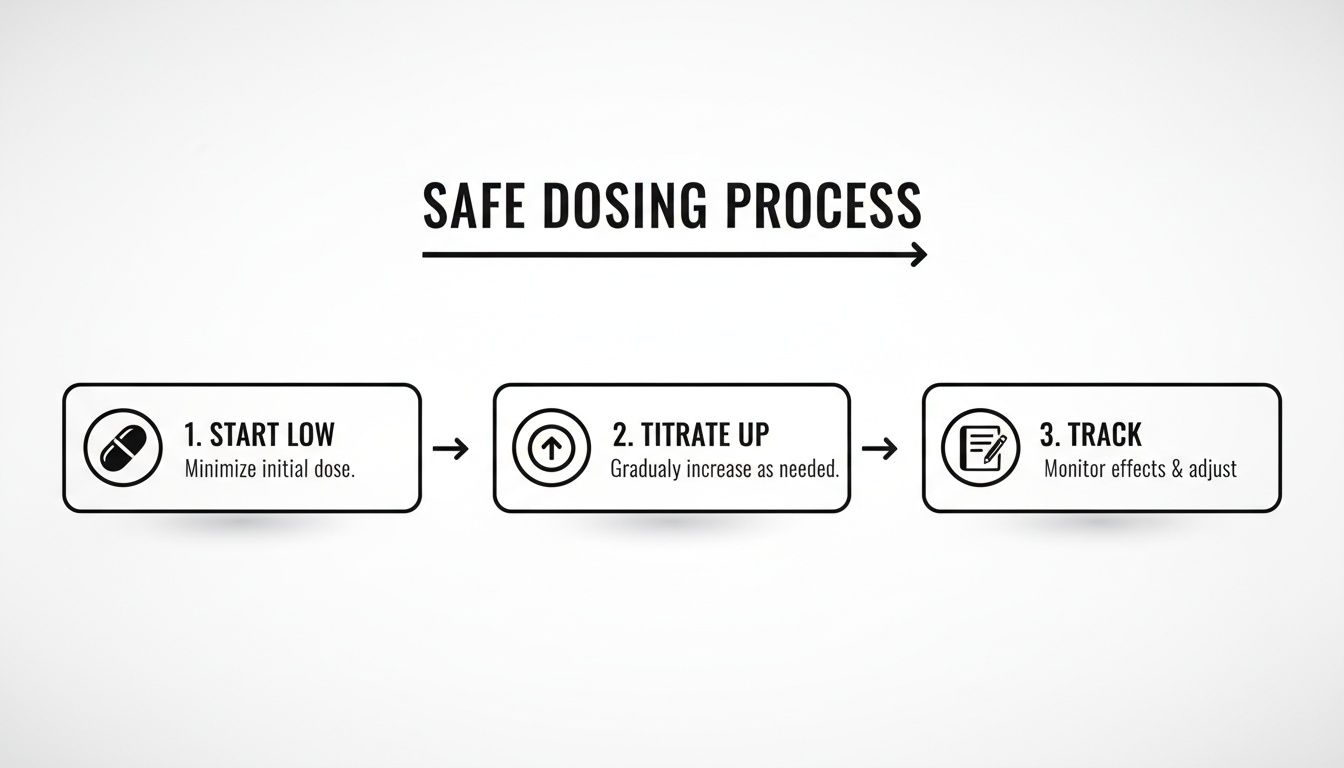
For most people exploring Mucuna for mood and motivation support, the general approach is: start low, take it with food, stay consistent, and pay attention to how you feel. A standardized 20% extract makes this easier because the L-Dopa dose is predictable from serving to serving. We cover amounts and timing in detail in our complete guide to Mucuna pruriens dosage.
A few practical points that come up often:
Give it time. People who notice changes generally describe them building gradually over weeks, not overnight.
The Safety Section — Please Don’t Skip This
Because Mucuna pruriens directly influences dopamine, it is not a “take it and don’t think about it” supplement, and there are specific situations where you should talk with your healthcare provider before using it:
- If you take any prescription medication. Mucuna’s effect on dopamine and related neurotransmitter systems means it can interact with a range of medications. This is a conversation to have with a professional who knows your full history — not something to navigate on your own.
- If you are pregnant or nursing, unless your provider has specifically approved it.
- If you have a diagnosed health condition of any kind. A supplement that affects neurotransmitter pathways deserves professional input when there’s an underlying condition in the picture.
- If you have concerns about blood pressure or cardiovascular health, since dopamine pathways interact with these systems.
None of this is meant to alarm you — it’s meant to be honest. The same mechanism that makes Mucuna interesting for mood and motivation support is the reason it warrants a real conversation with a qualified practitioner if any of the above applies to you. A licensed healthcare provider can look at your specific situation, your medications, and your history in a way that no article can.
Choosing a Quality Mucuna Supplement
If you decide Mucuna pruriens is worth exploring, a few things separate a reliable product from a gamble:
- Standardization to a stated L-Dopa percentage (we standardize to 20%), so you know what you’re getting.
- Third-party lab testing, so the label reflects what’s actually in the capsule.
- A transparent, filler-free formulation.
Our Mucuna L-Dopa 20% capsules are made to those standards, and our Certificates of Analysis are published so you can verify the testing yourself.
The Bottom Line
Mucuna pruriens is a genuinely interesting botanical with a clear, well-understood mechanism: it supplies L-Dopa, which supports the dopamine pathways involved in mood, motivation, and focus. The research supports that mechanistic story while stopping well short of positioning it as a treatment for any condition — and that’s the honest framing. Used thoughtfully, standardized for consistency, and paired with a conversation with your healthcare provider when your situation calls for one, it’s a reasonable option for people looking to support healthy dopamine levels as part of a broader approach to well-being.
Leave a Reply