
Herbal supplements for stress are more than just a quick fix. They’re plant-based compounds, many of which are called adaptogens, that work with your body to help it manage and adapt to whatever life throws at it. Instead of just putting a band-aid on the symptoms, they support your body's built-in stress-response system, helping you build genuine resilience over time.
Your Body on Stress—And How Herbs Can Help
Think of your body’s stress response like a highly sensitive smoke detector. When it senses a threat—a tight deadline at work, a heated argument, or even just rush-hour traffic—the alarm goes off. Hormones like cortisol and adrenaline flood your system, putting you into "fight-or-flight" mode. This is a brilliant survival mechanism for short-term threats.
The problem is, modern life is full of constant, low-grade "smoke." The incessant ping of emails, the 24/7 news cycle, the endless to-do lists—it all keeps the alarm blaring. When your system is constantly on high alert, it never gets a chance to reset. This is chronic stress, and it leads straight to burnout, exhaustion, and that all-too-common feeling of being completely overwhelmed.
The Cortisol Connection
Cortisol is the main hormone driving this process. Ideally, your cortisol levels should be highest in the morning (your natural wake-up call) and then gently taper off throughout the day. But chronic stress throws that delicate rhythm completely out of whack, keeping your cortisol levels jacked up when they should be winding down.
This hormonal chaos is why you might feel "wired but tired" at night, struggle with sleep, or notice your immune system isn't what it used to be. This is exactly the kind of imbalance where well-chosen herbal supplements can step in to provide targeted support.
Adaptogens: Your Body's Personal Calibrators
Adaptogens are a truly unique class of herbs. They don't force your body into a state of relaxation or stimulation. Instead, they help your body become more efficient at handling stress on its own.
Think of them as intelligent tuners for your internal stress-response system. They help your body react appropriately to a stressor—turning the volume up when needed—but more importantly, they help it turn the volume back down to a normal, balanced level once the threat has passed. This return to equilibrium is known as homeostasis.
Instead of overriding your body's natural processes, these remarkable plants work with them to modulate the stress response. This approach builds resilience without the side effects like drowsiness or jitters that can come with other solutions.
The Shift Toward Natural Solutions
It's no surprise that people are turning to natural, effective ways to manage stress. We're getting smarter about our health, looking for solutions that work in harmony with our bodies, not against them.
This isn't just a niche trend; it's a massive shift. The global market for stress relief supplements is on track to hit an incredible USD 1,084 million by 2035. You can find more details on this growing trend at Future Market Insights. This explosive growth highlights a clear demand for proactive, plant-based approaches to wellness.
In this guide, we'll dive into specific herbal allies like ashwagandha and Mucuna L-Dopa, exploring how they can become your personal stress modulators. You'll get the full picture—how they work, what makes a high-quality product, and how to use them to build a stronger, more resilient you.
Meet the Top Players in Natural Stress Management
When we talk about "herbal stress relief supplements," we're entering a wide and varied world. But the real heavy hitters, the ones with the most research and traditional use behind them, are often a special class of herbs called adaptogens.
Think of these plants not as a single, one-size-fits-all solution, but as a team of specialists. Each one has a unique talent for helping your body adapt to and handle stress. Getting to know their individual strengths is the secret to finding the perfect ally for your particular needs.
Instead of just putting a band-aid on symptoms, these powerful herbs work on a much deeper level to help bring your body's internal systems back into balance. This diagram gives a great visual of how they step in to interrupt the stress cycle.
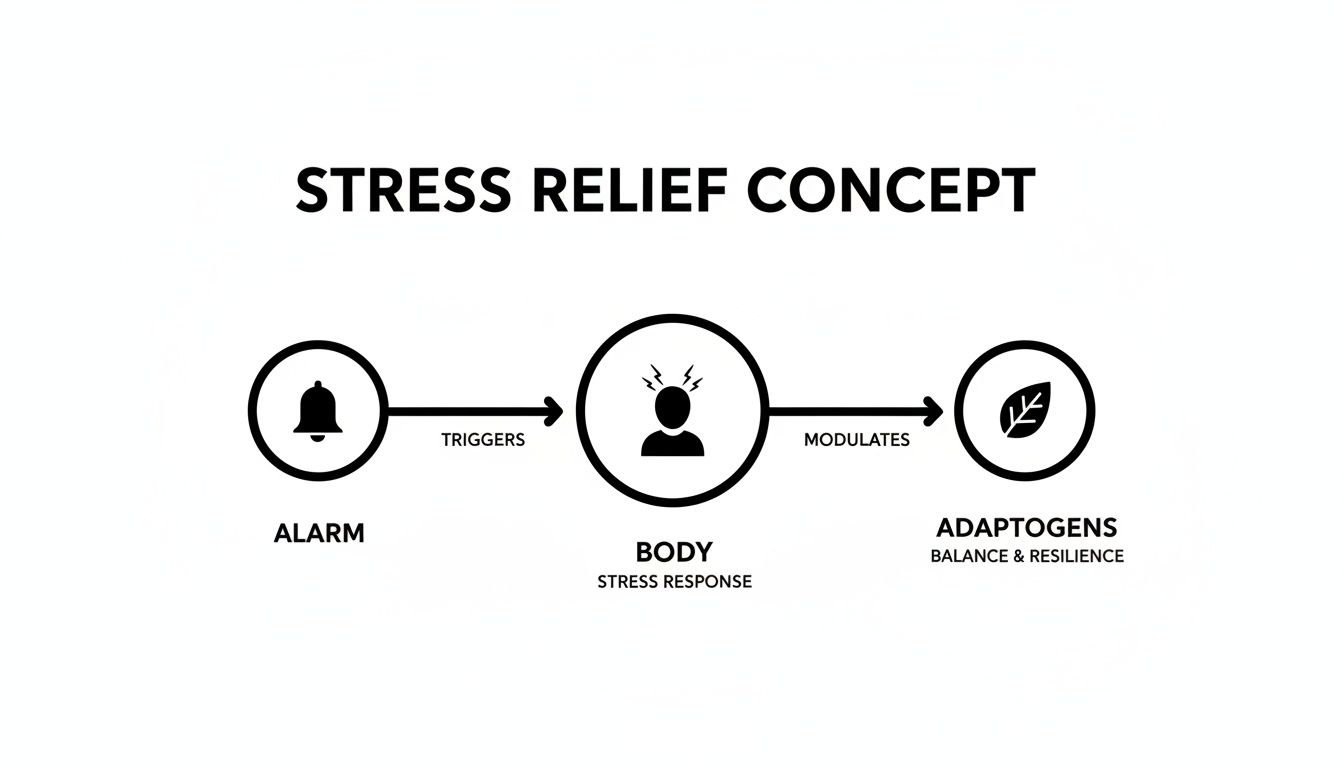
As you can see, an outside stressor (the alarm) sets off your body's internal alarm bells. Adaptogens (the leaf) act like a skilled moderator, gently guiding your system back to a state of equilibrium.
Now, let's get acquainted with some of these specialists.
Ashwagandha: The Cortisol Calmer
Ashwagandha (Withania somnifera) is probably the most famous adaptogen out there, and for good reason. Its main job is to help manage cortisol, your body's primary stress hormone. If you constantly feel frazzled, "wired but tired," or just plain stuck in overdrive, out-of-whack cortisol levels are often the culprit.
Picture Ashwagandha as a sophisticated volume knob for your stress response. It helps turn down the noise when it’s blaring, fostering a sense of calm and stability without making you drowsy. This makes it an incredible tool for anyone dealing with the relentless, low-grade tension that defines so much of modern life.
Who is Ashwagandha best for?
- The Overwhelmed Professional: Juggling tight deadlines and high-pressure situations, leaving you perpetually on edge.
- The Anxious Student: Facing academic pressures that mess with your sleep and ability to focus.
- The Chronically Stressed: Feeling like your body's stress switch is permanently flipped to "on."
Research has shown that consistent use, often around 500-600 mg per day, can make a real difference in how stressed people feel while also measurably lowering cortisol levels. By helping restore that hormonal balance, Ashwagandha supports your body's natural rhythm and builds true resilience over time.
Rhodiola Rosea: The Fatigue Fighter
Does your battle with stress show up as deep physical and mental exhaustion? If so, Rhodiola Rosea is the adaptogen you need to know about. Hailing from the cold, harsh mountain regions of Europe and Asia, this tough little plant has a long history of being used to boost stamina and fight off fatigue.
Rhodiola works by getting to the very root of your energy supply: your cells. Think of your body's energy like a smartphone battery. Chronic stress is a power-hungry app that drains it fast, leaving you depleted. Rhodiola acts like a smart charger, helping your cells produce and use energy more efficiently. The result is often improved mental clarity and physical endurance.
This makes Rhodiola an amazing choice for combating the burnout that so often comes with long periods of high demand. It’s not a temporary jolt like caffeine; it’s about rebuilding your foundational energy from the ground up.
Mucuna Pruriens: The Motivation Booster
While many adaptogens are focused on calming the system, Mucuna Pruriens comes at stress from a different angle—by targeting motivation and mood. This unique herb is one of nature's richest sources of L-Dopa, which is the direct building block for the neurotransmitter dopamine. Dopamine is the "get up and go" chemical, driving your brain's reward centers, focus, and sense of purpose.
When chronic stress drains your dopamine, you can feel apathetic, uninspired, and lost in a mental fog. Mucuna helps to replenish this critical neurotransmitter, effectively reigniting that inner spark. It's the perfect herbal supplement for when stress manifests as a lack of engagement or that flat, "blah" feeling.
The secret to getting real results from Mucuna is standardization. A supplement that is standardized to contain 20% L-Dopa guarantees you're getting a consistent, effective amount of the active compound in every single dose. That kind of predictability is what separates a high-quality supplement from a guessing game.
This kind of targeted, natural support is resonating with more people than ever. In fact, plant-based products for stress are becoming a huge part of the herbal supplement market as people shift toward preventive health. Capsules are the preferred format, holding a 31.5% market share, because they offer the precise dosing people want—like capsules standardized for a consistent 20% L-Dopa to boost motivation. You can see more data on herbal supplement market trends to get the full picture.
Choosing a standardized product like Mucuna L-Dopa 20% from a reputable source ensures you get the focused support needed to reclaim your drive. By directly nourishing your dopamine pathways, it offers a unique solution for the motivational slump that stress so often leaves in its wake.
To help you navigate these options, here's a quick side-by-side look at some of the top herbal allies for stress.
A Quick Guide to Top Herbal Stress Supplements
This table offers a snapshot comparison of popular herbal supplements, helping you identify which might be the best fit for your personal stress-related challenges.
| Herb | Primary Benefit | How It Works (Simplified) | Best For |
|---|---|---|---|
| Ashwagandha | Calms the nervous system & reduces cortisol | Helps regulate the body's main stress hormone (cortisol) for a sense of stability. | Feeling "wired but tired," anxious, or overwhelmed by constant pressure. |
| Rhodiola Rosea | Fights physical & mental fatigue | Supports cellular energy production, improving stamina and mental clarity under stress. | Burnout, exhaustion, and brain fog caused by prolonged high-demand periods. |
| Mucuna Pruriens | Boosts motivation, mood & focus | Provides a natural source of L-Dopa to replenish the "motivation" neurotransmitter, dopamine. | Apathy, lack of drive, and feeling uninspired or mentally flat due to stress. |
| Lemon Balm | Eases restlessness & promotes calm | Works on GABA receptors in the brain to quiet nerve activity and reduce nervous tension. | Restlessness, irritability, and trouble unwinding or falling asleep. |
Remember, the "best" herb is the one that targets the way you experience stress. Take some time to think about your primary symptoms—is it fatigue, anxiety, or a lack of motivation?—and use that as your guide.
How to Spot High-Quality Supplements That Actually Work
Walking down the supplement aisle can feel overwhelming. With so many bottles making big promises, how do you know which ones will actually help and which are just expensive dust? The secret isn't in the slick marketing—it's about learning what to look for on the label.
Honestly, learning to read a supplement label is the most powerful tool you have. It cuts through the noise and lets you see if a product has what it takes to deliver real results. It’s the difference between a smart investment in your health and a waste of money.
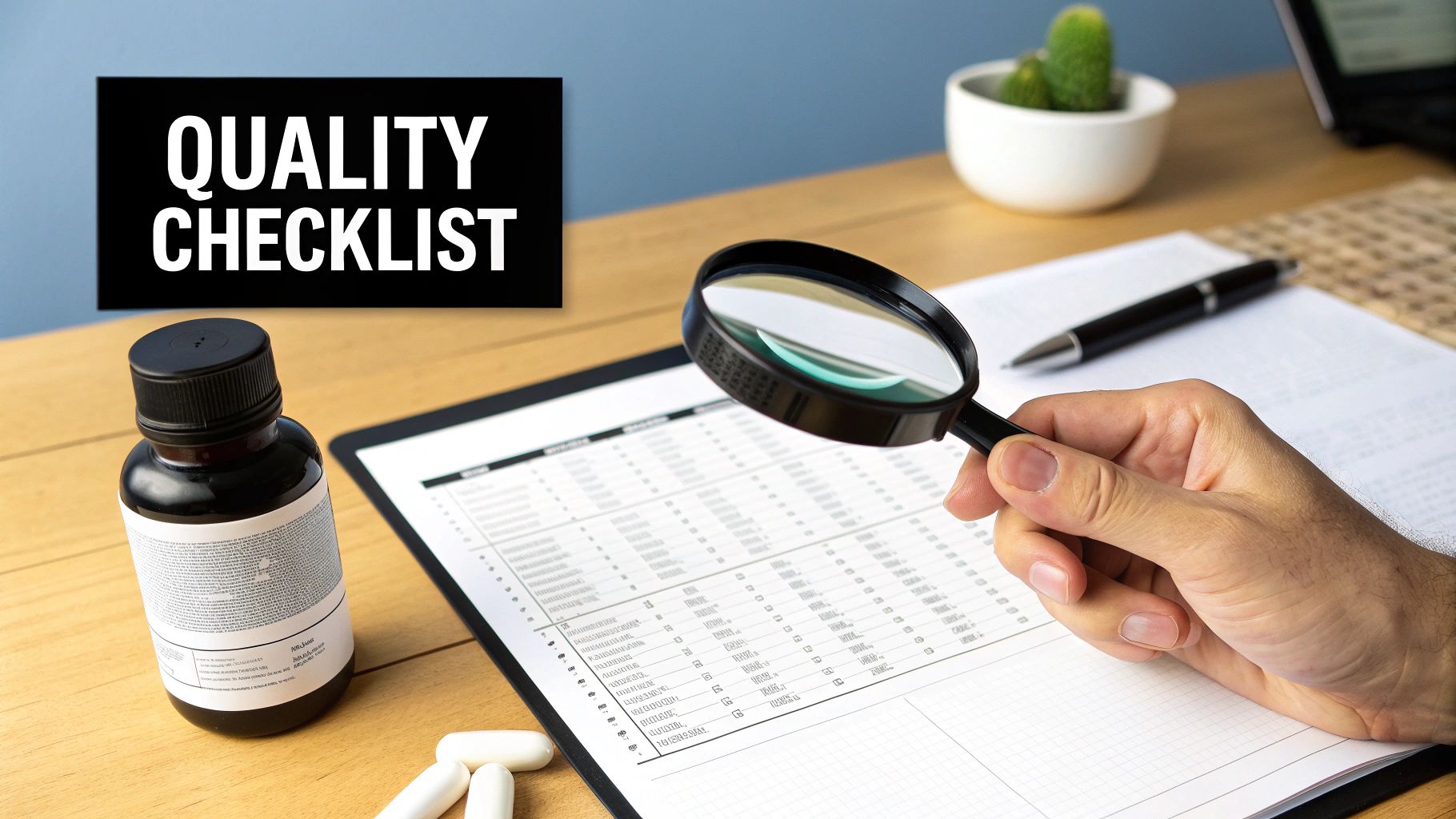
Pillar 1: Standardization Ensures You Get What You Paid For
Ever tried an herb that worked wonders, only to buy a different brand of the same herb and feel nothing? The culprit is almost always a lack of standardization.
Think of it like this: a "scoop of coffee grounds" tells you nothing about strength. You could end up with brown water or rocket fuel. But a scoop that’s guaranteed to contain 100 mg of caffeine? That’s a predictable experience. Standardization is just like that for herbs—it’s a guarantee that you're getting a specific, consistent amount of the key active compound that makes the herb work.
For instance, if you're looking at Mucuna Pruriens for a motivation boost, you don't just want powdered beans. You need an extract that’s specifically standardized for a high percentage of L-Dopa, the active ingredient that actually interacts with your brain's dopamine system.
A label that clearly states "Mucuna Pruriens standardized to 20% L-Dopa" is your green light. It shows the manufacturer is committed to delivering a potent, effective dose every single time. It takes all the guesswork out of it.
Pillar 2: Purity Protects You From Junk Fillers
The next non-negotiable is purity. A truly high-quality supplement contains the active ingredients you need and nothing else. Sadly, many companies bulk up their capsules with cheap fillers, binders, and other additives to cut their own production costs.
These extras don't just water down the good stuff; they can sometimes cause digestive upset or other issues. Your first move should always be to flip the bottle over and read the "Other Ingredients" list.
- Magnesium Stearate: A common "flow agent" used to make machines run faster. It does nothing for you.
- Silicon Dioxide: Another anti-caking agent that’s completely unnecessary in a carefully made product.
- Titanium Dioxide: A pigment used to make capsules look perfectly white. It's purely cosmetic.
- Artificial Colors & Flavors: These are major red flags. A brand focused on health has no need for them.
A top-tier supplement will have a short, clean "Other Ingredients" list—maybe just the vegetable cellulose for the capsule itself. This is a clear sign that the company puts your health ahead of its own manufacturing convenience.
Pillar 3: Third-Party Testing Verifies What's Inside the Bottle
Finally, the gold standard of trust is third-party testing. This is where an independent lab, with no skin in the game, tests the product to confirm two critical things: that it actually contains the ingredients and potency claimed on the label, and that it's free from nasty contaminants like heavy metals, pesticides, or microbes.
Because the supplement industry isn't regulated as tightly as pharmaceuticals, this independent verification is your single best guarantee of safety and quality. A brand that voluntarily pays for third-party testing is showing you they have nothing to hide.
Look for seals from trusted organizations like NSF International or USP on the bottle or website. Even better, some brands make their test results (often called a Certificate of Analysis, or COA) public. That level of transparency is a powerful sign you’ve found a product—and a company—you can rely on.
Putting Herbal Supplements to Work in Your Daily Life
So, you’ve done your research and picked out a high-quality herbal supplement. That's a great first step, but just having the bottle on your counter won't do the trick. The real magic happens when you thoughtfully weave it into your daily rhythm.
Getting the timing and dosage right isn't just a minor detail—it's everything. Think of it like learning to cook a new recipe. You wouldn't just toss all the ingredients in a pot at once and hope for the best. You add them at the right time, in the right amounts, to get the flavor just right. The same goes for herbal stress support.
Timing Your Doses for Maximum Impact
Your body runs on an internal clock, and you’ll get far better results by syncing your supplement schedule with its natural highs and lows. Different herbs have different personalities; some are energizing, while others are deeply calming.
-
Morning Kickstarts: Herbs like Rhodiola Rosea or Mucuna Pruriens, known for their ability to sharpen focus and fight fatigue, are best taken in the morning. This timing complements your body's natural cortisol spike, which is highest when you wake up, setting you up for a productive, energized day.
-
Evening Wind-Downs: On the flip side, calming herbs like Ashwagandha or Lemon Balm are perfect for the evening. Taking them a couple of hours before you plan to sleep can help quiet a busy mind and ease your body into a state of rest, preparing you for deep, restorative sleep.
Following this simple "energizers in the AM, relaxers in the PM" strategy helps you create a supportive daily cycle, making sure you get the right effect at the right time.
The Golden Rule: Start Low and Go Slow
Whenever you introduce a new supplement to your system, this is the single most important rule to follow. Starting with a small dose and increasing it gradually gives your body time to adjust and helps you find your personal "sweet spot."
Start with the lowest recommended dose on the label and stick with it for at least a week or two. This gives you a clean baseline to see how you feel. Rushing the process or jumping to a high dose from day one can muddy the waters, making it tough to know if the herb is truly a good fit for you.
Listen to your body. Pay close attention to the small shifts in your energy levels, mood, and how well you're sleeping. If you’re feeling good and tolerating the initial dose without issue, you can then consider slowly increasing it, always staying within the recommended range.
This mindful, natural approach is resonating with more people every day. It's no surprise that 16.5% of U.S. adults currently on mental health medications are actively seeking alternatives, often due to concerns over side effects. People are prioritizing gentle, effective support, which is driving a major shift toward herbal solutions. You can discover more insights on the growing stress relief market and see just how big this movement has become.
Always, Always Talk to a Professional
Herbal supplements come from nature, but that doesn't mean they aren't powerful. They are potent substances that interact with your body’s unique chemistry, which is why getting professional guidance is non-negotiable.
Before you start any new herbal regimen, make it a point to talk with your doctor or another qualified healthcare practitioner. This is absolutely essential if you:
- Are pregnant, trying to conceive, or breastfeeding.
- Have a pre-existing medical condition (like an autoimmune disorder, thyroid issues, or liver problems).
- Take any prescription medications, as herbs can sometimes alter how they work.
A healthcare professional can look at the whole picture—your health history, your current medications, your goals—and help you make a choice that is both safe and effective. It's the best way to ensure your journey with herbal stress relief is a positive and responsible one.
Lifestyle Habits That Amplify Your Supplement's Effects
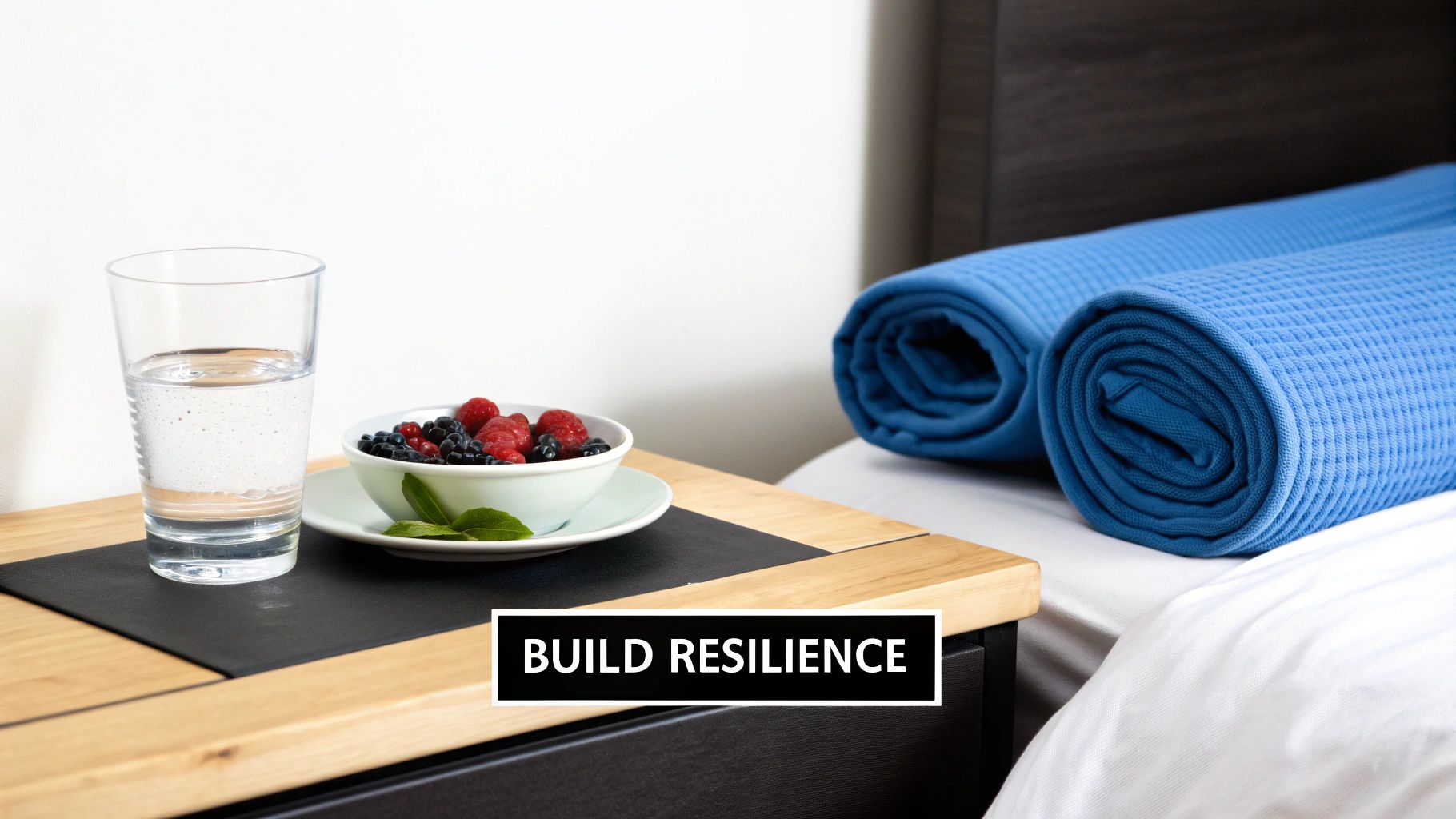
While a high-quality herbal supplement is a powerful tool against stress, it doesn't work in a vacuum. Think of your supplement as the star player on a team; it performs best when the rest of the team—your daily habits—is playing strong defense.
You don't need a complete life overhaul. The idea is to make small, consistent adjustments that create the right internal environment for your supplements to do their best work. Marrying your herbal regimen with these foundational practices is how you build real, lasting resilience from the inside out.
Nourish Your Brain and Body
What you eat is direct fuel for your brain's stress-management systems. A diet loaded with processed foods and sugar can actually stoke inflammation and trigger mood swings, forcing your supplements to fight an uphill battle. A nutrient-rich diet, on the other hand, is a powerful ally.
Try to weave in more of these simple, brain-supporting foods:
- Omega-3 Fatty Acids: Salmon, walnuts, and flaxseeds are packed with these essential fats, which are critical for brain health and have been shown to help ease anxiety.
- Complex Carbohydrates: Foods like oats, quinoa, and sweet potatoes provide a slow, steady supply of glucose—your brain's main fuel—preventing the kind of energy crashes that can make stress feel so much worse.
- Magnesium-Rich Foods: Leafy greens like spinach, plus almonds and avocados, are fantastic sources of magnesium, a mineral that plays a huge role in calming the nervous system.
Prioritize Restorative Sleep
Sleep is non-negotiable. It's when your body and brain get down to the business of repair. The problem is, chronic stress wrecks sleep, and poor sleep makes you more vulnerable to stress. It's a vicious cycle. Herbal supplements can certainly help you unwind, but a solid sleep routine is what truly unlocks their calming potential.
Your supplement can help quiet the mental chatter, but it's up to you to create a sleep-friendly environment. This synergy is where the real magic happens, allowing for deep physical and neurological recovery overnight.
Simple habits can make all the difference. Try to hit the sack around the same time every night, even on weekends. An hour before bed, dim the lights and put your phone away. This signals to your brain that it's time to wind down, naturally boosting melatonin production and working right alongside any calming herbs you’re taking.
Incorporate Mindful Movement
You don't need to crush it at the gym to fight stress. In fact, gentle, mindful movement can often be far more effective at lowering cortisol. The goal here isn't to push your body to its absolute limit, but simply to reconnect with it.
Things like a brisk walk outside, a gentle yoga session, or even just 15-20 minutes of stretching can release feel-good endorphins and melt away muscle tension. This physical release is the perfect partner to the biochemical support you get from your supplements, creating a powerful one-two punch against the physical toll of stress. The key is consistency, not intensity. Just find something you enjoy and treat it like an appointment you can't miss.
Common Questions About Herbal Stress Supplements
Jumping into the world of herbal supplements can feel a bit like learning a new language. You've got the basics down—you know the key players and what makes a quality product—but practical questions always pop up. Let's tackle some of the most common ones so you can move forward with confidence.
Think of this as the "now what?" part of the guide. We'll get straight to the point on timing, combining herbs, safety, and what all that jargon on the label really means for you.
How Long Does It Take for Herbal Supplements to Work?
One of the first things you'll notice is that herbs don't work like a light switch. Unlike a pharmaceutical that might kick in within an hour, herbal allies are playing a longer game. Their goal isn't to force a change but to gently guide your body back into balance.
Most people start to feel subtle shifts—maybe a little less edge, slightly better sleep, or a bit more energy—within 2 to 4 weeks of taking them every day. This is the "getting acquainted" phase. The more profound, day-in-and-day-out benefits really start to shine through after about 2 to 3 months of consistent use.
Patience and consistency are everything here. These aren't a quick fix for a bad day; they're a long-term strategy for building a more resilient you. You have to stick with it to give the herbs a fair shot at doing their job.
Can I Take Multiple Stress Relief Supplements Together?
Yes, but you have to be smart about it. "Stacking," or combining different herbs, is pretty common. Some pairings are fantastic and create a synergy where they work even better together. A classic example is taking an energizing herb like Rhodiola in the morning and a calming one like Ashwagandha in the evening for 24/7 support.
The golden rule, though, is to start with one thing at a time. This is the only way to truly know how your body responds to a specific herb without other factors confusing the picture.
Once you have a good handle on how one supplement affects you, you can think about adding another. Before you do, it's a really good idea to chat with a healthcare professional or an herbalist who knows their stuff. They can help you build a safe and effective stack that's right for your specific needs.
Are Herbal Stress Supplements Addictive?
This is a huge plus for herbs: adaptogens like Ashwagandha, Rhodiola, and Mucuna Pruriens are not considered addictive. This sets them worlds apart from many prescription medications used for similar issues.
The reason is in how they work. Instead of creating a chemical dependency or forcing your body into a certain state, they help your internal "thermostat"—your stress-response system—learn to regulate itself better.
They support your body's own journey back to equilibrium rather than making it rely on an outside substance to function. This makes them a great choice for sustainable, long-term stress management without the risk of dependency.
What Is the Difference Between a Standardized Extract and a Whole Herb?
Nailing this distinction is key to getting a supplement that actually works. A "whole herb" product is just what it sounds like: the entire plant, dried and ground into a powder. While you get the full spectrum of compounds, the amount of the main active ingredient can be all over the place from batch to batch.
A standardized extract, on the other hand, is the gold standard for a reason. It's a concentrated form of the herb that has been carefully processed to guarantee a specific, consistent amount of its most important active compound. It’s your guarantee of potency and reliability.
For example, when a label says "Mucuna Pruriens standardized to 20% L-Dopa," you know exactly what you're getting. Every capsule delivers a precise, effective dose of L-Dopa—the compound that drives the mood and motivation benefits. This takes all the guesswork out of the equation and ensures you get predictable results. Choosing standardized extracts means choosing consistency.
Ready to feel the difference a high-quality, standardized herbal supplement can make? The team at Keter Wellness is obsessed with creating potent, pure, and effective formulas to support your well-being. Our Mucuna L-Dopa 20% is expertly crafted to deliver consistent results for motivation and mental clarity.
Explore our commitment to quality and find your natural solution at Keter Wellness
Leave a Reply