

When you’re looking for the best nootropics for focus, a few natural powerhouses always seem to come up, like L-Theanine and Mucuna Pruriens. There’s a good reason for that—they stand out for their real-world cognitive benefits, helping sharpen concentration without the jitters or harsh side effects of synthetic stimulants.
Your Guide to Nootropics for Enhanced Focus

In a world buzzing with notifications and distractions, finding a state of deep, sustained focus can feel like a genuine superpower. Whether you’re tackling a demanding work project or cramming for exams, the ability to truly concentrate is more valuable than ever. This growing need for a mental edge has sparked a huge interest in nootropics, also known as cognitive enhancers.
Think of your brain’s focus system like an orchestra. To create a beautiful symphony of concentration, every instrument—from memory and motivation to mood—has to play in perfect harmony. Nootropics can act like the conductor, helping coordinate these complex processes, sharpen your attention, and filter out all that mental noise.
Understanding the Nootropic Landscape
The word “nootropic” is a big umbrella, covering everything from ancient plant extracts to modern synthetic compounds, all designed to support brain function. For this guide, we’re zeroing in on plant-based options, which many people prefer for their long history of traditional use and generally favorable safety profiles.
We’ll explore how the right compounds can help you:
- Enhance concentration for those complex, deep-work tasks.
- Improve working memory so you can hold onto and process information better.
- Support mood and motivation, which are the true foundations of focus.
- Increase resilience to stress, one of the biggest roadblocks to mental clarity.
The search for cognitive enhancement isn’t just a fleeting trend. It taps into a fundamental desire to be more productive and mentally sharp in our daily lives. The real key is finding what works for your individual brain chemistry and goals.
This rising interest has fueled a massive industry. The global nootropics market was valued at around $14.01 billion and is projected to climb to roughly $40.09 billion by 2033, driven by the demand for products that help with attention and productivity. You can see more detailed projections on the nootropics market at globalgrowthinsights.com.
To give you a quick overview of what’s to come, here’s a snapshot of some of the top-tier nootropics we’ll be discussing.
Top Plant-Based Nootropics for Focus At a Glance
| Nootropic | Primary Mechanism | Key Benefit |
|---|---|---|
| Mucuna Pruriens (L-Dopa) | Provides the direct precursor to dopamine | Boosts motivation and drive |
| L-Theanine | Increases alpha brain waves & GABA | Promotes calm, alert focus without sedation |
| Bacopa Monnieri | Enhances neural communication | Improves memory formation and recall |
| Ginkgo Biloba | Improves blood flow to the brain | Supports mental clarity and processing speed |
| Rhodiola Rosea | Modulates stress hormones like cortisol | Fights mental fatigue and burnout |
This table is just a starting point. We’ll dive much deeper into each of these to give you a full picture.
Navigating Your Options
It’s crucial to remember that the “best” nootropic is highly personal. What works wonders for one person might do very little for another. Effectiveness really comes down to your unique biochemistry, lifestyle, and what you’re trying to achieve.
This guide is designed to take you from curious to confident. We’ll get into the science, safety, and practical applications of these brain-boosters. By the end, you’ll have a clear roadmap for choosing high-quality nootropics that can deliver real, noticeable results for your focus.
How Nootropics Actually Sharpen Your Focus
So, how do the best nootropics for focus actually work their magic? It’s not as mysterious as it sounds.
Think of your brain as a high-performance electrical grid. For everything to run smoothly—for you to think clearly, learn new things, and stay on task—you need three things: clear communication lines, a steady power supply, and a well-maintained infrastructure.
Nootropics don’t add new power plants or wires. Instead, they act like a skilled electrical engineer, fine-tuning the existing system. They optimize the flow of information, boost energy production, and protect the grid from wear and tear. This isn’t a bio-hack in the futuristic sense; it’s about supporting the brain’s natural, biological pathways so you can hit that state of deep concentration more easily.
Let’s look at the three main ways they do this.
Optimizing Brain Chemicals
Your ability to focus, feel motivated, and switch between tasks comes down to chemical messengers called neurotransmitters. Imagine them as the data packets flying through your brain’s communication network. When the signal is strong and clear, information flows effortlessly.
Two of the most important neurotransmitters for focus are:
- Dopamine: This is your “get it done” molecule. Dopamine is what drives motivation, reward, and the mental stamina to stick with a task until it’s finished. Low dopamine is why you find yourself procrastinating or losing steam halfway through a project.
- Acetylcholine: Think of this as your brain’s spotlight. Acetylcholine helps you zoom in on important details, learn new information, and filter out distracting background noise. It’s critical for attention and memory.
The most effective nootropics for focus work by supporting the production and function of these key chemicals. They might provide the raw materials your brain needs to make them, or they might help the receptors that receive the signals become more sensitive. The end result is a clearer, stronger signal.
A well-balanced neurotransmitter system is the bedrock of sustained mental performance. Supporting these chemicals is like upgrading your brain’s internal Wi-Fi from a spotty connection to high-speed fiber—everything just works faster and more reliably.
Boosting Brain Energy
Your brain is an absolute energy hog. It makes up just 2% of your body’s weight but devours about 20% of its total energy. This power comes from tiny cellular engines called mitochondria, which produce a molecule called ATP (adenosine triphosphate).
When your brain’s energy supply dips, you feel it immediately—mental fatigue, brain fog, and a total collapse of focus. It’s like a city-wide brownout. Certain nootropics help prevent this by:
- Supporting Mitochondrial Function: They help your mitochondria work more efficiently, cranking out more ATP to power your brain cells.
- Improving Cerebral Blood Flow: Some nootropics help relax blood vessels in the brain, which increases the delivery of oxygen and nutrients. This is like ensuring the fuel lines to your power plants are wide open.
By giving your brain a steady and robust energy supply, these compounds help you power through tough mental work without hitting that afternoon wall. The result is better mental endurance and concentration that lasts.
Providing Neuroprotection and Promoting Plasticity
Great focus isn’t just about what you can do today; it’s also about protecting your brain for the long haul. Day-to-day life—stress, environmental toxins, even a poor diet—creates oxidative stress. Think of this as rust forming on the critical infrastructure of your brain-city, causing slow, cumulative damage.
Many plant-based nootropics are packed with antioxidants that neutralize these harmful free radicals, protecting your brain cells from damage. This neuroprotective effect is vital for keeping your mind sharp as you age.
Beyond just protection, nootropics can also support synaptic plasticity—your brain’s incredible ability to rewire itself by forming new connections. This is like building new roads or shortcuts in your brain-city, making information travel more efficiently. Better plasticity means faster learning, stronger memory, and the flexibility to tackle new challenges. By supporting this process, nootropics help you not only focus better now but also build a more resilient and adaptable brain for the future.
Exploring the Top Plant-Based Nootropics
Now that we’ve covered the biological pathways, let’s look at a few specific plant-based compounds that really shine. The market is flooded with options, but a handful have earned their reputation with researchers and health enthusiasts alike for delivering reliable effects on focus, memory, and mental energy.
These aren’t magic bullets. Think of them as sophisticated tools that work with your brain’s natural chemistry, providing the raw materials it needs to perform at its best—especially when you need to lock in and concentrate.
This concept map breaks down the three main ways nootropics support your brain.
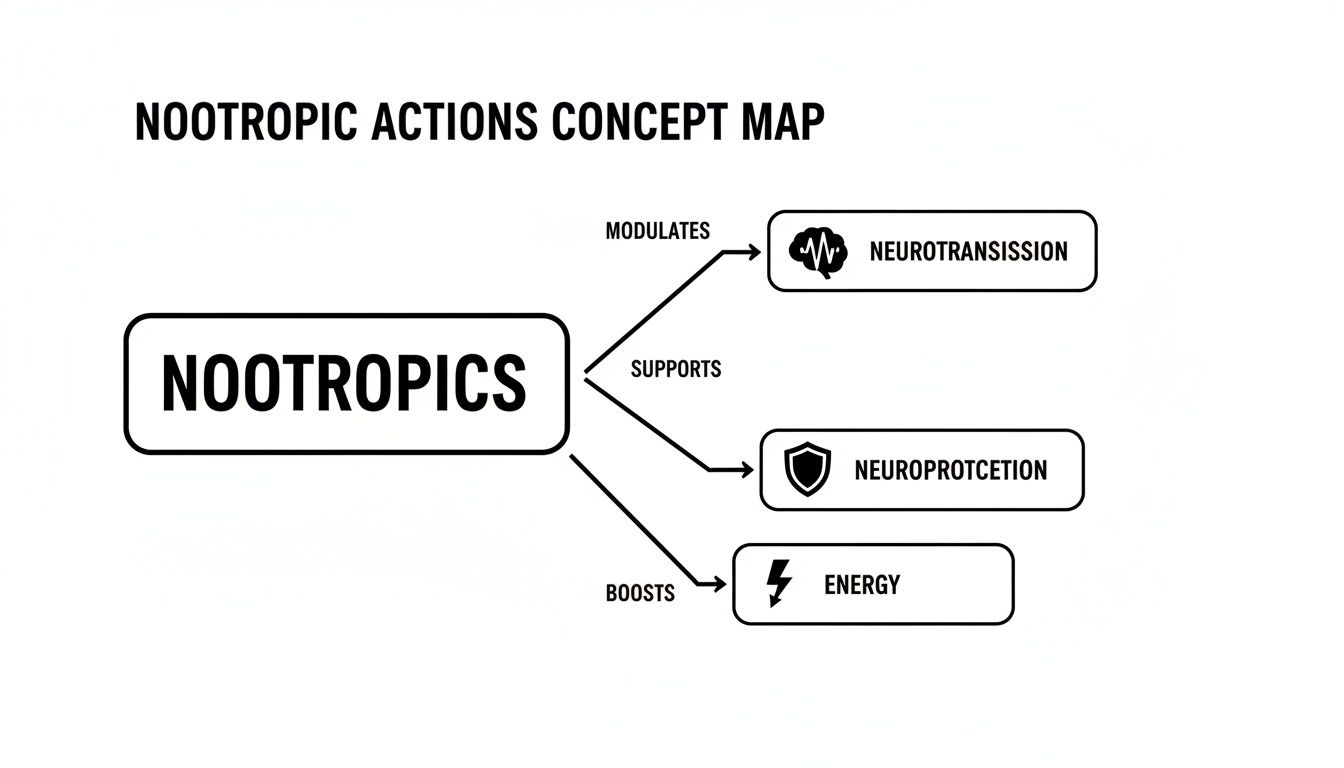
As you can see, the best nootropics for focus often work on multiple fronts. They help optimize brain signals, protect your neurons, and make sure your brain cells have a steady supply of energy.
H3: L-Theanine: The Calm Focus Enhancer
Found almost exclusively in green tea leaves, L-Theanine is famous for its unique ability to promote a state of “wakeful relaxation.” It works by increasing alpha brain waves, which are the same brain waves associated with a calm, alert, and creative mindset—almost like what you’d feel during meditation.
This makes L-Theanine a fantastic choice for anyone wanting to sharpen their focus without the jittery side effects that come with stimulants. It helps quiet the mental chatter and takes the edge off stress, creating the perfect headspace for deep work.
H3: Bacopa Monnieri: The Memory and Learning Herb
For centuries, Bacopa Monnieri has been a cornerstone of traditional Ayurvedic medicine, revered for its benefits to memory and intellect. Modern science is finally catching up to this ancient wisdom, with study after study confirming its positive effects on cognitive function.
Bacopa’s magic lies in its ability to enhance communication between brain cells. It actually encourages the growth of nerve endings, known as dendrites, which speeds up how fast your nervous system can process information.
This makes it especially effective for:
- Improving memory formation and your ability to learn new things.
- Enhancing information retention and recall later on.
- Increasing processing speed and attention over time.
Because its benefits build up, Bacopa is best seen as a long-term investment in your brain’s health, not an instant fix.
H3: Mucuna Pruriens: The Motivation Molecule Precursor
Perhaps one of the most direct-acting nootropics for focus is Mucuna Pruriens, a tropical legume also known as velvet bean. Its power comes from its naturally high concentration of L-Dopa, the direct precursor your brain uses to create dopamine.
Dopamine is often called the “motivation molecule,” and for good reason. It’s the main neurotransmitter driving your sense of reward, ambition, and the ability to stay locked onto a goal. When your dopamine levels are where they should be, you feel engaged, motivated, and ready to tackle whatever is in front of you.
By providing a standardized source of L-Dopa, Mucuna Pruriens effectively refuels your brain’s dopamine system. It’s like keeping the fuel tank for your motivation engine topped up, allowing you to sustain effort and focus for longer.
This direct link to dopamine production makes standardized Mucuna an incredibly powerful tool for anyone looking to boost their drive and beat procrastination. For those looking for quality options, exploring this guide to mucuna can offer more insight into how ingredients like Mucuna are best used.
Comparing Popular Plant-Based Nootropics
Choosing the right nootropic really comes down to your specific goals. Are you looking for calm alertness, better memory, or a powerful motivation boost? This table breaks down the key differences between the compounds we’ve discussed to help you decide.
| Nootropic | Primary Benefit | Effective Dose Range | Best For |
|---|---|---|---|
| L-Theanine | Calm, alert focus | 100–200 mg | Reducing jitters from caffeine and promoting a relaxed state of mind for creative or analytical work. |
| Bacopa Monnieri | Memory and learning | 300–600 mg (standardized extract) | Students and professionals who need to learn and retain large amounts of new information over time. |
| Mucuna Pruriens (L-Dopa) | Motivation and drive | Varies based on L-Dopa standardization | Overcoming procrastination and boosting the mental stamina needed for completing demanding projects. |
Understanding these distinctions is the first step toward building a personalized cognitive support plan. Each of these plants offers a unique key to unlocking a different aspect of your mental performance, allowing you to pick the right tool for the job.
How to Choose High-Quality Nootropic Supplements
Walking into the world of nootropics can feel a bit like the Wild West. With so many brands making big promises, how can you tell which products are the real deal and which are just clever marketing?
The secret isn’t just about picking the right ingredients. It’s about learning to spot the markers of quality that separate a truly effective supplement from a bottle of dust.
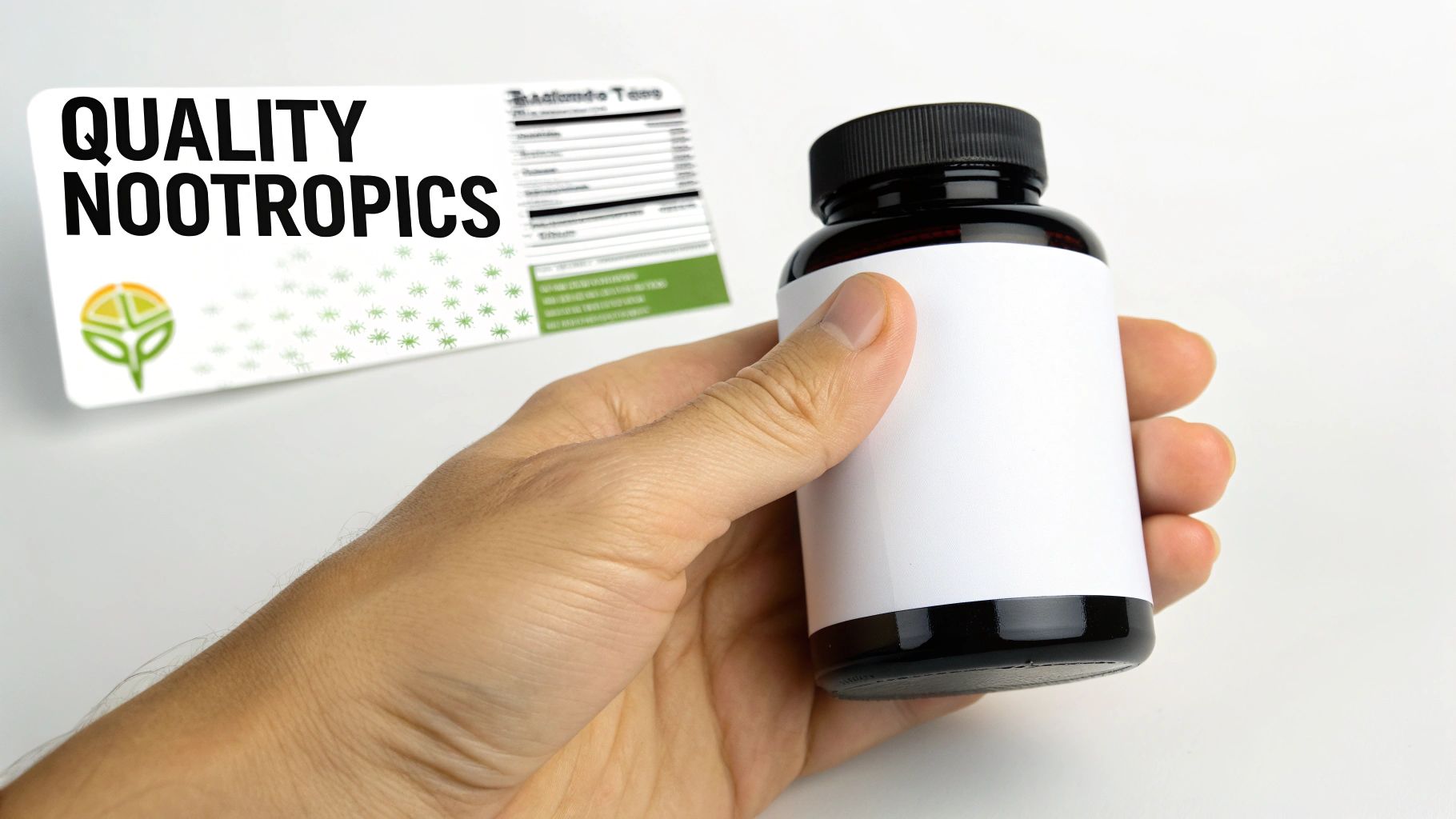
Think of it like shopping for fruit. You can grab any apple off the shelf, or you can choose the one that’s certified organic, vibrant, and firm to the touch. The same logic applies here. Your ability to read a supplement label is the single most powerful tool you have.
Look for Standardized Extracts, Not Just Raw Powder
This is one of the most critical—and often overlooked—details on a label. Understanding the difference between a raw powder and a standardized extract can mean the difference between feeling a real benefit and feeling nothing at all.
- Raw Powder: This is simply the whole plant, dried and ground up. The amount of active compounds can vary wildly from batch to batch, just like one orange might be way sweeter than another. It’s a total crapshoot.
- Standardized Extract: This is a concentrated version of the plant, carefully processed to guarantee a precise, consistent percentage of its key active compounds. Every time.
For instance, a supplement that just says “Mucuna Pruriens powder” is a gamble. But a product like Keter Wellness’ Mucuna L‑Dopa, which is standardized to contain 20% L-Dopa, ensures you get an effective, predictable dose of the very compound responsible for its focus-enhancing effects. Consistency is everything when you’re looking for reliable results.
When you choose standardized extracts, you’re not just buying an herb; you’re investing in a guaranteed level of the bioactive ingredient. It’s the difference between hoping for a benefit and expecting one.
Demand Third-Party Testing and Certifications
Good brands don’t just tell you their products are clean—they prove it. Third-party testing is a non-negotiable sign of quality. It means an independent lab has analyzed the supplement to confirm its potency and screen for contaminants like heavy metals, microbes, or pesticides.
Also, keep an eye out for a GMP (Good Manufacturing Practices) certification. This seal shows the product was made in a facility that follows strict quality and safety standards set by the FDA. It’s a basic, fundamental signal that the company takes its job seriously. Without these checks, you’re flying blind.
If you want to get really good at this, learning how to read supplement labels is an invaluable skill for anyone who cares about their health.
Avoid Proprietary Blends and Unnecessary Fillers
Be skeptical of products that hide their doses behind a “proprietary blend.” This is a classic industry trick where a list of ingredients is provided, but not the exact amount of each one. It allows companies to “fairy dust” their formulas with tiny, ineffective amounts of the expensive ingredients while bulking it out with cheaper ones.
A high-quality nootropic will have a crystal-clear, transparent label that tells you:
- Each specific ingredient by name.
- The exact dosage of that ingredient per serving.
- The standardization percentage for any herbal extracts.
Finally, flip the bottle over and read the “Other Ingredients.” Top-tier products don’t contain a long list of artificial colors, synthetic fillers, and other junk. A short, clean ingredient list is almost always a sign of a better product. Stick to these rules, and you’ll be able to confidently find nootropics for focus that are safe, transparent, and actually designed to work.
Safely Integrating Nootropics into Your Daily Routine
Finding the right nootropic for focus is a great start, but knowing how to use it safely is what really unlocks its potential. Think of it less like flipping a switch and more like tuning an instrument—small, deliberate adjustments are what create real-world results.
The idea isn’t just a one-day boost. It’s about building a sustainable routine that supports your brain for the long haul. This means listening to your body, understanding timing and dosage, and recognizing that supplements work best when they enhance a healthy lifestyle, not replace it.
Start Low and Go Slow
This is the golden rule. When you try any new nootropic, always begin with the lowest effective dose. Your personal biochemistry, body weight, and sensitivity all play a role in how you’ll respond. Jumping in with a high dose is a common mistake that can lead to unwanted side effects and make it impossible to tell what’s actually working.
Starting low lets you find your personal “sweet spot”—that perfect dose that gives you sharper focus and motivation without any downsides. It helps to keep a simple journal to track your dose, the time you take it, and how you feel. This is invaluable data for fine-tuning your approach.
The Art of Stacking and Cycling
Once you get a feel for a nootropic, you might explore two popular strategies: stacking and cycling. These are used to amplify benefits and keep your body from getting too used to a supplement.
- Stacking: This just means combining two or more complementary nootropics to create a synergistic effect. A classic example is stacking L-Theanine with caffeine to get the alertness without the jitters. The key is to do your homework and choose compounds that work well together.
- Cycling: This is the simple practice of taking a nootropic for a set period—say, five days on, two days off—and then taking a break. Cycling helps prevent tolerance, ensuring the supplement stays effective. It gives your brain’s receptors a chance to reset.
Think of cycling like a rest day at the gym. Constant stimulation leads to diminishing returns. Strategic breaks allow your system to recover so it can respond powerfully when you resume.
Always Consult a Healthcare Professional
I can’t stress this enough: always talk to your doctor or a qualified healthcare professional before starting any new supplement. This is non-negotiable if you are pregnant, nursing, have a pre-existing medical condition, or are taking prescription medications.
Even natural nootropics can interact with certain drugs, including antidepressants, blood thinners, or blood pressure medications. A professional can review your health history to help you avoid risky interactions and make sure your journey toward better focus is a safe one. For example, anyone managing a condition like Parkinson’s disease must be extremely cautious with dopamine-affecting supplements like Mucuna Pruriens.
Nootropics Are Part of a Bigger Picture
Finally, remember that nootropics are tools, not magic pills. The best results always come from a holistic approach to brain health. The most powerful nootropic in the world can’t fix the brain fog from a poor diet, chronic stress, or terrible sleep.
See supplements as amplifiers for a healthy lifestyle. When you pair high-quality nootropics with these foundational habits, you create an environment where your brain can truly perform at its best.
- Quality Sleep: Get 7-9 hours a night. This is when your brain clears out metabolic waste and consolidates memories.
- Balanced Nutrition: Feed your brain the good stuff—healthy fats, antioxidants, and essential vitamins.
- Regular Exercise: This boosts blood flow to the brain and triggers the release of beneficial growth factors.
By putting these pieces together, you ensure the nootropics you choose are working on fertile ground, delivering the mental clarity and focus you’re looking for.
Bringing It All Together
Diving into the world of nootropics can feel like a lot to take in, but finding your way to better focus is simpler than it seems. If there’s one thing to remember, it’s this: the best nootropics for focus are the ones that fit your unique biology, are backed by real science, and come from a source you can trust. This isn’t about finding a magic bullet—it’s about making smart, empowered choices for your brain.
You now understand the mechanics behind how these compounds work, whether they’re supporting crucial neurotransmitters or fueling your brain’s energy factories. Just as important, you can now spot a high-quality supplement from a mile away.
Your Simple Quality Checklist
- Look for Standardization: Always, always choose products with standardized extracts. A Mucuna Pruriens supplement that guarantees its L-Dopa content ensures you get a predictable, effective dose every single time.
- Insist on Transparency: A clear label is a confident label. Avoid “proprietary blends” that hide what’s really inside and stick with brands that list every ingredient and its exact dosage.
- Confirm with Third-Party Testing: The best brands prove their products are pure and potent by sending them out for independent testing. This is your guarantee against contaminants and under-dosed ingredients.
At the end of the day, sharpening your mental clarity is a personal journey. Use what you’ve learned here to pick supplements that align with your goals and weave them into a lifestyle that puts your brain health first.
If you’re ready to explore further, understanding the different categories of brain-boosters is a great next step. You can dive deeper in our complete guide to the mucuna pruriens and see how it can support your performance.
By pairing targeted, high-quality supplements with healthy habits, you’re not just chasing focus—you’re building a solid foundation for peak mental performance that lasts.
Your Nootropics Questions, Answered
Even when you know what nootropics are supposed to do, a few practical questions always come up when you’re just starting out. Let’s tackle some of the most common ones to clear the path for your journey into better focus.
How Long Does It Take for Nootropics to Work?
This really depends on the specific compound you’re taking and what you want to achieve. Nootropics generally fall into two camps based on how quickly they act, and it’s helpful to know which is which.
Fast-Acting (Acute Effects): Some nootropics get to work quickly, often within an hour or so. L-Theanine is a great example—it can promote a calm, yet alert state shortly after you take it. This makes it perfect for immediate needs, like getting dialed in before a big presentation.
Gradual Builders (Cumulative Effects): Others, like Bacopa Monnieri, need time to build up in your system to show their true strength. You’ll start noticing benefits like better memory retention after several weeks of daily use, as they support slow and steady changes in your brain.
Can You Take Nootropics Every Day?
Whether a nootropic is right for daily use comes down to the supplement and how your body responds. Many are designed for consistent, long-term brain support, but it’s smart to be familiar with the concept of cycling.
Cycling is simple: you take a supplement for a set period (like five days on) and then take a break (like two days off). This gives your brain’s receptors a chance to reset, helping ensure the nootropic stays effective. The best advice is always to listen to your body and consider taking planned breaks.
The goal isn’t just to boost performance for today, but to build a resilient, healthy brain for the long haul. Smart cycling is a key part of that sustainable strategy.
Are Plant-Based Nootropics Safer Than Synthetic Ones?
It’s a common assumption that “natural” always means “safer,” but the reality is a bit more complex. While many plant-based nootropics have a long history of traditional use and are generally well-tolerated, safety is ultimately about quality control and responsible use—not just the source.
A contaminated, poorly sourced plant extract can be far more dangerous than a pure, lab-tested synthetic compound. The two most important factors for safety are standardization, which ensures you get a consistent dose of the active compounds, and third-party testing, which verifies purity.
Whether a nootropic is natural or synthetic, everyone’s body chemistry is different. The safest first step is always to talk with a healthcare professional before starting something new.
Ready to experience the motivational benefits of a high-quality, standardized extract? Keter Wellness offers a premium Mucuna L-Dopa supplement designed for purity and potency, providing a reliable foundation for your focus and drive. Learn more and begin your journey at /.
Leave a Reply